The Fed’s preferred inflation gauge cooled in June. It might not last
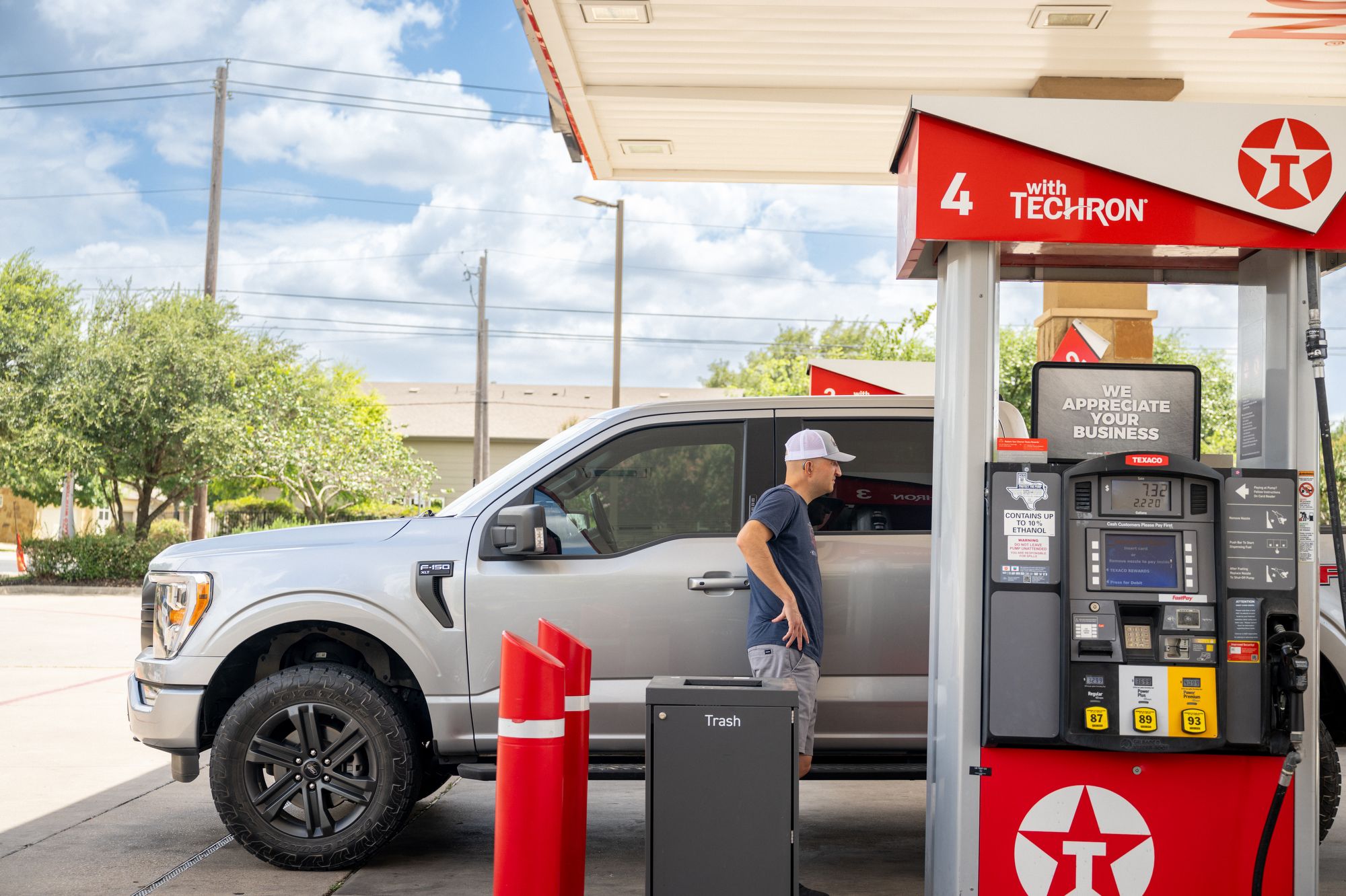
Falling gas prices were expected to drive inflation lower in June. Economists are expecting the Personal Consumer Expenditures price index has slowed to 3.7% last month.

By Alicia Wallace, CNN
(CNN) — The temporary truce in the war with Iran sent gas prices – and thus inflation – lower in June, providing some fuel for a crucial economic engine: the American consumer.
The welcome readings, however, are likely temporary.
Overall inflation fell in June for the first time in six years. The Personal Consumption Expenditures price index – the gauge used by the Federal Reserve for its target inflation rate – dropped 0.1% from May, bringing the annual rate to 3.7% from 4.1%, Commerce Department data showed.
That reprieve helped to buoy household finances. Inflation-adjusted consumer spending rose 0.4% last month, matching an 11-month high, according to new data released Thursday by the Commerce Department.
The inflation slowdown was largely driven by energy prices, particularly those at the fuel pump, which tumbled amid a false dawn in the Middle East war: In mid-June, the US and Iran reached a Memorandum of Understanding and ceasefire that later fell apart.
Gasoline and energy goods prices sank 9.2% in June, the largest monthly drop since August 2022. But prices have since shot higher, and the national average is back above $4 a gallon – a critical threshold for consumer psychology and sentiment.
“Setting aside the volatility caused by oil and energy prices, underlying inflation is moving right around 3%, so that’s not going to provide material comfort to households or investors,” Joe Brusuelas, RSM US chief economist, told CNN. “The improvement in June will be partially or completely reversed by the upward volatility in July.”
Energy prices are often choppy, as are food prices, so economists and policymakers closely watch “core” inflation measurements that exclude more volatile components.
When stripping out energy and food prices, the “core” PCE index rose 0.1% on a monthly basis and was up 3.3% from a year ago. It’s been at or above 3.3% for four months running, the longest such stretch in that range since the fall of 2023.
A “supercore” services index that excludes energy and housing rose just 0.1% but is still up 3.8% from a year ago.
That particular measure of underlying inflation has been incredibly sticky and slow to ease because of the relative strength of the overall economy and the resilience of consumer spending. The latter has been supported by pay gains, tax refunds, and (for a segment of households) rising stock and home prices, said Adam Schickling, senior economist at Vanguard.
Tapping savings for spending
The PCE price index is part of the Commerce Department’s monthly Personal Income and Outlays report, which includes comprehensive data on how Americans earn, spend and save.
In June, consumers increased their spending by 0.3% from the month before, with health care, motor vehicles, financial services and insurance driving the gain. When adjusting for inflation, spending was up 0.4%.
That spending, however, is growing in excess of income (which increased at 0.2% last month), so Americans are continuing to dip into their piggy banks.
The personal saving rate, which is the percentage of after-tax income that households save, slipped to 2.7% in June, a nearly four-year low.
The labor market is running in a lower gear, so income growth should continue to slow, Vanguard’s Schickling said.
“[Consumers] don’t have vast amounts of liquid savings like they had post-pandemic,” he told CNN.
Since most people aren’t going to tap their home equity or raid their 401(k)s, it’ll be hard for Americans to keep spending at the current rate unless hiring activity picks up steam.
And that’s “not something that we expect to see in the near-term,” Schickling said.
The July jobs report, due out next week, is expected to continue to exhibit a low-hire, low-fire dynamic.
However, if inflation were to accelerate further, that could turn up the pressure on consumers and businesses alike, he added.
“With the renewed tensions in the Middle East, we think that the balance of risks is to the upside,” he said, noting the sticky supercore index. “With the other geopolitical uncertainty factors and oil volatility, you start to raise the risk of that spillover of higher energy prices to other parts of the inflation basket.”
Even with those risks, Schickling expects that the Federal Reserve won’t hike interest rates this year.
The-CNN-Wire
™ & © 2026 Cable News Network, Inc., a Warner Bros. Discovery Company. All rights reserved.
