One year after shooting, CDC workers say they still feel like targets
Bullet holes mark the glass at a CVS store across from CDC headquarters in Atlanta after the shooting.

By Brenda Goodman, CNN
(CNN) — “Kuh, kuh, kuh.” It was a Friday, and staffers at the US Centers for Disease Control and Prevention’s Atlanta headquarters were getting ready to pack up and head home for the weekend. They thought the steady pneumatic sounds they heard outside their windows were coming from some kind of road work.
“Why are they doing construction on a Friday afternoon, at nearly closing time?” wondered Dr. Daniel Jernigan, who was then director of the CDC’s National Center for Emerging and Zoonotic Infectious Diseases. His office was on the fifth floor of building 16, the closest to the street.
Another staffer, a doctor, heard the repetitive noise but tried to tune it out to focus on one last task before she met family waiting for her at a nearby restaurant. Finally, a colleague stood up and said loudly, “I think we should be concerned.”
They walked to a window in building 24, which had a view of the sidewalks below.
“Everyone who was walking around campus just immediately flung themselves on the ground,” said the doctor, who asked not to be named out of fear of repercussions. “So that’s how we knew.”
From a stairwell outside a CVS pharmacy across the street, a 30-year-old man who believed that the Covid-19 vaccines were harmful and blamed the CDC sprayed the agency’s main campus with more than 500 rounds of ammunition from five guns, according to the Georgia Bureau of Investigation.
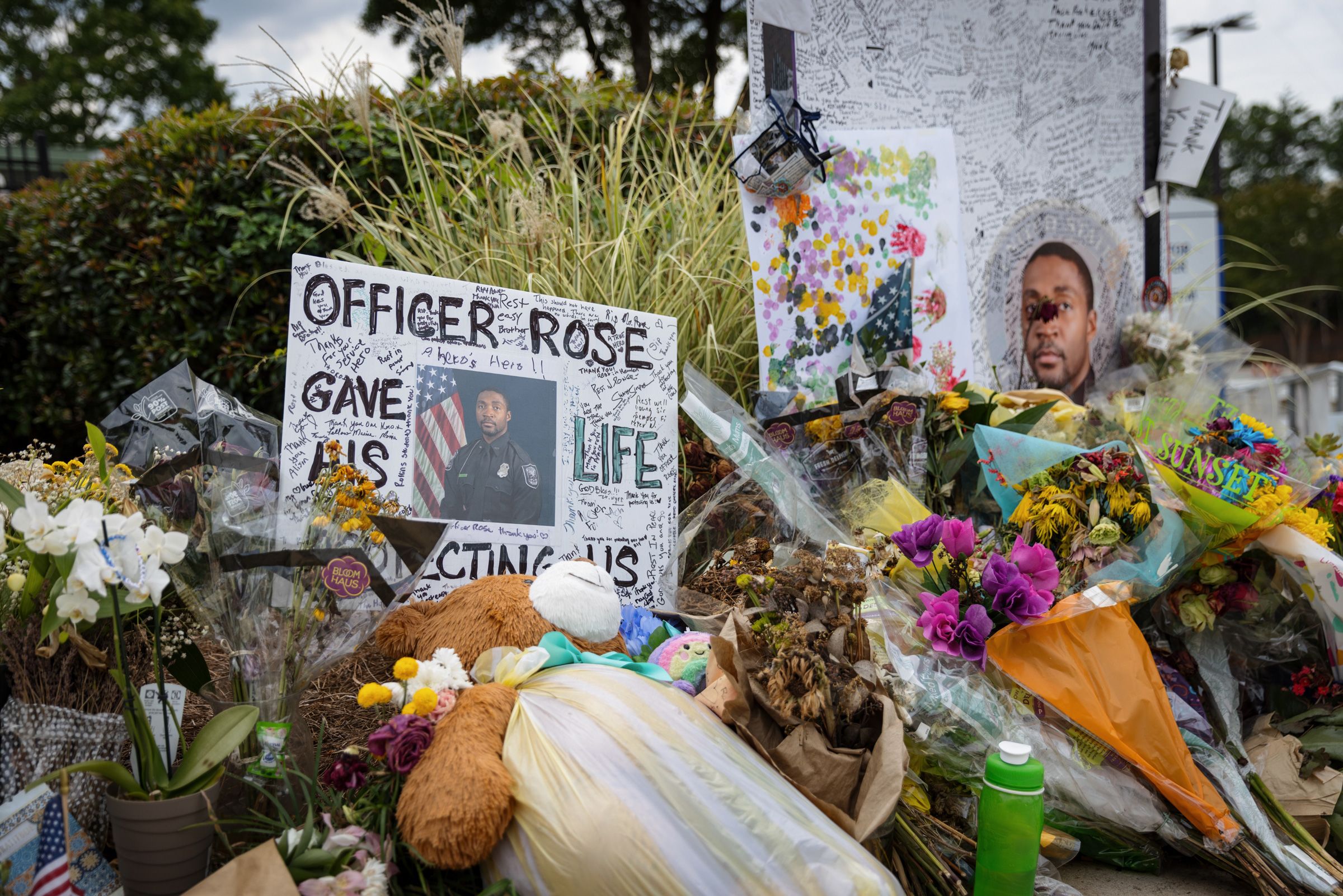
DeKalb County Police Officer David Rose, who was one of the first law enforcement officers to respond, was killed. The gunman later killed himself, the GBI said.
One year later, US Health and Human Services Secretary Robert F. Kennedy Jr. visited the agency Friday to unveil a plaque and rename a street to honor Rose and other first responders. He also spoke to staff along with outgoing acting CDC Director Dr. Jay Bhattacharya, director of the US National Institutes of Health. A recording of the meeting was obtained by CNN.
Bhattacharya spoke briefly about about the first responders’ bravery and noted that “many of you heard the shots and felt the real blows of it, and I’m grateful for your service even through that tough time.”
Kennedy too sought to strike a conciliatory note in his remarks.
He praised the CDC for its work on major outbreaks like Ebola and dengue, as well as domestically on measles and managing the influx of visitors for the World Cup.
“You are our best ambassadors to the rest of the globe,” Kennedy said. “I’m very, very proud to be able to serve with you. I’m proud of your service.”
He did not take questions directly from staff, nor did he address the trauma and upheaval felt by many at the agency during his tenure.
Some workers who were present Friday described the campus as nearly empty, as many of their colleagues used teleworking days to skip the visit. Others wore black in protest.
Kennedy’s visit came as the CDC is poised to get a new full-time director, its first in a year: Dr. Erica Schwartz, who won Senate confirmation this week. Schwartz comes with the kind of education and experience that should set her up for success at an agency that prides itself on its dedication to science and public health. But some of her pledges during her confirmation hearing were not as forceful and definitive as many had hoped when it came to the question of whether she would be able to do her job free of political interference.
‘Walking into a hijacked airplane’
In sharp questioning before the Senate Health, Education, Labor and Pensions Committee in July, Chairman Bill Cassidy reminded Schwartz that the most recent CDC director, Dr. Susan Monarez, had been fired for refusing to commit to policies that she felt were unscientific and bad for public health. Would Schwartz commit to stand up the same way? Would she be able to lead free from political interference?
“Chairman, the secretary absolutely will allow me to be the CDC director. That is why I am sitting here before you,” Schwartz answered.
“You can be CDC director and just take orders,” said Cassidy, who is also a medical doctor. “We need a CDC director that will actually stand up to crazy stupid things being said that undermine faith in immunization. You are the bulwark. So I’m asking: Will you have the ability and the firmness to stand up to that political meddling?”
A wary agency isn’t holding its breath that she can.
“People at CDC really want her to do well,” said Dr. Demetre Daskalakis, who resigned as director of the National Center for Immunization and Respiratory Diseases last year, in solidarity with Monarez.
“She’s walking into a CDC that has been weaponized by the secretary,” he said. “She is walking into a hijacked airplane where the people who are the hostages are the career staff at CDC. So I’m I hope that the first thing that comes out of her mouth is ‘I am here to help rebuild trust.’”
It won’t be an easy task.
Interviews with seven current and former staff who were on campus during the August 8, 2025, shooting or who dealt with its aftermath reveal that they continue to deal with deep trauma from that day.
Many don’t feel safe coming to work and say they still feel targeted and undermined by Kennedy and other federal officials who they say should have their backs.
President Trump, they note, has never made a statement or issued condolences on the shooting.
“I don’t think we’re any safer than we were a year ago,” said the doctor, who still works at the agency.
One former staffer, who worked in the National Center for Immunization and Respiratory Diseases, said he was trapped outside when the shooting started. The staffer, who asked not to be named because he no longer feels safe after the attack, was trying to get to his car to drive home.
“I’m someone who worked a lot in high-threat situations overseas, trained for shootings and other attacks, and you know, I never imagined it would be happening on our campus in the United States,” he said
The sounds of the gunshots were so loud and so constant, he said, he thought there were multiple shooters. He believed he could die.
He worked at the agency for more than 15 years and left because of the trauma he’s still dealing with as a result of the shooting.
“This was a terrorist attack against a US federal facility, and that needs to be recognized,” he added.
Trauma after months of instability
The shooting came after months of turmoil and loss at the CDC, which has suffered deep staff cuts under the Trump administration. Data from the Office of Personnel Management shows that the agency lost more than 3,300 staff, roughly one-quarter of its total workforce, over the past fiscal year.
Many of the agency’s seasoned leaders have resigned, retired or been fired, and top positions that would normally have been occupied with nonpartisan civil servants and scientists have since been filled by political appointees loyal to Kennedy’s views on vaccines and medical freedom.
Kennedy has also sought to personally reform the agency’s vaccine policy, firing all 17 of its vaccine advisers and replacing them with his own picks, many of whom have questioned the benefit of vaccines while exaggerating their harms. He directed changes to a CDC website dedicated to vaccines and autism to say that the claim that vaccines do not cause autism isn’t an “evidence-based claim because studies have not ruled out the possibility that infant vaccines cause autism.” Language on that page was later tweaked by HHS to ensure Senate support for Schwartz’s confirmation.
In many ways, staffers say, the shooting was a manifestation of an attack the agency was already feeling.
More than 180 bullets pierced, cracked or shattered windows in six buildings on campus. In one case, an employee was summoned out of her office just before a bullet struck the window in front of her desk.
Hundreds of employees were held in lockdown for hours, relying on texts from friends or news reports for updates. The overhead PA system didn’t work in several buildings on campus, leaving many without a way to know what was going on, and a text system that was supposed to deliver alerts didn’t work on many people’s phones.
Some workers were trapped in labs in protective gear without cell phones or any other way to get information.
One staffer who had pulled up to a daycare on campus to pick up her young child was pinned in her car as the shooting started. She pressed her body into the floorboards while bullets flew outside.
Another barricaded herself into an interior office with two other people, pulling a heavy filing cabinet in front of the door. They got updates from a friend in California who had tuned in to local police scanners.
In a tour of the campus in the days after the shooting, the scene inside the buildings was jarring, according to a former CDC official who asked not to be named to protect her current employer. “Tons of glass everywhere. It was all over people’s desks, all over the floor, all inside people’s plants,” she said, and it was “a miracle” that more people weren’t hurt.
SWAT officers and security personnel who had gone from room to room clearing the buildings after the incident had been forced to break down doors to gain entry.
“I got nauseous seeing it all,” said Dr. Deb Houry, then the agency’s chief medical officer and deputy director for program and science.
Many in leadership positions have been allowed to work from home, people interviewed for this story said, but lower-level staff have been ordered to return to buildings that still bear the scars of the shooting.
An email that was sent to staff sent this week and shared with CNN said that window, façade and door repairs were expected to be complete by the end of September.
Another CDC official said she’s still in counseling for post-traumatic stress disorder and knows others who are in therapy, too.
“Loud noises are still very triggering,” said the official, who asked not to be named for fear of jeopardizing her job.
“We’re all doing what we do because we’re passionate about it, and it’s like the opposite of causing harm, and yet we were targeted,” the official said. “And I think, for me, it was just really amplified by the complete lack of acknowledgement from the administration.”
The day after the shooting, Kennedy issued condolences on social media to Rose’s family and acknowledged the pain of CDC employees. “We know how shaken our public health colleagues feel today,” he said. “No one should face violence while working to protect the health of others.”
He also sent an internal email to staff and made his first visit to the agency three days later, while staff were still working from home, to survey the damage.
Still, his words rang hollow to many who said they feel that the secretary bears some responsibility for putting the agency’s workers in harm’s way in the first place.
Kennedy has a history of disparaging the CDC and its staff. When he was running for president in 2024, he pledged to clean up “the cesspool of corruption at CDC” and said he would “force public health agencies to come clean about Covid-19 vaccines.” In congressional testimony last year, he repeated that he believed the CDC was the most corrupt agency in HHS.
Emily Hilliard, senior press secretary at the US Department of Health and Human Services, disputed the claim that Kennedy hasn’t done enough to publicly support the CDC.
“Secretary Kennedy unequivocally condemns last year’s horrific attack and remains fully committed to the safety and well-being of every CDC employee. Any claim that the Administration does not take this tragedy or its lasting impact on the CDC workforce seriously is simply false,” Hilliard said in a statement this week.
‘Too little, too late’
In the days after the shooting, a handwritten note that said “F**k RFK” was posted in one of the buildings.
Staff were traumatized and angry, Houry said. “We needed to hear across the board that violent rhetoric and attacks were unwarranted,” she said, and they didn’t get those statements from other federal officials.
“He may as well have just pulled out a gun and kept shooting,” Daskalakis said.
Many of Daskalakis’ staff felt especially unsafe after the shooting because they worked on issues related to vaccines. Whether the gunman intended it or not, many of the bullets broke windows in the building where they worked.
Kennedy’s visit was “too little, too late,” Daskalakis said.
“This is going to not be a good anniversary. I think that there’s going to be a lot of happiness that part of CDC will, like always, memorialize the brave police officer who gave his life. But news flash, no one wants RFK there,” he added.
One staffer who is still at the CDC said much of her anger is tied up in knowing that Kennedy’s feelings about vaccines are similar to the shooter’s.
“The fact that Kennedy didn’t immediately come out and say ‘violence against anyone, including federal employees, is completely inappropriate, no matter how you feel about science, whether it aligns with what I think or not,’ was just kind of the final nail in the coffin,” the staffer said.
The-CNN-Wire
™ & © 2026 Cable News Network, Inc., a Warner Bros. Discovery Company. All rights reserved.
