Republicans fear two key Senate races are slipping from their grasp
Georgia Republican Senate candidate

By Lauren Fox, Patrick Svitek, Dianne Gallagher, CNN
(CNN) — Some Republicans are growing worried that two key Senate races once considered critical to holding their majority are slipping from their grasp.
In more than a dozen interviews with campaign officials, senators and operatives, there is recognition that North Carolina and Georgia are looking less competitive than the party once anticipated and that decisions need to be made soon about whether to keep investing, even as party officials insist they are not walking away from their candidates there.
Republican senators like North Carolina Sen. Thom Tillis, said it was time for the party to make some tough decisions about spending.
“You spend the money where we get Republicans elected,” Tillis said. “I want them to do that now. I mean you don’t spend the money just because you want to help somebody.”
The longtime Republican strategist Karl Rove was more blunt about the two states.
“We’re not going to win either one,” he said Saturday at the Texas Tribune Festival in Austin.
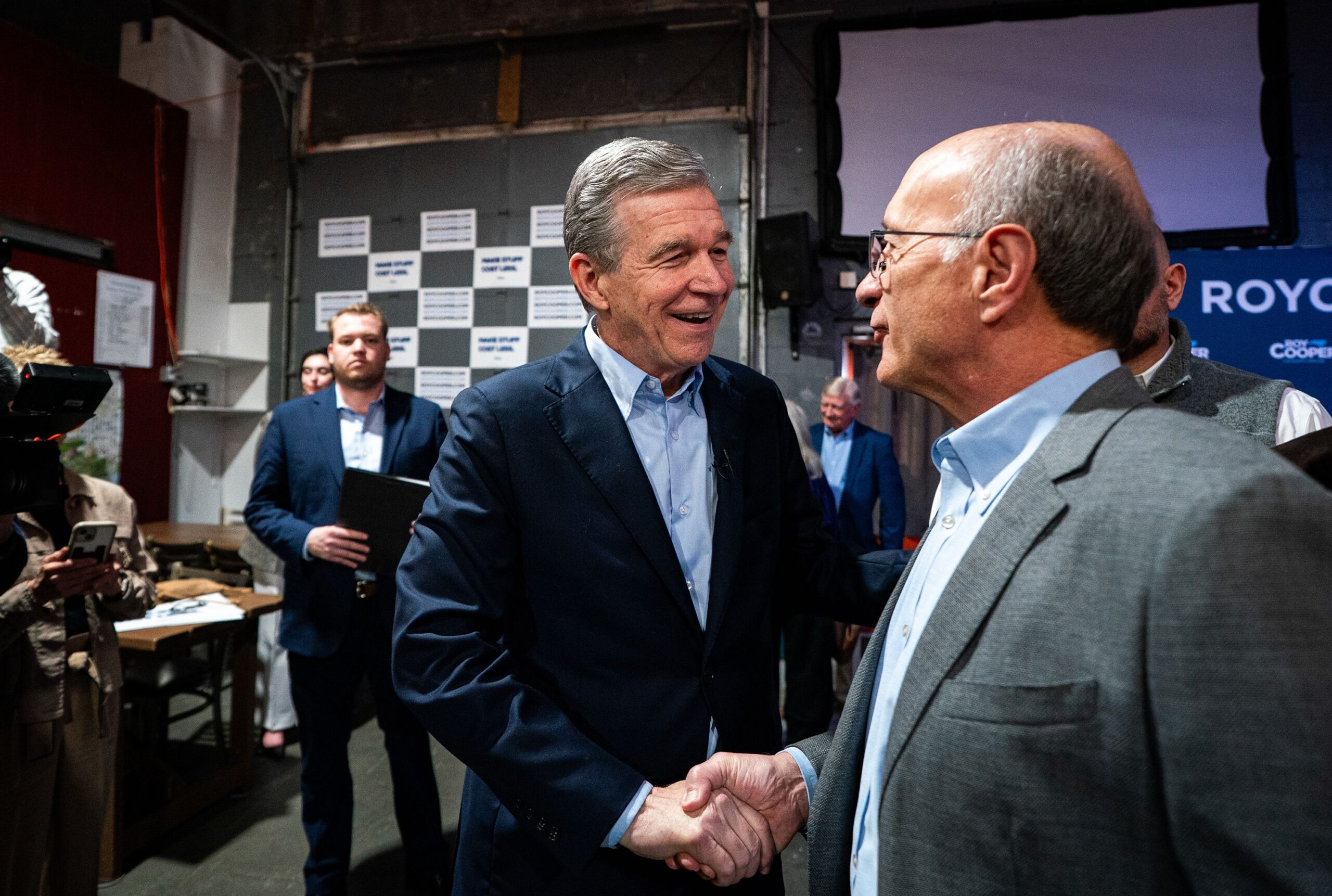
Both Rep. Mike Collins, who is trying to unseat Georgia Sen. Jon Ossoff, and Michael Whatley, who is running against former Gov. Roy Cooper to replace Tillis, are behind in polls and facing questions about their campaigns. A GOP loss in North Carolina – a state President Donald Trump won three times – would give Democrats one of the four flips they need to retake the Senate.
One GOP super PAC, Old North Action, trimmed its ad reservations in North Carolina by about a third last week, one of the clearest signs yet that the party may be losing confidence in the race. Whatley said this week he feels “very comfortable” he will have the money he needs.
“I don’t know what the path is for Michael. I mean, I’ll just say that. Unless Cooper just completely stumbles,” a North Carolina Republican strategist, speaking on the condition of anonymity to freely discuss the political environment, told CNN.
Collins’ campaign recently made clear to allies it needs more help in Georgia. In a memo posted on his website and dated Monday, the campaign argued that 1 in 10 voters are “still up for grabs” for Collins. The campaign said they are mostly voters who supported Trump in 2024 and are backing Rick Jackson for governor, who is in a closer race with Democrat Keisha Lance Bottoms.
“They should be voting for Mike Collins, and they are not yet, mainly because they do not have a firm opinion of him,” the memo says, suggesting stepped-up ad spending could change that.
But the party and its allies are having to spend big to shore up even redder seats, including an investment of well over $100 million in Texas.
“We are erecting a big wall around all of our candidates,” Senate Majority Leader John Thune said. “There are headwinds we are facing in all the races around the country.”
Party leaders are sending signals that they’re still committed to Georgia and North Carolina in particular. Thune headlined a fundraiser for Collins on Thursday night in Atlanta along with Georgia Gov. Brian Kemp. And Trump and Vice President JD Vance each visited North Carolina recently as part of their first stops for candidates following the GOP midterm convention.
A spokesman for the NRSC, Nick Puglia, criticized Ossoff and Cooper in a statement for this story and promised Republicans “will continue working to expose their far-left records to permanently retire them.”
NRSC Chairman Sen. Tim Scott pushed back Thursday against any suggestion the committee was deprioritizing Georgia and North Carolina. “Hogwash!” Scott wrote on X.
His denial came after a closed-door meeting with Senate Republicans where he discussed the Senate map. An NRSC spokesperson said Scott spoke positively about Collins and Whatley, saying they were chipping away at their polling deficits.
A crisis of confidence – and some blame for Trump
But confidence is waning in other corners of the GOP.
Texas Sen. John Cornyn, who hosted a fundraiser Monday for a group of Senate GOP candidates in other states, questioned the party’s decision to keep plowing money into races that may no longer be winnable.
“Here we are, what, 40 days out? And so I don’t think there is a lot that can be done,” Cornyn said. “I think it is going to be a matter of where the resources should be deployed.”
Cornyn’s fundraiser, which he headlined with former President George W. Bush, sent a clear message about his view of the map. The guest list included incumbents and nominees from Alaska, Ohio, Michigan, Iowa, New Hampshire and Minnesota. Collins and Whatley were not there. Notably, Cornyn also excluded GOP Senate nominee Ken Paxton, the Texas attorney general who defeated him in a primary this year after getting a late Trump endorsement.
He said he focused his fundraiser on the other states “because I think the money will go a lot further in those places.”
Cornyn said he did not think there was anything Whatley could do to turn around his campaign at this point.
“I think if Thom Tillis was on the ticket, things would look a lot different, but the president basically went after him, and now we’ve got somebody who is not as well-known and he’s struggling,” Cornyn said.
Whatley painted an optimistic picture of his campaign during a recent radio interview where he was asked about outside funding.
“We certainly do need the groups, you know, like the Republican Party, to come in and be supportive … because the Democratic Party is going to send hundreds of millions of dollars into North Carolina,” Whatley said on Thursday. “But I feel very comfortable we are going to have the resources that we need over the next 42 days to prosecute this campaign and win.”
Still, when speaking with CNN, several GOP operatives in North Carolina questioned Whatley’s campaign strategy in this current environment, noting ads and campaign events supporting the former North Carolina GOP and RNC chair have predominately focused on crime. Meanwhile Cooper, a two-term governor who has never lost a race, has centered his campaign around affordability and economic issues.
“I thought the crime stuff would be effective, that some of the bad stuff he did in office would come back to bite Cooper. It should be a really good message. But, for whatever reason, it’s not landing yet,” said the GOP strategist. “But they aren’t doing anything else. Even when the president came, he mostly harped on crime. It’s not resonating, we should be doing something else.”
Outside of Old North Action, Republican groups have mostly maintained their ad reservations for the final weeks of the races and the NRSC, the Senate GOP’s campaign arm, has already spent $7.9 million in coordinated spending in North Carolina and $3.6 million in Georgia through the end of August.
Republicans try to rally late
The optimistic case for Republicans is that North Carolina has a reputation for deciding late. Trump focused heavily on the state in the closing days of the 2024 election, raising speculation that he was concerned about it. He went on to win by 3 percentage points.
“These polls look really rough,” the North Carolina GOP strategist said of this year’s Senate race. “The good thing is, Republicans always outperform polls. But, never to this degree.”
Cooper’s campaign, meanwhile, has long urged Democrats against growing complacent in the state. They were especially outspoken after a Supreme Court ruling lifted limits on coordinated spending with political parties, giving the Republican National Committee – which Whatley previously led – more flexibility to spend in races.
“A Democrat has not won statewide federal office here in nearly two decades,” Cooper campaign manager Jeff Allen told CNN in a statement. “Whatley’s elite DC connections mean Republicans are going to spend whatever it takes to keep this seat.”
In Georgia, Collins is confronting a stronger-than-expected incumbent in Ossoff, who is already generating buzz as a potential 2028 presidential candidate. (Ossoff has said he has “zero interest.”)
Thune told CNN, shortly before his trip to Atlanta, that he still believes Collins can win.
“I think part of it is, it’s a big state, an expensive state and … we’ve got a House member running, who it just takes a lot of money to get known,” Thune said. “I think once you get the name ID up there, you can litigate the contrast.”
“It’s like every place else,” Thune added. “It’s a resource issue.”
Thune’s fundraiser for Collins, which also featured Georgia Gov. Brian Kemp, brought in over $400,000 for the candidate, according to a source familiar with the event.
Like Cooper, Ossoff is also wary of Democrats declaring victory too soon. He told CNN earlier this week that he is “taking nothing for granted.”
“We’re still seeing significant Republican super PAC activity,” Ossoff told CNN. “As for the national groups and whatnot, again, every day I run like I am behind.”
The-CNN-Wire
™ & © 2026 Cable News Network, Inc., a Warner Bros. Discovery Company. All rights reserved.
CNN’s Manu Raju contributed to this report.
