AI could force 11 million US workers into new careers by 2035
The job market has been in a “low-hire

By Alicia Wallace, CNN
(CNN) — Millions of Americans may need to find an entirely new career in the next decade, according to research released Tuesday.
An estimated 11 million workers, or about 6.5% of the current labor force, might have to jump into entirely different occupations by 2035 as a result of automation and artificial intelligence adoption, according to a report from consulting firm McKinsey & Co.
The McKinsey Global Institute report predicts that AI could create more jobs than it kills in the next nine years; however, the technological innovation “may require the largest and most sustained workforce transformation in US history.”
“While social media abounds with dire predictions about the impact of AI on labor, the United States is likely to have more jobs available in 2035 than today, but with fewer workers because the population is aging,” according to the report.
McKinsey researchers’ base estimate is that automation could reduce labor demand by 36 million jobs by 2035, while growth in AI-related fields and the broader economy could generate demand for 40 million jobs during that time.
About 25 million of those 36 million affected workers should be able to stay in their current occupations because growth in their industries should offset the impact of automation, McKinsey noted.
“The remaining 11 million may need to switch occupations entirely,” researchers wrote in the report. “The next decade’s challenge is mobility, not scarcity.”
AI impacts notwithstanding, the labor market already is undergoing a historic transformation as Baby Boomers retire, net immigration slows, and exogenous shocks ripple through the economy.
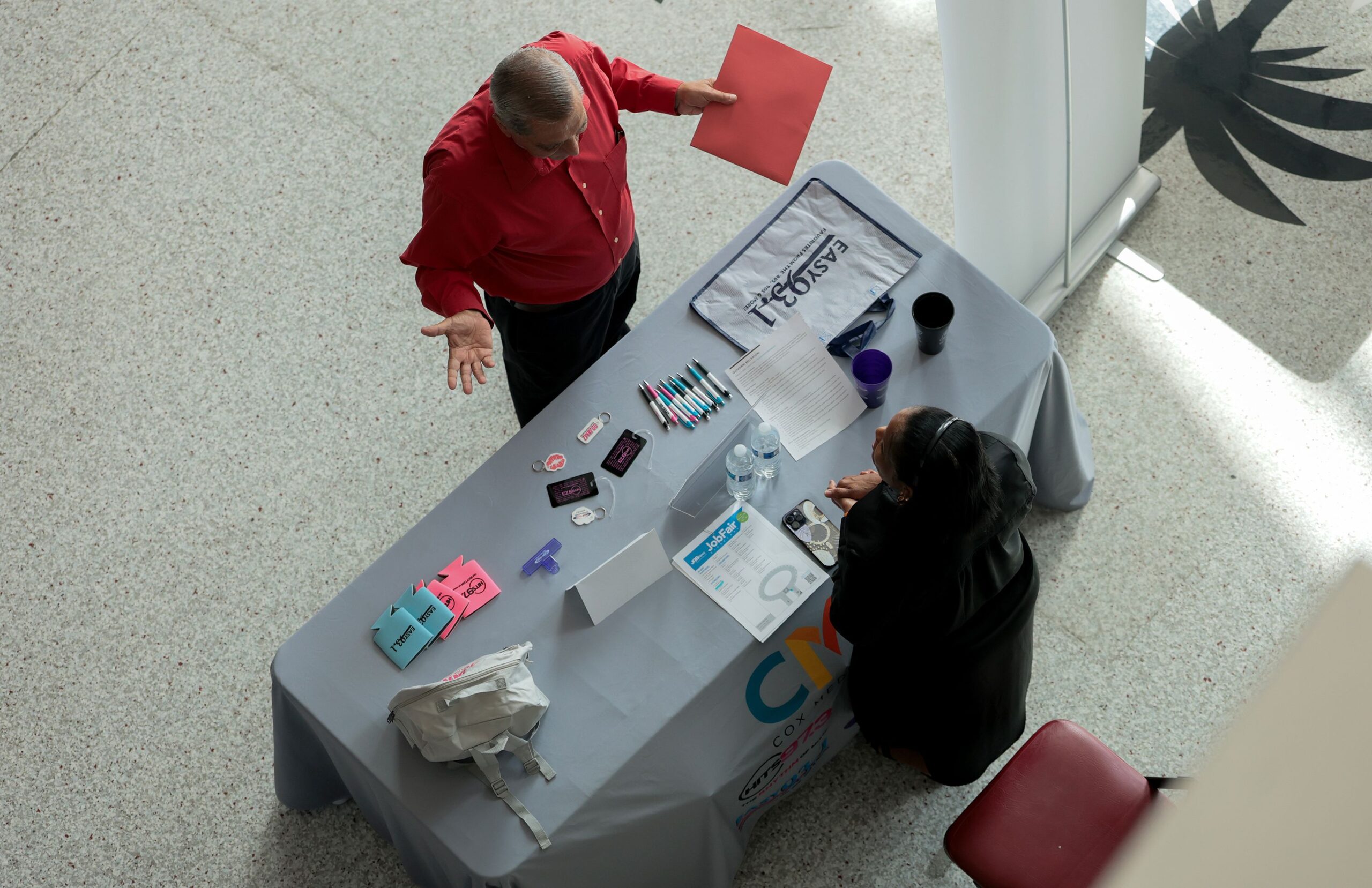
For two years running, the job market has been in a “low-hire, low-fire” state, a lethargic turnover environment with opportunities for the few but not the many.
Labor market remains sluggish
That lack of churn was underscored in a separate report released Tuesday by the Bureau of Labor Statistics.
Job openings, a closely watched measure of worker demand, fell to a five-month low at the end of August; the rate of voluntary quits (a gauge of worker confidence) remained near a six-year low; and layoffs shrank for the second month in a row.
Job growth last year was one of the weakest on record. Employment gains have picked up this year (at 80,000 per month versus sub-10,000 last year); however, they remain below historical averages, BLS data shows.
Sluggish hiring means that workers feel stuck, said Daniel Zhao, chief economist at Glassdoor, a job search and online career community site.
“And that means that frustration and anxiety continue to build without a healthy outlet for it,” he told CNN in an interview.
Americans’ confidence slips further
In September, Glassdoor’s Employee Confidence Index fell to a new record low – its third such nadir this year for the 10-year-old index – as workers grew increasingly worried about their job security, economic uncertainty and AI.
Overall consumer sentiment remains in the dumps. Separately on Tuesday, the latest consumer confidence index slumped to its lowest level in 12 years.
The Conference Board’s index, which measures Americans’ assessments of both current and future economic conditions, fell 6.7 points to 81.9 as higher gas prices and uncertainty surrounding the war in Iran and global trade relations weighed on their outlooks.
The Conference Board’s survey showed a much more dramatic decline in consumer sentiment compared to a similar one produced by the University of Michigan. That survey showed consumer sentiment declining by 7% points from August to September, landing at the second-lowest level on record.
The University of Michigan’s sentiment index focuses more heavily on personal household financial conditions and the impact of inflation, while the labor market conditions weigh more heavily into the consumer confidence index.
“Consumers were more downbeat about labor market conditions in September, as the low hiring rate weighed on perceptions of job availability,” Grace Zwemmer, US economist at Oxford Economics, wrote in a note Tuesday. “Despite this being a challenging environment for those currently unemployed, the labor market is roughly in balance, with a slow pace of labor force growth aligning with weaker payroll gains.”
The official September jobs report is set to be released Friday morning and economists expect that employment growth slowed from August. The consensus expectations are that the economy added 95,000 jobs this month, versus 162,000 in August, and that the unemployment rate remained steady at 4.1%, according to FactSet.
The-CNN-Wire
™ & © 2026 Cable News Network, Inc., a Warner Bros. Discovery Company. All rights reserved.
CNN’s Elisabeth Buchwald contributed to this report.
