Ukraine peace talks restart after 9 months. What makes them different this time?

By Billy Stockwell, Issy Ronald, CNN
(CNN) — A fresh round of peace talks between the US, Ukraine and Russia is underway in Abu Dhabi this week, as the Trump administration renews its drive to end the nearly five-year conflict even after it announced significant concessions to Moscow.
The negotiations lasted for more than four hours on Tuesday and were described by the US as very productive. Ukrainian President Volodymyr Zelensky thanked the US for organizing the talks and called them “constructive and quite substantive.”
They are expected to resume in the UAE capital on Wednesday morning local time.
Russia has made clear it wants the negotiations – the first of their kind since February – to be strictly trilateral, though national security advisers from several European nations, as well as officials from NATO and the European Union, are also in the UAE capital for separate meetings.
Many – particularly in Europe – have cast doubt on Moscow’s intentions. The EU’s foreign policy chief, Kaja Kallas, said Monday she saw little sign that Russia was willing to negotiate in good faith.
Who is leading the negotiations?
The US is represented by US President Donald Trump’s son-in-law Jared Kushner – who acts as one of the country’s top diplomats despite holding no official role within the Trump administration – and Middle East envoy Steve Witkoff, while Ukraine’s foreign intelligence chief and top negotiator Rustem Umerov is leading the Ukrainian delegation.
Russia has sent deputy foreign ministers Sergei Ryabkov and Mikhail Galuzin as delegates, according to Russian state news agency TASS, as well as Kremlin aide Vladimir Medinsky, military intelligence chief Igor Kostyukov and member of general staff Yuri Zhigarlovsky.
Representatives from the E4 group – the United Kingdom, France, Germany and Italy – as well as NATO and the European Commission are also in Abu Dhabi, and met with the Ukrainian and American delegations before Tuesday’s trilateral talks.
Russian Foreign Minister Sergey Lavrov criticized the presence of European officials, saying their involvement was not a “promising approach.”
“As for the Europeans’ involvement – well, they flew to Abu Dhabi. Let them sit in a hotel there,” Lavrov said Tuesday as the negotiations were underway.
What makes these talks different?
These talks come amid a renewed push by European nations for a more active role in negotiations over Ukraine’s future, and the security of the bloc at large, after Trump touted a new security deal for Ukraine that “might involve all of Europe.”
“Our objective is to assert a fundamental principle: the pursuit of peace in Ukraine and security in Europe are inextricably linked,” the Elysée Palace in Paris said Tuesday before the talks started.
Europe has long been wary of any US-brokered peace deal negotiated without its involvement, with Umerov saying Monday that Ukraine was “doing everything we can to ensure that Europe is a participant in the diplomatic process.”
Witkoff said he and Kushner met with Ukrainian and European partners on Tuesday to continue the “close coordination on efforts to end the war in Ukraine and establish the conditions for a durable peace, including support for robust security guarantees as part of any settlement.”
“The participants reaffirmed their shared commitment to a strong post-war European security architecture and arrangements, and were clear that a strong NATO will remain central to Euro-Atlantic collective defense,” Witkoff posted on X.
Zelensky later on Tuesday said that negotiators “spoke in detail about the substance of security guarantees for Ukraine and the foundations for ensuring these guarantees function over the long term.”
US Secretary of State Marco Rubio, who is in Paris for a G7 meeting, said Tuesday his administration’s goal is to expand the current talks so that Europeans are “represented at that table directly.”
He also downplayed differences between the US and Europe on the war, saying “our goals are the same.”
How likely is a breakthrough?
This will be the fourth round of trilateral talks. All have ended without significant breakthrough.
Earlier this year, Zelensky said that trilateral talks in Geneva, Switzerland, in February fell short of Ukraine’s goals.
The US later postponed a round of trilateral talks that were expected to take place in March due to the war in Iran.
Putin is still making maximalist demands previously rejected by Kyiv, including Russian control over Ukraine’s eastern Donbas region, a reduction in the size of Ukraine’s military and the abandonment of Kyiv’s ambitions to join NATO.
John Herbst, senior director of the Atlantic Council’s Eurasia Center and a former US ambassador to Ukraine, said any expectations for the Abu Dhabi talks should be “very modest.”
“They are only taking place because Putin wants to give Trump a reason to continue to distance himself from Ukraine,” Herbst wrote last week.
What is the situation on the ground in Ukraine?
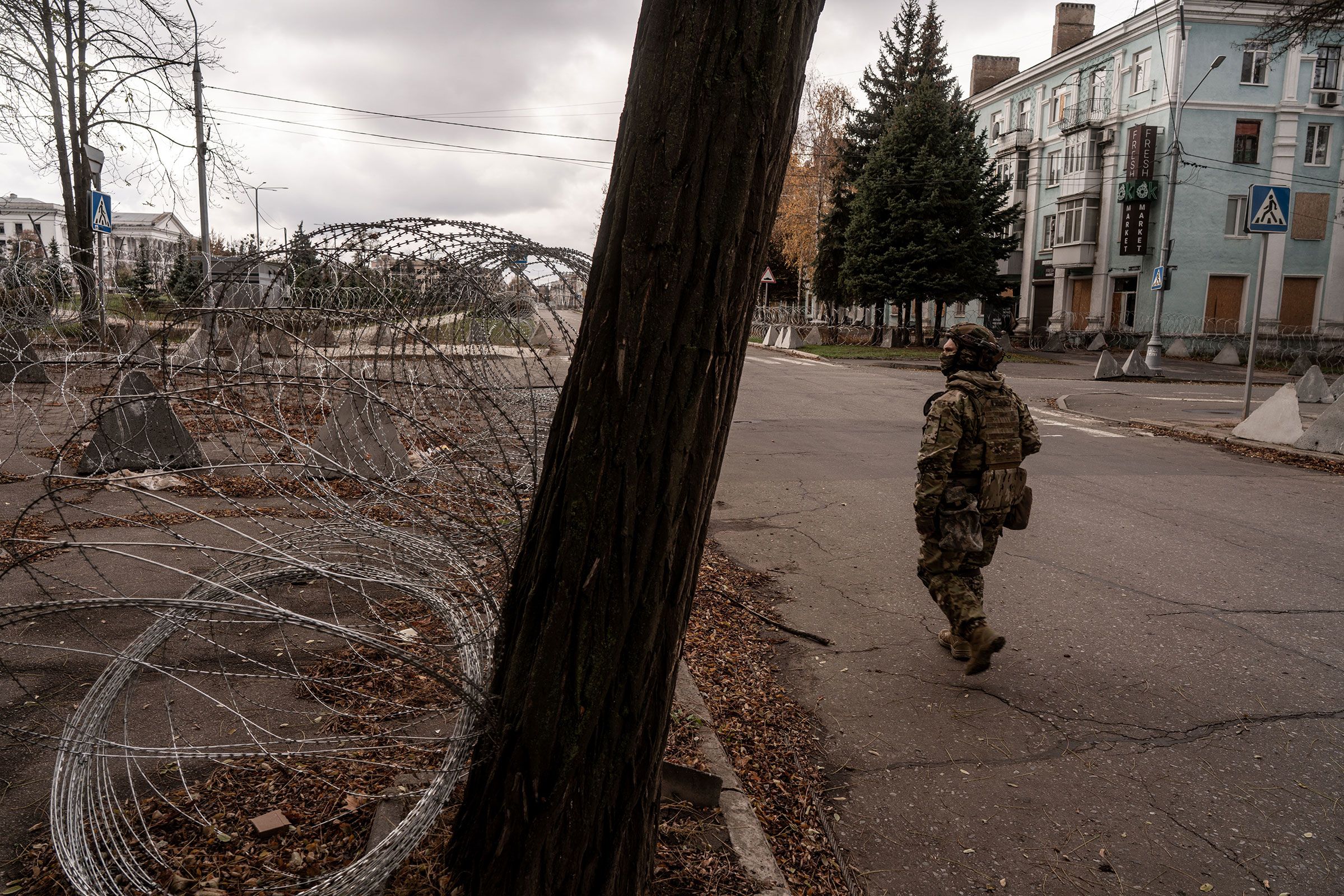
With Russia’s full-scale invasion of Ukraine now in its fifth year and gains on the battlefield remaining difficult to come by, Moscow has escalated its aerial attacks – with deadly results for Ukrainians.
At least 55 people were killed last Monday when Russia dropped several bombs on a school building used as a shelter and aid center in Zaporizhzhia, marking one of the deadliest single incidents of the war to date. Civilian deaths in Ukraine are at their highest point since the start of the war, with more than 2,700 killed in Russian strikes so far this year, according to ACLED, a global conflict monitor.
And continuing a pattern seen in previous years, Russian drones and missiles are already hitting Ukraine’s energy infrastructure, but harder and earlier than in other winters, analysts say. Russian attacks on the power grid left more than 600,000 people in the Dnipropetrovsk region without electricity overnight into Sunday, Zelensky said, as temperatures plummet and winter draws in.
Over the past few months, Russia has deployed faster, jet-powered Shahed drones, which are harder to shoot down. At the same time, more missiles are slipping through Ukraine’s air defenses as Kyiv grapples with a chronic shortage of US-made Patriot interceptors that are one of the few defensive weapons capable of shooting down ballistic missiles.
Where does the US stand on the war – and could the midterms change that?
Where the Biden administration positioned the US as Ukraine’s biggest single donor and most powerful ally, the Trump administration’s relationship with Kyiv has been decidedly more complicated. It halted financial aid to Ukraine at the beginning of 2025, while the intelligence and technology support it still provides has come under strain in recent weeks too.
Last month, Zelensky accused his Western allies of not providing intelligence warnings before multiple ballistic missile attacks, a claim that the Trump administration denied.
In October too, Ukraine’s ability to use Starshield, a military-grade version of Elon Musk’s Starlink service that is critical to its military operations, was hampered when speed limits were imposed on the satellite terminals. Trump denied approving that decision, while Musk said the Trump administration was behind the ban in a social media post.
Undergirding all this recent tension has been Trump’s sensitivity to rising gas prices, which skyrocketed due to the Iran war and contributed to the Republicans’ landslide defeat in last week’s midterms.
He has shown a willingness to strike business deals with Moscow, including one to supply markets with Russia’s diesel, in a sharp break from the sanctions aimed at punishing and isolating the Russian economy, and pressured Zelensky to accept a short-lived “energy ceasefire.”
So, as Democrats prepare to take control of Congress, Zelensky has publicly said he hopes the “blue wave” can bolster US support for Ukraine since the party “speaks very clearly about supporting Ukraine and providing assistance to Ukraine.”
It remains unclear whether the midterms will substantively change US policy toward Kyiv, however. In a “60 Minutes” interview that aired Sunday, Trump refused to say whether he trusted Zelensky or Putin more and suggested Ukraine may have to cede some of its territory.
“They’re gonna end up with a little bit different shape, Ukraine,” he said, outlining a scenario that Zelensky has repeatedly rejected.
The-CNN-Wire
™ & © 2026 Cable News Network, Inc., a Warner Bros. Discovery Company. All rights reserved.
CNN’s Kit Maher, Charlotte Reck, Ivana Kottasová, Tim Lister, Matthew Chance, Jennifer Hansler, Pierre Bairin, Victoria Butenko and Lauren Kent contributed reporting.
