‘Turn the cameras off:’ London’s growing privacy pushback against smart glasses
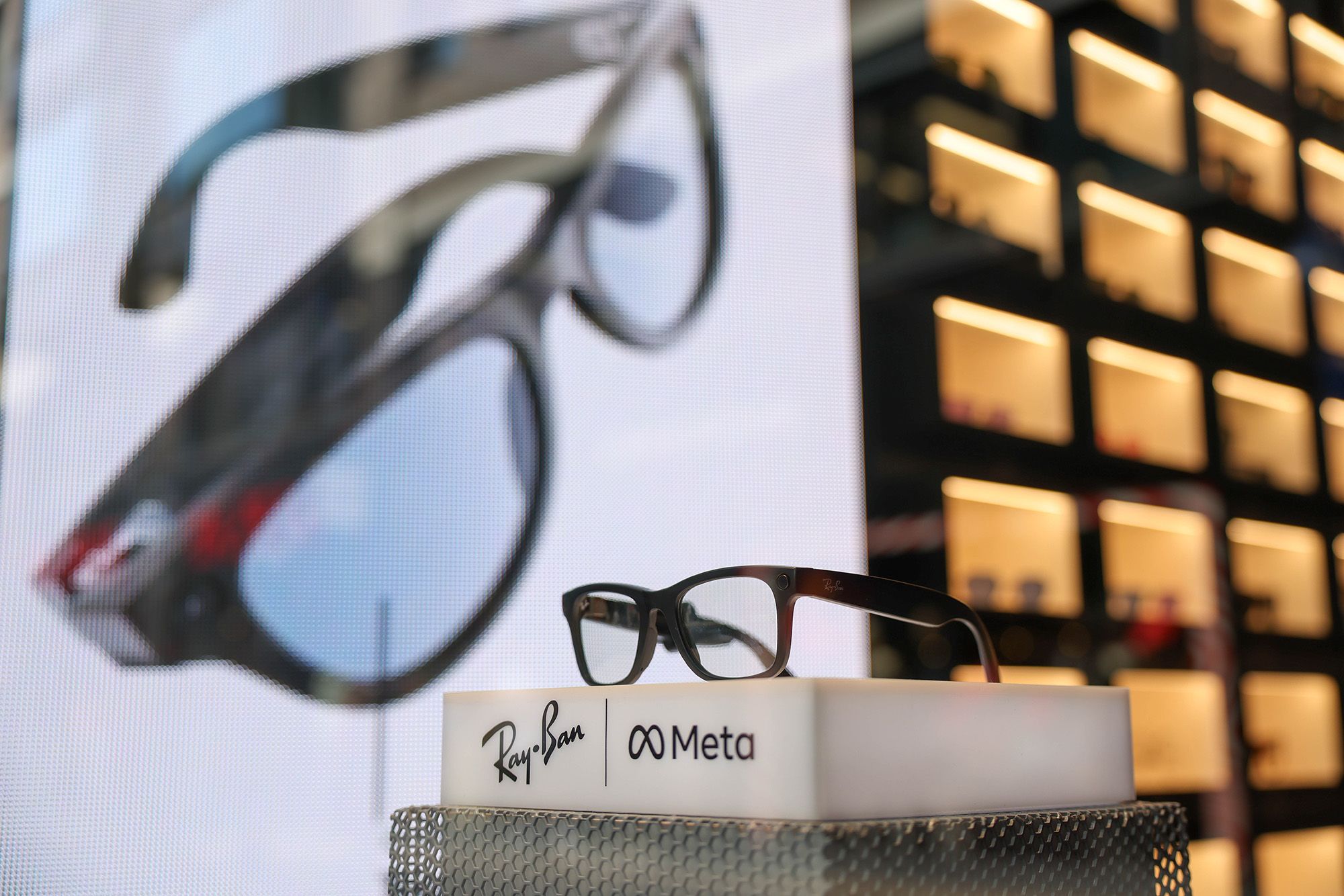
Ray-Ban Meta smart glasses on display in the window of a Ray Ban store in London in July 2024.

By Sophie Tanno, Lisa Eadicicco, CNN
London/New York (CNN) — The bars, theaters and restaurants dotting central London may not seem like a conflict zone. But many venue owners are facing a difficult fight over a new and, some say, potentially dangerous device: smart glasses.
The glasses — which can capture video, photos and audio from the wearer’s perspective — are growing in popularity. Eyewear giant EssilorLuxottica, which Meta partners with for its glasses, said 7 million pairs of AI glasses were sold in 2025. Meta is holding its Connect conference this week, where it’s expected to announce new smart glasses without cameras, according to The Information. Samsung and Google are expected to debut new jointly developed smart glasses this fall.
But as the technology becomes more widespread, so too has the backlash. Videos posted on social media showing men who appear to film women without their knowledge have raised questions about consent — and whether existing privacy laws can keep pace with technology that allows people to record almost invisibly.
“It makes it harder and harder to protect yourself by just looking around and screening for things,” Irina Raicu, director of the internet ethics program at Santa Clara University’s Markkula Center for Applied Ethics, previously told CNN. “So, the whole notion of consent is kind of disintegrating.”
London, along with New York and Australia, is emerging as a bellwether for how people and businesses are responding to the growing tech. Some hospitality and entertainment venues have introduced restrictions or bans, and anti-smart glasses advertisements have begun appearing at some bus stations throughout London. One skewers Kylie Jenner’s ad campaign for Meta glasses, transforming her into a skeletal X-Ray with the tagline: “We’re Always Watching.”
The sentiment echoes a broader ban across the United Kingdom from August that prohibits smart glasses in the courtroom.
Some Londoners told CNN that smart glasses make them feel uneasy in places where people expect a degree of privacy, like bars, restaurants and other social settings.
‘Turn the cameras off’
Popular pub chain Wetherspoons has prohibited customers from recording using the glasses. “I don’t really want to be filmed when I’m just out having a couple of pints,” Zak, a student at a Wetherspoons pub in central London, told CNN. He said he had seen videos on TikTok in which people appeared unaware they were being filmed, adding that covering the glasses’ recording light was “ridiculous.”
Serena, another Wetherspoons customer, said she was particularly concerned about the possibility of being filmed without knowing where the footage might end up.
A Wetherspoons spokesperson told CNN, “With regard to Meta glasses, our instinct was to say, ‘turn the cameras off.’”
Meta says the camera on its glasses won’t record if the recording light has been covered. In August, the company said it updated its glasses to prevent users from covering the light after they started recording, coming after it previously enabled the glasses to detect whether the light had been tampered with. Meta also said it has cracked down on videos shared on social media that show wearers using their AI glasses to harass people around them.
“Naturally some places shouldn’t be filmed at all and that’s reasonable, but rules should be applied consistently,” a Meta spokesperson said in a statement to CNN. “Our glasses have a light that turns on to let people know when a photo or video is taken, something smartphones and other cameras don’t have.”
Google has been down this road before. It tried popularizing smart glasses more than a decade ago with its now discontinued Google Glass eyewear, which sparked similar privacy concerns.
Sameer Samat, Google’s president of the Android ecosystem, said the company isn’t surprised by the recent pushback. Details like how the glasses indicate when they’re recording and whether users can work around those safeguards “really, really matter,” he told CNN in August, adding that Google is taking those concerns into account when developing its glasses. Like Meta’s glasses, Samsung’s upcoming glasses powered by Google’s software will have a privacy light that’s tamper-resistant.
Samsung and Google declined to comment when reached by CNN.
Solving the privacy problem won’t be easy, according to Calli Shroeder, director of the AI and Human Rights program at the Electronic and Privacy Information Center (EPIC). Many potential solutions — like features that would blur peoples’ faces automatically when recording or require their legal consent before uploading videos — would be challenging to implement and still wouldn’t fully address the risks.
One possible remedy would be to make it so that glasses detect their location and automatically disable recording in sensitive areas like playgrounds and locker rooms. But that would entail making sure the glasses could sense their surroundings autonomously, which could also raise privacy issues.
Not just privacy
At London’s Piccadilly Theatre, workers and attendees said smart glasses could undermine the experience of live performance and negatively impact actors’ livelihoods.
A lot of the appeal of going to theaters is that the performance remains a mystery right up until showtime, a benefit that stealthy filming could threaten, said Bradley, a waiter and theatre director.
“It’s not a huge wide scale media like TV and film, it’s a much more enclosed environment, which you’re more intrigued to go to without those spoilers or without that pre-formed opinion of it,” he said.
A spokesperson for ATG Entertainment, which operates several of London’s iconic West End theatres including Picadilly Theatre, told CNN that audience members will be asked to remove the eyewear and delete any footage if caught with them.
Many movie theaters in the UK are also banning the use of smart glasses due to piracy concerns, the UK Cinema Association (UKCA) said late last month.
Race for the next big thing
The growing unease comes as technology companies continue to invest heavily in wearable devices, betting that glasses capable of capturing and processing the world around their users could become the next major consumer technology platform.
The glasses allow users to listen to music, take calls and snap photos hands-free, and some tech companies believe they could one day be the preferred way to communicate with AI assistants.
A Meta spokesperson told CNN their glasses allow people to “stay in the moment, from listening to music to live translation or hands-free calls.” The glasses provide “critical new technology” to visually impaired consumers, the spokesperson said, adding that limiting how people can use this would be a “major step backwards.”
Advocacy groups, including the UK’s Royal National Institute of Blind People (RNIB) have warned that overregulation of smart eyewear could strip those who are blind or visually impaired of a key accessibility tool. The new tech can help with daily tasks like browsing restaurant menus, reading street signs, or describing scenery, according to RNIB.
Shipments of smart glasses grew by 212% year-over-year in the first half of 2026, according to market research firm Counterpoint Research. Meta leads the industry with about 84% of the market.
“I think there’s a huge fear of being like left behind in the race of these new technologies,” said Shroeder, the human rights director at EPIC. “I think also it’s very easy for these tech companies to fall into a bubble.”
The-CNN-Wire
™ & © 2026 Cable News Network, Inc., a Warner Bros. Discovery Company. All rights reserved.
