Outbreak of diarrhea caused by parasite jumps to 3,000 cases. Here’s why it’s so hard to identify the source

Originally Published: 13 JUL 26 11:28 ET
Updated: 13 JUL 26 14:11 ET
By Brenda Goodman, CNN
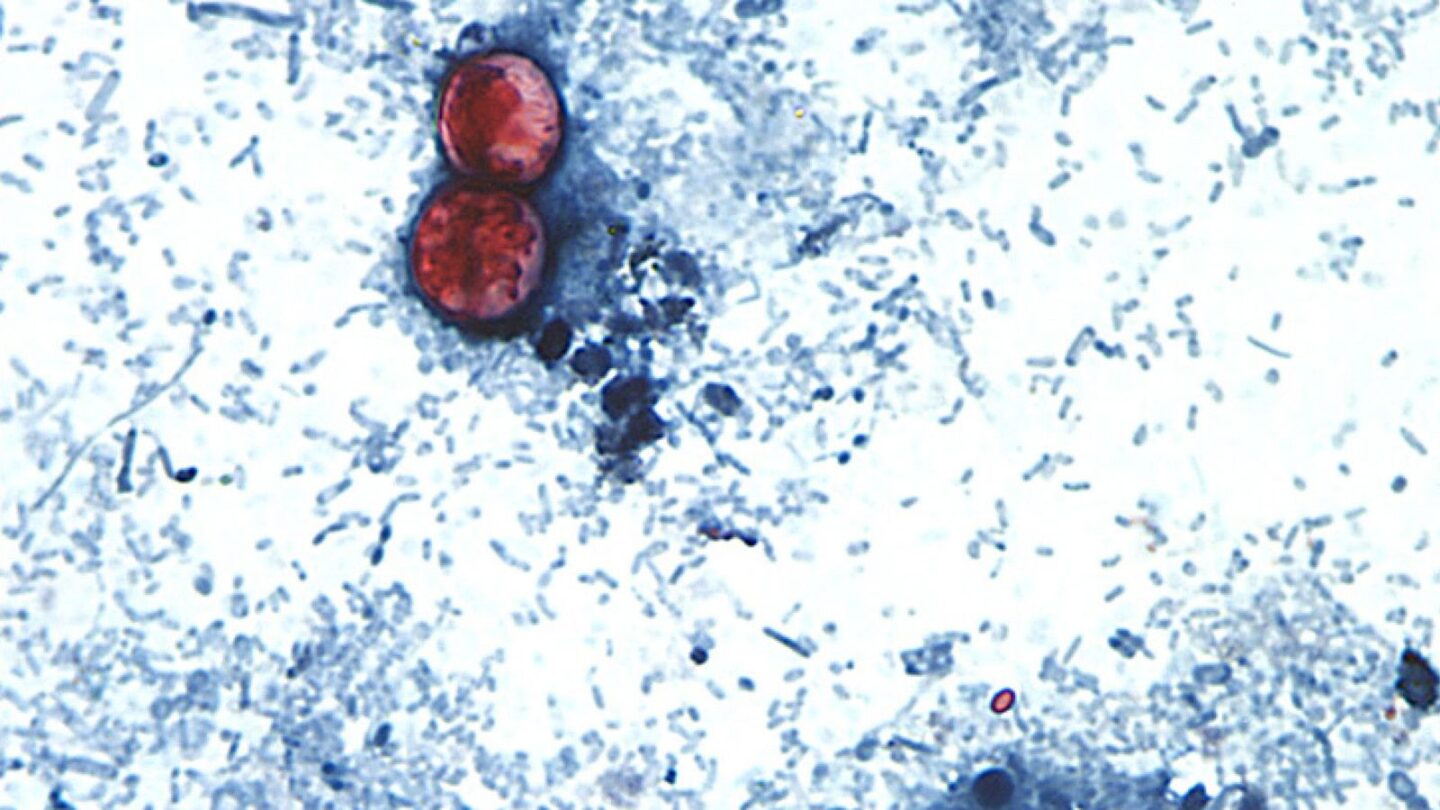
(CNN) — An outbreak of diarrhea caused by the parasite cyclospora has risen to more than 3,000 cases in Michigan and Ohio, and state health officials say they’re not close to identifying the source.
Michigan reported 2,640 cases as of 9:30 a.m. Monday, including 44 hospitalizations. Ohio has reported 361cases since June 1. At least 46 peoplehave been hospitalized.
As of July 10, 31 states have reported cases to the US Centers for Disease Control and Prevention, although it’s not clear whether they’re all part of the same outbreak. The CDC says “multiple states” have reported an increase in cases in the last two weeks compared with the same period in 2025. The agency said Friday that its national count — 843 confirmed cases since May 1 — is lower than states’ counts while cases undergo further analysis.
It’s not clear what is causing the surge in cases, and it’s difficult for investigators to pin it down. Cyclosporiasis cases are slow to be counted; genomic testing for cases is complicated; and some public health systems that track foodborne illness have recently faced sharp cuts.
Less robust illness tracking
In 2025, in the wake of staff and funding cuts to public health agencies, the CDC scaled back one of its surveillance systems for foodborne illness. The FoodNet system is a partnership between the CDC, US Department of Agriculture, US Food and Drug Administration and 10 state health departments which proactively looks for cases of foodborne illness by contacting labs directly for test results rather than waiting for them to be reported.
Before July 1, 2025, FoodNet collected data on eight pathogens, including cyclospora. The network now only collects information on two pathogens, salmonella and an especially dangerous kind of E. coli bacteria. The rest are optional.
Cyclosporiasis remains a nationally notifiable disease, which means confirmed cases are reported to state health departments and eventually the CDC.
But the cuts mean US surveillance isn’t as robust as it once was for this pathogen.
“I don’t think it’s in our country’s interest to cut these programs back,” former CDC Director Dr. Robert Redfield told CNN on Monday. “Surveillance is sort of the key to early identification.”
The US Department of Health and Human services says cyclosporiasis cases are expected to rise over the summer months, and they are working with federal and state partners to monitor case counts and cluster activity.
“FDA and CDC are actively engaged with state partners to identify the source of the growing number of illnesses,” Emily Hilliard, a US Department of Health and Human Services spokesperson, said in an emailed statement.
Difficult to trace back
Cyclospora is a trickier pathogen to track than others, too.
With some foodborne pathogens, like E. coli and salmonella bacteria, scientists can sequence, or read, their DNA to match a strain that’s making people sick with a strain that’s contaminating food or water. This gene matching is how scientists often spot outbreaks of foodborne illness in the first place.
A national network of surveillance labs called PulseNet constantly sequences the genes of bacteria that make people sick so they can compare the DNA fingerprints of cases in near-real time. When the fingerprints match across multiple cases in different states, scientists know to look for a common source.
But gene matching only works because the genetics of a particular strain of E. coli or salmonella change very little as they transmit from food to us or from person to person. The letters of their instructions read the same way each time, so they can be tracked pretty easily.
It doesn’t work quite the same way for cyclospora, said Jennifer McEntire, a microbiologist who is founder and CEO of Food Safety Strategies, which advises clients on dealing with cyclospora.
“For the bacterial pathogens, the technology is quite mature, and the organisms are really very, very simple. It’s like reading a children’s book versus reading “War and Peace” — cyclospora being the “War and Peace.” McEntire said.
“They’re all letters of the alphabet, but they are not the same thing,” she said.
Cases may be undercounted
Cyclosporiasis doesn’t typically pass directly from person to person. Rather, people become ill by eating or drinking something that’s been contaminated several weeks prior, usually fresh produce or water from a swimming pool.
People with cyclosporiasis may experience symptoms, including watery diarrhea, cramping and bloating, for weeks. Dehydration can land people in the hospital. Treatment is seven to 10 days of the combination antibiotic sulfamethoxazole-trimethoprim, which is sold as Bactrim or Septra.
Illnesses from the parasite are assumed to be an undercount since many people who get cyclosporiasis, which causes unrelenting diarrhea, cramping and bloating, may be embarrassed to see a doctor or may try to wait out their symptoms at home.
Getting an accurate diagnosis can also be challenging since cyclospora sheds intermittently in stool. People may need more than one test toidentify it. The test is also not included on all standard lab workups for stomach bugs, and may require a special order from the doctor who suspects it.
So by the time a person does become counted as a “confirmed case” and their case is reported to public health authorities for follow up, it has been several weeks since the exposure that made them sick.
That’s part of the reason state and federal investigators say they haven’t yet been able to determine the source or sources causing this year’s cyclosporiasis cases.
Early signals, but no source identified
Spokepeople for both the Michigan Department of Health and Human Services and the and Michigan Department of Agriculture and Rural Development, the agencies that are leading the investigation into the outbreak there, say that while they are working diligently, they are not close to identifying the source of the contamination.
Some restaurants have reportedly pulled certain fresh ingredients off their menu while the investigation continues. Those measures are voluntary said Dr. Natasha Bagdasarian, Michigan’s chief medical executive.
“There have been proactive measures that were taken to ensure that exposure did not occur,” Bagdasarian said.
There is no nationwide recall of any food suspected of being related to this outbreak, Bagdasarian added.
“We have seen some signals. We are looking for signals, and we are seeing some early signals,” Bagdasarian said on Friday.
When it became clear they were in the midst of an outbreak, Bagdasarian said her team scrambled to issue guidance over the July 4 holiday weekend to food handlers — at home and in restaurants — about general practices for preventing illness from this parasite.
To reduce risk of infection, people should thoroughly wash produce and cook fruits and vegetables, and can consider avoiding recreation water, like public swimming pools.
Identifying the source of the outbreak is going to take longer, she said, because they are working to interview each person who has a confirmed case — now more than 2,600 of them in Michigan.
People who agree to be interviewed will be asked to remember what they ate weeks earlier, which is difficult and unreliable. So in addition to interviews, they also look at people’s digital and paper trail, including restaurant and grocery receipts.
“It actually requires us looking at every item they’ve ordered in a restaurant, what was in those menu items, and it requires pulling their shopper cards,” Bagdasarian said.
“You can just imagine the sheer amount of effort and work that goes into this.”
Correction: A previous version of this story misstated the number of cyclosporiasis cases reported in Ohio since June 1.
The-CNN-Wire
™ & © 2026 Cable News Network, Inc., a Warner Bros. Discovery Company. All rights reserved.
