Looking a school shooter in the eyes: How teenage victims confronted Colt Gray in court
Colt Gray was shackled at the ankles throughout his sentencing hearing.

By Andy Rose, CNN
Winder, Georgia (CNN) — Dark clouds hung over the Barrow County Judicial Courthouse, both outside and inside, as more than 100 people sloshed through a soggy parking lot to hear Colt Gray take responsibility for the lives he had taken, along with the ones that he forever changed.
Victims of the 2024 shooting at Georgia’s Apalachee High School and their family members were there last week to make sure Gray’s voice wasn’t the only one heard.
The teenager’s decision to plead guilty promised an end to a painful chapter for the community of Winder after four people – two adults and two students – were murdered and seven others injured by gunfire from the AR-style rifle purchased for Gray by his father.
Loved ones of Christian Angulo and Mason Schermerhorn – the 14-year-olds killed – wore shirts with their smiling faces, anxious to make sure no one would forget what was lost on September 4, 2024. The hashtag message “#lovelikemason” was on the back of the shirt worn by Breanna Schermerhorn, Mason’s mother.
Thunder from the outside could be heard in the dimly lit top-floor courtroom Friday as Gray – the long, bleached hair of his mug shot now dark and short, with a wispy mustache, one of the few reminders of his previous appearance – was led into the courtroom, the chains from his leg restraints jangling.
He repeatedly leaned into a microphone with a blank expression and said, “Yes, your honor,” to accept a guilty plea on 55 charges, including four counts of murder. A dozen sheriff’s deputies lined the walls of the courtroom, with a bailiff in a dark blazer monitoring from the front.
On the gallery’s hard, wooden benches resembling church pews, 115 people sat quietly to hear whether there would be a tinge of regret in his voice or a troubled look on Gray’s face as he admitted to his crimes. That day, there was none.
As Gray emotionlessly acknowledged his crimes, the hallway outside the courtroom showed how not just lives were taken that day, but innocence. A line of teenage girls – some who had been shot, all of whom witnessed the shooting – were prepared to share their stories and ask that Gray would never again see freedom.
By Tuesday, they would get to see the impact of their words, as Judge Nicholas Primm sentenced Gray to life in prison without the possibility of parole, just two days before his father, Colin Gray – who bought the rifle for his son – is set to learn his sentence for murder and manslaughter. But on this first day of the three-day hearing, all they knew was they would be standing feet from the classmate who changed their lives, speaking directly to him for the first time.
The teens, comforted by family members and court advocates – and protected by law enforcement and a leather-clad biker group called Mystic Saints formed days after the shooting to support the school – were called one at a time to tell their story, baring emotion that had been building for nearly two years.
Taylor Jones
Walking into court under her own power was its own victory for Taylor Jones, who was a ninth grader when Gray shot into her algebra class and shattered her femur. After the shooting, she was told she might never walk again. Surgeries along with months of therapy helped her beat the odds, but that didn’t end the trauma.
The physical scars were hidden in court by her floor-length pink dress and denim vest, her skirt so long she seemed in danger of tripping over it. Her left foot nervously dug into the carpeted floor. The emotional scars could be heard in her voice.
Taylor looked at the assistant district attorney guiding the victims’ testimony, getting gentle reassurance. She hoped occupying the spotlight she never asked for would make an impression on the shooter.
“I hope my story makes Colt realize the horrible things that he has done and all the pain and suffering he has caused.”
Natalie Griffith
Natalie Griffith’s words spilled out with such rapid nervous energy, the judge had to ask her to slow down, drawing chuckles from the crowd that cut the tension that had been building all day. Leaning against the lectern and taking a breath, Natalie said her school was supposed to be her sanctuary.
“I never thought something like that would happen here. Those things happen in places where the sun doesn’t shine as bright,” said Natalie, who, like Taylor and others, had been shot in their math class.
Intense medical attention has helped her slowly regain much of the use of her left arm, torn open by Gray’s gun, after a year of needing other people to cut her food for her.
Frustrated. Angry. Sad. Natalie described the range of her feelings over the past nearly two years. She looked directly at Gray as she said his actions were all for nothing.
Natalie stepped back from the microphone but stayed in the courtroom that day and returned for the next two days, watching testimony. Twisting open the cap of her bottle of Sprite is a struggle, and she spends much of her time crocheting, a hobby that helps her build strength in her reconstructed wrist.
Nautica Walton
A cell phone clutched in her right hand, her shirt cuff pulled partially over her left, Nautica Walton told the judge her dreams are simple.
“About once a week, I find myself thinking about what would it feel like to be normal again.”
To this day, Nautica – who was a freshman when she was shot in the leg in math class – feels uncomfortable sitting with her back to a door, she said. She wants to know she always has an escape route, just in case. Now, she is afraid of the dark. Afraid, she said, “of everything.”
Hayden Bowen
A victim’s advocate never left the side of Hayden Bowen as she approached the microphone, keeping a hand on her right shoulder next to her dark, wavy hair. As she struggled to begin, clearly uncomfortable with the spotlight cast on her by the bowl-shaped chandelier hanging in the center of the court, the prosecutor added reassurance.
Although Hayden’s voice was quiet and shaky, full of sighs, her message directly to Gray was powerful.
Hayden, who witnessed the shooting but was not injured, reminded the judge that even the courthouse – a place to seek justice – is a place where she can never feel comfortable.
“I now live with fear lurking behind me everywhere I go. Everywhere. I have frequent panic attacks. I can’t stay in places for too long. I can’t go out anywhere. I can’t even stay in my own bedroom without feeling fear. I’m not able to be a normal teenager anymore.”
Aryanna Norman
The summer break is the best time of the year for many high school students, and the July Fourth holiday is usually a day for a picnic or relaxing time on the water. For Aryanna Norman, after watching students shot in her own school, it only brings more anxiety.
“I don’t hear fireworks the same again because to me, they sound like gunshots, and when it’s far away, it can be hard to tell the difference, which always gives me anxiety. Now I feel the need to identify an escape route everywhere I go because I get scared I’m going to be trapped like I was on September 4th.”
Her dark, curly hair lies freely on a blue short-sleeved shirt with black stripes. Although she speaks with a stronger voice than the students who have gone before her, Aryanna’s nerves are betrayed by a stress ball she holds onto in her left hand. At times, she squeezed so hard, it bulged from underneath her clinched fist.
The heartfelt testimony from children – along with the adult survivors who preceded them – induced silent tears across the courtroom, with families exhausting boxes of tissues that had been spread throughout the gallery. The tissue box sitting in front of Gray remained untouched.
During the recess after their emotionally draining testimony, the nerves faded away. The girls who had bared their pain to a judge and the world suddenly seemed like students again, escaping from their nightmare back into the real world, tapping text messages on their cellphones and speaking casually about their plans for the weekend.
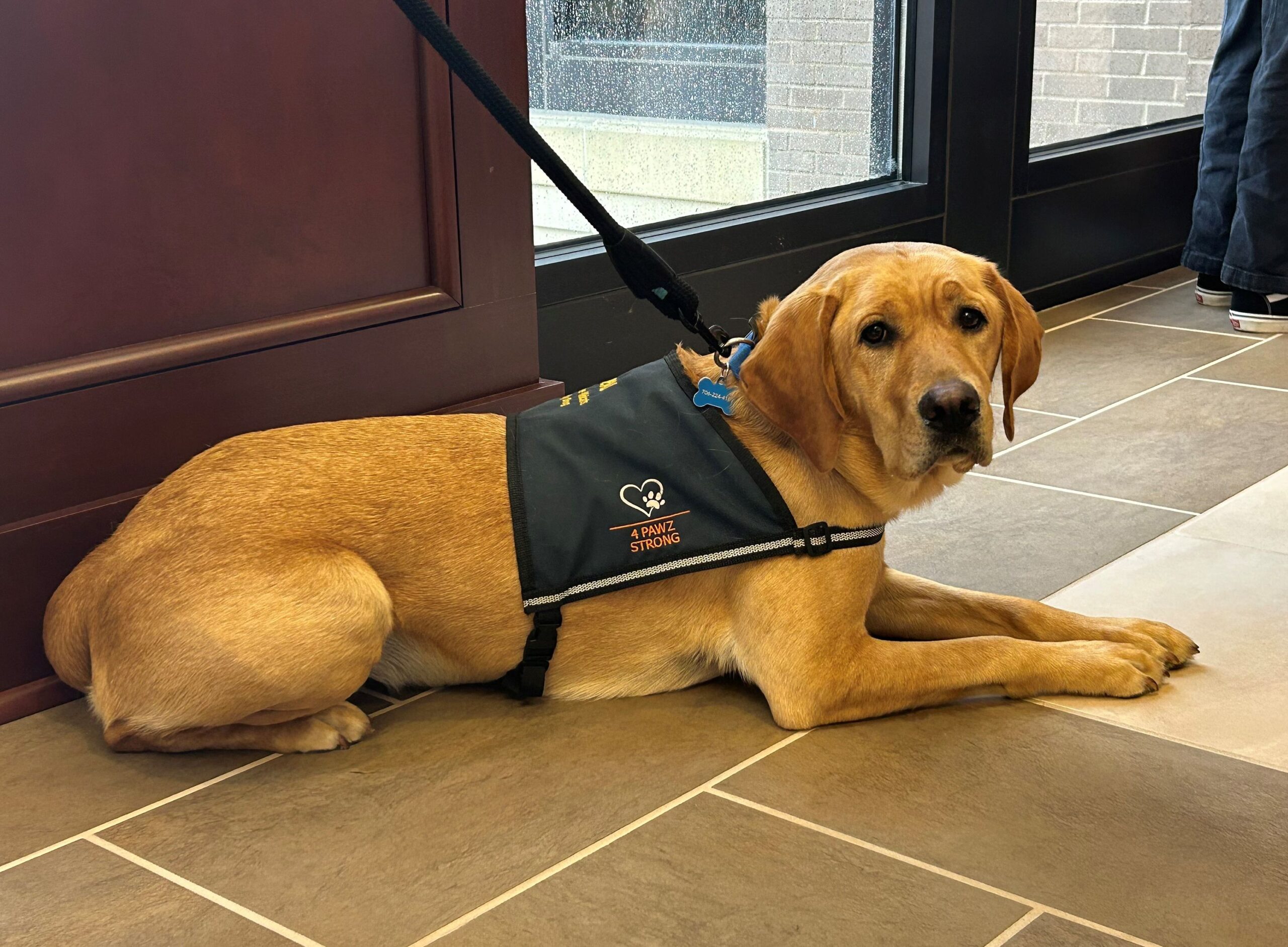
Natalie excitedly introduced her mother to Beau, one of the two Apalachee High therapy dogs that were quietly waiting in the hallway. A goldendoodle named Frankie weaved around the legs of people standing around in conversation, accepting pets from anyone who needed the calm.
But some of the most painful reminders of the day that changed their lives came later that afternoon, as prosecutors played more than two hours of recordings of Gray speaking to police shortly after the shooting.
Family members of the victims shifted uncomfortably in their seats as Gray’s choking sobs and wails of apparent regret played over the loudspeakers, with Gray himself sitting impassively at the defense table.
But as the recording played on, the initial wave of Gray’s emotion began to dissipate into indifferent ripples. By the time he was being interrogated at the police station, Gray was calm. Prosecutors would later assert the emotion was an act, a ruse filled with Easter eggs tying him to other mass shooters.
The families were visibly weary of Gray’s meandering, inconsistent statements. Some had heads down, eyes closed. Mason Schermerhorn’s parents had their cellphones out, casually scrolling even as Gray said in the recording that he felt sorry for the victims’ parents. Although the phone use technically broke the court’s rules of decorum, the sheriff’s deputies who lined the walls, many yawning themselves, looked the other way.
The families touched by the unspeakable violence have become close, leaning on each other, sometimes literally. Breanna Schermerhorn was quick to give hugs, sometimes darting across the room to greet a family member or law enforcement officer she knows. Natalie sat next to her in court after speaking to the judge and crocheted, slowly hooking loops of yarn with the hand that is still recovering from the school shooting.
Natalie handed Schermerhorn her most recent work, a floppy gold star. Schermerhorn smiled and held tightly to the star, a physical token of the bond they now share in tragedy, with both hands.
By the final day, with Judge Primm’s decision approaching, tensions rose in the gallery. As Colt Gray’s grandmother, Debbie Polhamus, said she hoped he could “have a chance to prove himself,” Natalie flashed fury.
“Never, never,” Natalie mouthed quietly.
As the judge called a recess to make his decision, and the courtroom audience emptied into the hallway with its huge arched window framing the flags of the United States and Georgia, a shriek rang out. An unidentified family member began emotionally shouting, incoherently venting her grief as a loved one grabbed her in a bear hug and escorted her away.
The central hall that had served as a middle ground, shared each day by victims, reporters and the defense team sitting side by side, became unbearably tense.
Supporters cordoned the victims’ families, some of whom retreated into a room set aside for them that had been little used until now. The sheriff quietly led Gray’s legal team into a conference room around the corner, away from the view of the families.
The therapy dogs were gone. Instead, a police dog trained in finding hidden electronic devices roamed the building.
When Primm finally delivered the sentence, with Gray surrounded by law enforcement officers, it was clear the young victims had affected the judge.
“The slain will not return to life, the injured will not forget their wounds, and a 16-year-old boy will live and die in prison,” he said.
Families in the packed courtroom gasped as the words “without parole” finally came out of the judge’s mouth, and Mason Schermerhorn’s relatives quietly sobbed.
“Thank God,” said Schermerhorn’s grandmother, pulling away the assistive listening headset she had been wearing to hear Primm’s words.
After court was adjourned, Breanna Schermerhorn stopped to thank and embrace every deputy, advocate and fellow Apalachee family she encountered – a community forged in grief.
But as they poured out of the courtroom Tuesday, there were few smiles. Everyone who had agreed to bare their emotions to strangers to ensure a shooter will remain in prison faced another reality: Justice is served, but it can’t undo that day in September.
“This is not a happy day. This is a relief day,” District Attorney Brad Smith said. “The depths of their loss, I cannot comprehend.”
Correction: An earlier version of this story gave the wrong surname for Nautica Walton.
The-CNN-Wire
™ & © 2026 Cable News Network, Inc., a Warner Bros. Discovery Company. All rights reserved.
CNN’s Isabel Rosales contributed to this report.
