Remembering Dolly and Gloria, childfree icons
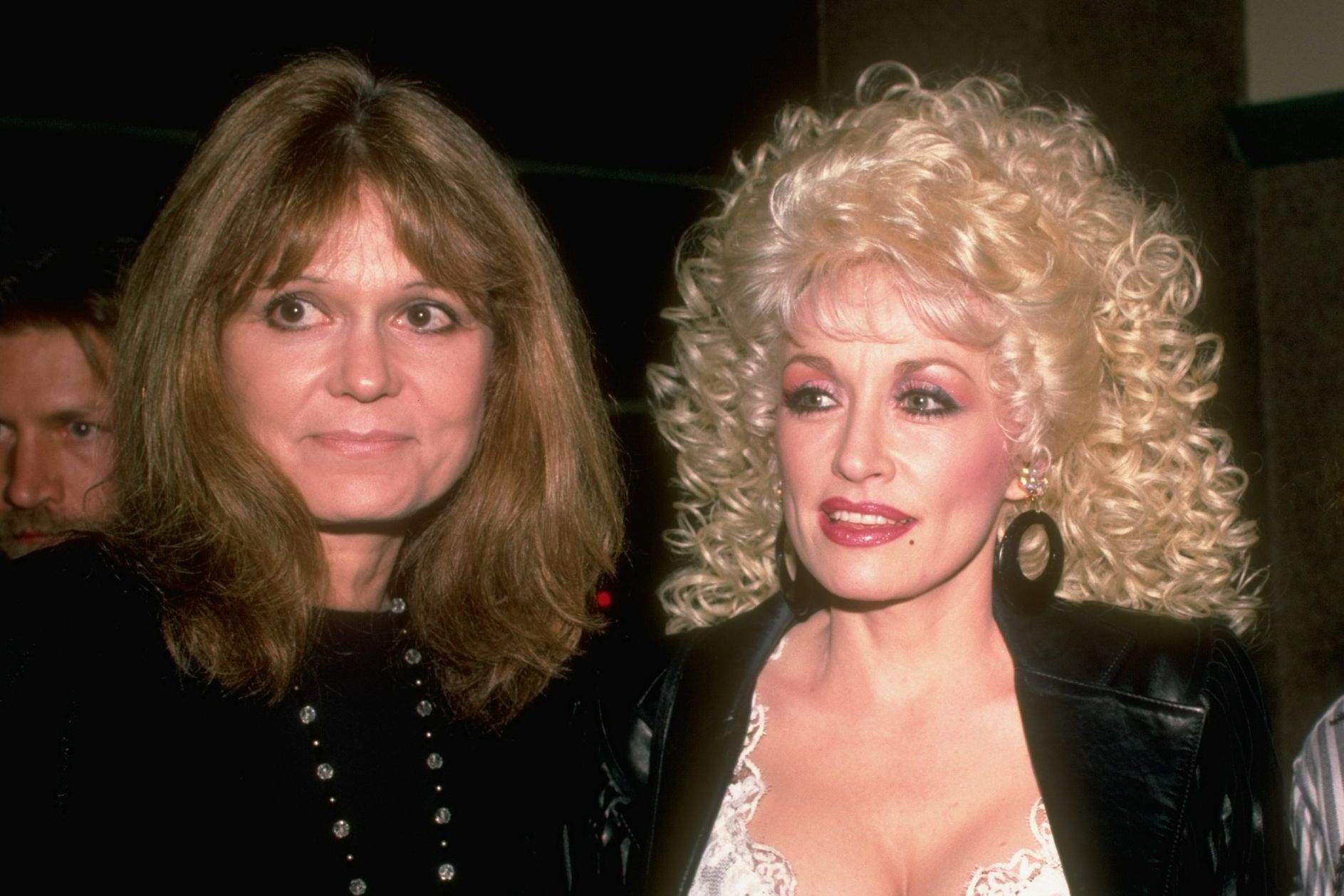
Through her philanthropy and literacy programs

By Choire Sicha, CNN
(CNN) — “Our goddess,” wrote a poster last week on the Reddit board devoted to being childfree, “has passed.” Dolly Parton, one of the greatest benefactors to children in world history while also being a role model to those who were without them, had died at 80.
This week, Gloria Steinem, the writer and activist who renounced both marriage — for most of her life — and children died at 92.
While both said they were influenced by having mothers who were frequently ill and in need of caretaking, they had very different paths to not having children of their own — and different paths in helping better the world for children and parents.
Parton’s path to a childfree existence was fairly convoluted in the way that bodies so often make things. She also grew up one of 12, and five of her younger siblings lived with her for a time after she left the family home. “We always have somebody’s children and we don’t want the total responsibility,” she said of those years.
But Parton came to like what being childfree could do for her, recognizing that it helped her career significantly. “I just want to be free to work. I want to think, I want to write better songs, I want to write different styles of music; I want to write Broadway plays, which I am; I want to write books, which I will,” she said in a conversation with Andy Warhol in 1984.
“Why didn’t you have children?” Warhol asked her bluntly. “I couldn’t,” she said, and: “But I don’t miss it. I did for awhile, but I realize that I am everybody’s mother.”
Raising children is a grave responsibility, no matter how casually many take the decision to do it. It’s also probably one of the most time-consuming, expensive and emotionally harrowing journeys one can experience in America, right up there with medical school and chronic illness.
Parton became one of the single greatest forces for children — apart from her literacy work, she literally paid children to stay in high school and last year the Dollywood Foundation reported giving college scholarships to 22 local high school students.
“She also understood that for kids to thrive, they almost necessarily need more support than their parents can give them alone,” as Ashley Fetters Maloy put it in the Washington Post.
There are different ways to contribute to the welfare of children and mothers. Steinem’s life’s work on abortion was in support of choices around parenthood.
The problem with children and marriage, as Steinem saw it, is that they were all caught up in women being treated as inferior to men. “Especially,” Steinem said in an interview a few years back, “I admire women who have raised children maybe not with the equal help of men frequently. I have not had to do that and I think that is huge.” Did she have any regrets about not having children? “No. Absolutely not. No. I’m not sure why,” she said.
She saw the world changing around her over the years. Steinem married for the first time at 66 — noting that marriage had changed as an institution — and thus became, for a time, Christian Bale’s stepmother, a funny footnote in the histories of both parenthood and celebrity.
She also saw the broken dynamics of men and women having children together improving here and there because their respective spheres in society were expanding. “Raising children or being raised to raise children is the way men become whole people, just as we become whole by being active in the world outside the home,” she said to a lecture attendee in 2015.
Steinem was always emphatic about not regretting it: “Not for a millisecond,” she said in one interview, noting that “not everybody with vocal cords has to be an opera singer.” This was nine years ago with the comedian Sarah Silverman, who herself noted in response that she would make “a great fun dad” but didn’t think the whole motherhood thing, as we understand it, sounded that appealing.
Without children, the home becomes something else. For Steinem, who spent so much of her life touring and talking, a private space of her own became a place to recharge.
“Home means safety, shelter, friends, sleep,” Steinem told Architectural Digest of the apartment she bought on E. 73rd Street in Manhattan and lived in for decades. She eventually bought the downstairs to expand and to get an actual full kitchen, even though “my idea of cooking is dialing.” Instead of an empty and dusty children’s room, she had a guest room that was always full of new experiences, in the form of friends and strangers alike.
The-CNN-Wire
™ & © 2026 Cable News Network, Inc., a Warner Bros. Discovery Company. All rights reserved.
