How ‘ghoul’ became a go-to insult in politics
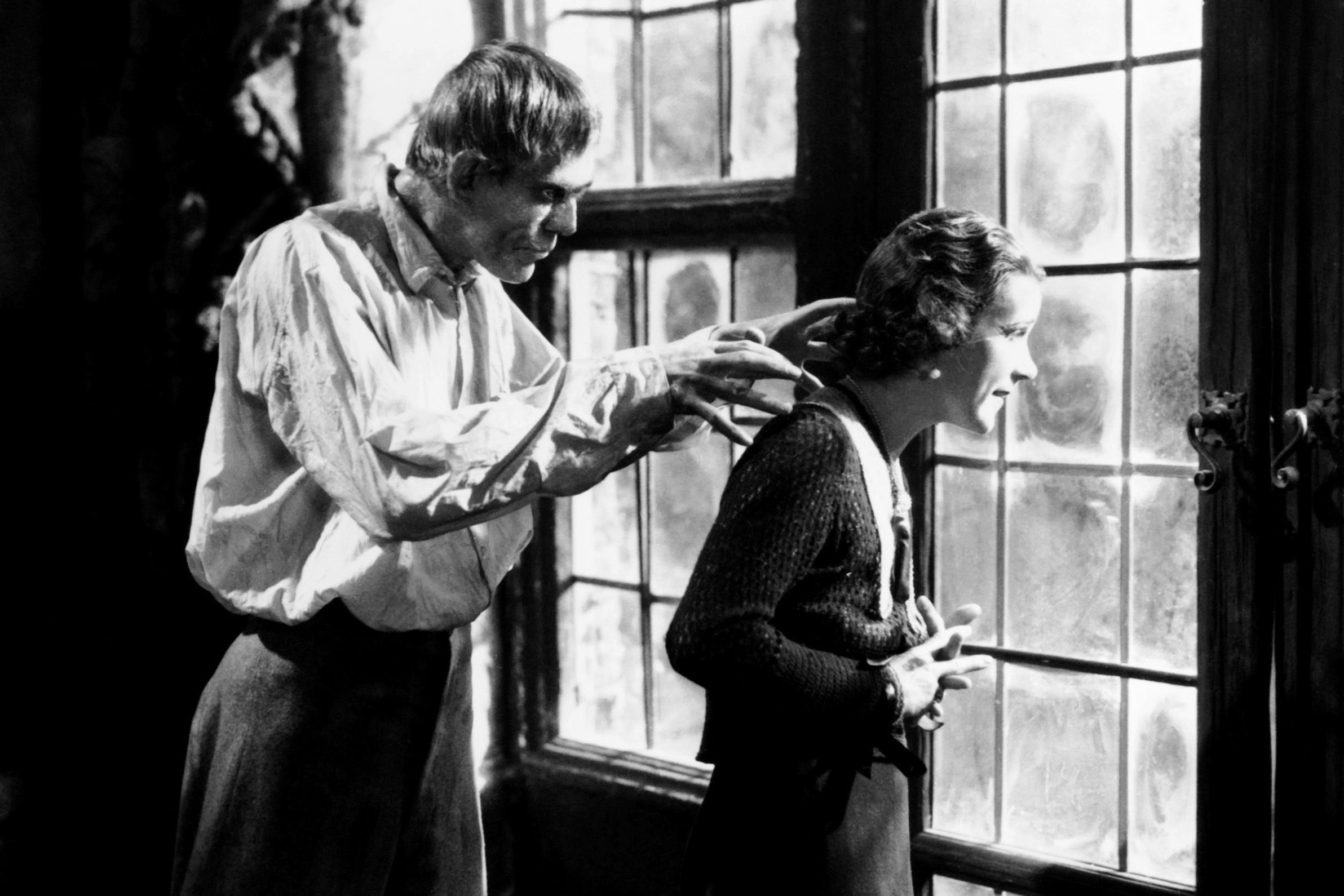
Boris Karloff and Dorothy Hyson in the 1933 horror film "The Ghoul."

By Harmeet Kaur, CNN
(CNN) — The daylight is getting shorter, the wind is getting colder, and the date fast approaches when people are supposed to beware of “ghouls” — no, not October 31, but November 3, Election Day.
Vivek Ramaswamy, the Republican nominee for governor of Ohio, “is an absolute ghoul,” the former Obama and Biden administration official Andrew Weinstein posted to Bluesky. “Vivek is a ghoul,” Pennsylvania Rep. Malcolm Kenyatta, the Democratic Party vice chair, wrote on X.
That chorus of people crying “ghoul” was inspired by a Ramaswamy campaign ad featuring his opponent Amy Acton’s estranged mother, whose husband was charged with raping Acton when she was a child. But Ramaswamy is far from the only accused ghoul in today’s politics. In recent weeks, members of the public have also leveled the insult at Defense Secretary Pete Hegseth over his plan to livestream a firing squad execution and at Israeli Prime Minister Benjamin Netanyahu after his speech at the United Nations General Assembly.
Use of the pejorative crosses party lines. Earlier this year, a Republican strategist called former Washington Gov. Jay Inslee a “soulless ghoul” for a social media post he made after a shooting at the White House Correspondents’ Dinner. President Donald Trump’s White House applied the term last year to a journalist who accused Health Secretary Robert F. Kennedy Jr. of running away from a medical emergency in the Oval Office; it also called a writer who questioned Trump’s decision to deploy National Guard troops in Washington, DC a “sick, disgusting ghoul.”
What does it mean to call someone a “ghoul”? And how did the mythical creature become a go-to insult in politics?
“It’s in a sense a dehumanization tactic,” said Fielding Montgomery, a researcher and author of “Horror Framing and the General Election.” “It’s that they are a monster … that they are particularly taking advantage of people or preying on people.”
The word “ghoul” derives from the French “goule” and the Arabic “ġūl,” which in turn comes from the Arabic “ġāla,” meaning “to seize.” Originating in pre-Islamic Arab traditions, the ghoul has long been a source of fear and fascination in Arab folklore, the scholar Ahmed Al-Rawi wrote in a 2009 article. People believed ghouls had the power to change form, and the concept of their underlying essence was likewise malleable — Al-Rawi noted that the ghoul has variously been considered “a kind of devil, genie, enchantress of genies, devilish genie, and spirit.”
Generally, though, the ghouls of Arab folktales were ugly female predators that wandered the desert, steering travelers astray.
Ghouls morphed again in the early 18th century when the orientalist Antoine Galland translated “One Thousand and One Nights” into French. Galland embellished his ghouls with new characteristics not found in the original Arabic, chiefly the macabre practice of digging up graves to feast on human flesh.
Galland’s depiction cemented the ghoul’s image in the Western world as a cemetery-dwelling cannibal. The Galland-style ghoul appeared in other European adaptations of the tales in “One Thousand and One Nights” — in “The Story of King Yunan and Duban the Sage,” a prince meets a ghoul who presents as a beautiful woman only to transform later into a grotesque, cannibalistic monster.
It was also a source of intrigue for writers of the Gothic era, featuring in William Beckford’s 1786 novel “Vathek” and in Lord Byron’s poem “The Giaour.” Edgar Allan Poe, in his 1849 poem “The Bells,” wrote that “They are neither man nor woman— They are neither brute nor human— They are Ghouls.”
By the 19th century, the word “ghoul” had also developed a figurative sense, applied to people who seemed to delight in others’ misfortune. In his 1854 novel “The Newcomes,” William Makepeace Thackeray wrote of “Ghouls feasting on the fresh corpse of a reputation.”
Ghouls continued to evolve in fiction and entertainment. The writer H.P. Lovecraft further iterated on the monsters in his 1927 short story “Pickman’s Model,” which depicted ghouls as subterranean creatures with “dog-like features,” Rehan Hyder wrote in “The Ashgate Encyclopedia of Literary and Cinematic Monsters.” In Lovecraft’s later novella, “The Dream-Quest of Unknown Kadath,” the character Richard Pickman reappeared as a ghoul — capturing the idea of the ghoul as a less-than-human form that a human could devolve into, Hyder noted.
Other popular depictions of ghouls conflated them with monsters such as zombies and demons. The 1933 film “The Ghoul” and the 1943 film “The Mad Ghoul” seemed to have little to do with the ghoul of Arab folklore, Hyder wrote, besides a connection to death and burial grounds. And though the 1968 film “Night of the Living Dead” is often described as zombie horror, director George A. Romero said he thought of his antagonists as ghouls.
The ghoul had become an emblem of desecration, a predator violating the boundary between life and death, a corruptor of what was wholesome and decent. Naturally, then, it was drawn into politics.
In the early 1920s, as the corruption of the late President Warren G. Harding’s administration came to light, Sen. George Wharton Pepper, a Republican like Harding, attacked those who pounced on “the mistakes of a beloved leader” as “political ghouls.”
“When any man for campaign purposes or to gain a partisan advantage undertakes to disturb the repose of that leader I brand him as a political ghoul and declare him to be unfit for the society of decent people,” Pepper said.
But the insult was thrown back at him. “[T]he Senator states that he is ‘speaking of the mistakes not of the living but of the dead’ when he lays upon the late President Harding’s shoulders the entire responsibility for the disgraceful condition of the Republican Party today,” the progressive political activist J. A. H. Hopkins declared. “Senator Pepper therefore does what he says only a political ghoul would do.”
In 1966, when World War II veteran Robert G. Thompson was denied a burial in Arlington National Cemetery over his communist sympathies, his widow Sylvia Thompson decried the decision: “The Pentagon has yielded to political ghouls,” she said. “Are they now saying that Arlington is only for political conformists?”
Today, calling someone a “ghoul” suggests a moral depravity so stark that it renders the person inhuman.
Robert L. Ivie, a scholar of political rhetoric, sees the ghoul as another iteration of the “evil enemy,” a longstanding trope in political and militaristic discourse. In today’s culture of politics as warfare, calling someone a “ghoul” can create a sense of fear and anxiety that heightens the stakes.
“It’s associated with darkness and death and savagery and tyranny and irrationality,” he said. “Where on the other side of that notion is, ‘We’re on the rational side, we’re on the side of the light instead of the dark, we’re on the side of life instead of death.’ That kind of dialectic.”
Using “ghoul” is just one part of the suite of horror imagery politicians use to signal an opponent’s inhumanity. Montgomery said he found an uptick in the use of horror tropes in presidential campaign advertisements after 9/11, but especially in the 2016 election. He pointed to one particular ad about Hillary Clinton from the Trump campaign: Narrated in a deep, ominous voice, the ad shrouded her in darkness and featured red lettering typical of monster flicks.
Though the ad didn’t explicitly refer to Clinton as a ghoul, or any kind of monster, the implication was obvious, Montgomery said.
“Do you attack someone for being ghoulish, or foolish?” he said. “The ghoulishness is really going to get at the inhumanity.”
The-CNN-Wire
™ & © 2026 Cable News Network, Inc., a Warner Bros. Discovery Company. All rights reserved.
