Stop criticizing your child’s athletic performance on the drive home
Richard Williams is shown practicing with his daughter

By Don Riddell, CNN
(CNN) — As soon as my son pressed play, the video made me wince.
A few years ago, he’d discretely recorded me from the backseat as I was driving, talking to my other son in the passenger seat. We were returning from one of their junior tennis matches and I was questioning what I had perceived to be a lack of effort. As I watched it back, I told myself that it could have been worse; I wasn’t angry but seeing it many years later made me wish I could take it all back.
Earlier this summer, I thought about those days again when Melanie Bedard’s 2023 interview with the Toronto Star about “the drive home” resurfaced. Her son Connor was just named captain of the Chicago Blackhawks, and is considered one of the best professional hockey players of his generation.
“Connor would say some of his teammates would be crying because they didn’t want to go on the car rides with their dad, with their parents,” she said of his early days in the game. “And I thought, all these people in this machine, you are losing sight of the most important thing, your relation.
“Because even if they are the next (NHL hockey legend Sidney) Crosby, they’ll probably be done in their 30s and you’ve damaged that relationship that you could have had for the rest of your life,” she said.
How bad is the ‘drive home’?
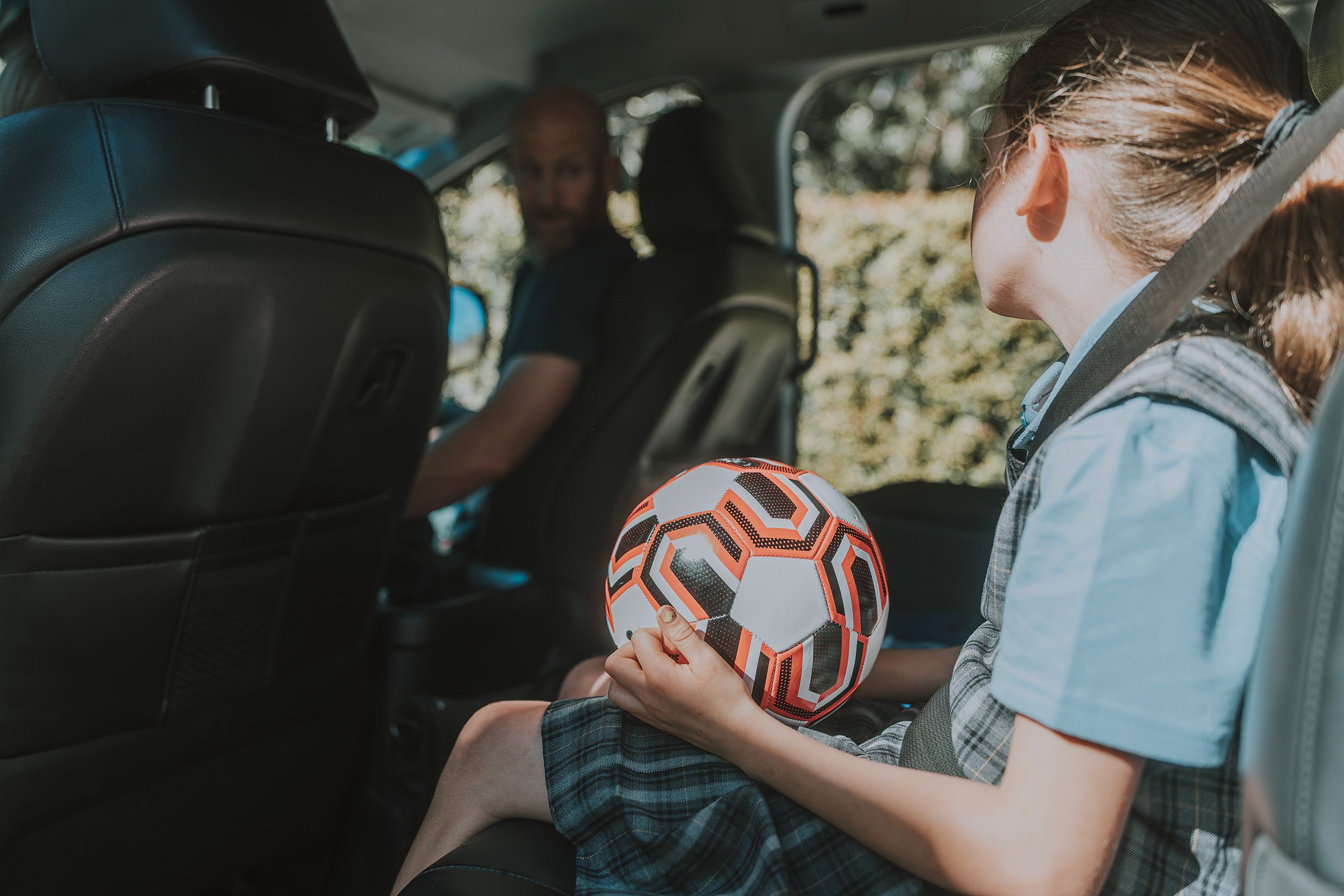
The “drive home” is a recognized experience, almost a rite of passage that many young athletes will have to endure immediately after a disappointing practice or game, trapped inside a vehicle when the emotions are most raw. It’s one of the reasons that many children fall out of love with sports: 70% of youth athletes drop out of organized sports by the age of 13, according to the American Academy of Pediatrics.
When I pitched the idea of this story to my editor, his reaction was visceral “I remember those rides home with my dad,” he said, rolling his eyes. Buried in my own subconscious is the memory of my father telling me of his embarrassment when I’d trailed in last place in a 400-meter race at my English middle school.
Every season, millions of young athletes are being driven home by parents navigating what to say, if anything, and how to say it.
A typical scene was created for a 2016 “True Sport” public service film in Canada: “So, not your best practice,” begins the father’s disappointed monologue as he turns the key in the ignition. “Was something wrong? Because you seem distracted. Can we agree on that?”
The camera slowly pans around the car to reveal a young boy sitting diagonally behind him, in silence. “It seemed like you wanted to hang out with your friends more than practice. Maybe we can skip your next game. That way, I don’t have to rush home from work to sit on a freezing cold bench for two hours to watch you and your buddies jerk around.”
The put-downs keep on coming, each one cutting deeper than the last, “Wasting your time’s one thing, wasting my time and your coach’s time, that’s selfish. Maybe that’s who you are.”
Pushing your child out of sports
“The number one reason why kids leave sport is because it’s not fun anymore,” said Karri Dawson, True Sport Foundation’s former executive director. She told CNN that the campaign was designed to speak to the average, well-intentioned parents who may not be aware of the power of their words.
In some cases, it was profoundly successful, Dawson said. “They were like, ‘Oh my word!’ People reaching out to me saying, ‘I had no idea that the things I was saying and doing may be having such a negative impact on my child’s enjoyment.’”
What plays out in those car rides home has actually been studied by Jeemin Kim, assistant professor of kinesiology at Michigan State University, who worked with the late Katherine Tamminen to understand those conversations. Their findings were published in January 2022.
While admitting to a probable sampling bias, because overbearing parents are unlikely to allow GoPro cameras to record their post-game interactions, Kim said that he was generally encouraged by the 28 parent-child pairings and 30 hours of footage he observed.
Not all parents are crazy about sports
“There’s this narrative of youth sport, parents are crazy, they’re always screaming at their kids, but that just wasn’t the case,” Kim told CNN. The study revealed that 59% of the recording was silence. “When emotions are running high, it’s not a bad thing to sit there and then let the emotions cool down,” he added.
The study revealed that sport was only discussed 13% of the time and that parents provided more praise about their child’s performance than the athlete did themselves. “In several instances, parents interjected before athletes could respond to their parents’ comments,” Kim said.
Researchers also interviewed the parents and their athlete children.
“I remember one kid saying something along the lines of, ‘I love playing the sport, but you don’t play to have these conversations,’” he added. “If that’s the memory they’re going to have associated with youth sport, they’re not going to remember it as good.”
Few of us have the wherewithal to be as disciplined as Richard Williams, who famously banned tennis talk with his daughters Venus and Serena on the way home. I remember reading that the father of two of the most famous tennis stars on the planet wanted to preserve the innocence of their youth for as long as possible. It was an edict that applied whether they had won or lost – there would be no recriminations, but he wouldn’t entertain any gloating either.
Several US-based organizations have highlighted the ride home as a critical element of a child’s sports enjoyment, but even some of the most vocal advocates admit that it’s not always easy. Former professional soccer player John O’Sullivan, who founded the Changing the Game Project, once admitted that he couldn’t help himself when his son TJ didn’t want to play in the first game for the team that he was coaching.
“On the car ride home, I felt the need to address this issue,” he wrote on his website, explaining that his wife karate-chopped him across the chest as soon as he addressed their five-year-old in the back seat.
“Really, didn’t you just write a whole book about this?” she shot back with a stern look.
It’s an anecdote that many parents will relate to – O’Sullivan was worried that his son would miss out on a game that he had loved all his life.
He advises parents now to just to say five words when everyone is back in the car: “I love watching you play.”
Regardless of their age, most athletes know when they have messed up. They don’t need to be told. They may also need time to process their own emotions about the game, and a parent’s lecture on the way home may kick off before they’ve fully come to terms with what just happened.
Do not analyze your kid’s game
The author of several books about peak performance, and a coach of his children’s youth teams, Brad Stulberg understands how consequential these moments can be. “The worst thing you can do is analyze the game,” he told CNN. “And even if they played great, you’re sending a message to the kid, like, ‘Well if I didn’t play great, are you not going to be excited to be with me?’
“I think the kids just want to be kids, and if they want to talk about what happened, they’ll tell you. But generally, my experience is they don’t.”
Looking back on those drives with my twins, who are both now in college, our best rides home were the ones that never focused on tennis. On one occasion, as one of my sons was starting to get into music, he’d play a track and ask me to guess how long was left on the song. The first time he asked, I nailed it. Somehow, I knew that there were exactly 27 seconds left on “Wonderwall” by Oasis. His eyes lit up as if I’d just performed some kind of sorcery.
It was beginners’ luck, and I never did it again. But it was a magical moment.
My boys dropped tennis after high school and are now in a college band together. When they were starting out as budding musicians, the drives home from practice or those early “School of Rock”-style performances were always joyful. There was never any chatter about off-tempo rhythms or missed notes. That’s how I should have done it for sport, too.
Nobody wants to be criticized for something that is supposed to be fun, and if you ruin all the fun, don’t be surprised if they don’t want to do it for much longer. Just love watching them play, and talk about anything else.
The-CNN-Wire
™ & © 2026 Cable News Network, Inc., a Warner Bros. Discovery Company. All rights reserved.
