Missouri conservationists urge action against invasive tree species, hosting buy-back event April 16th
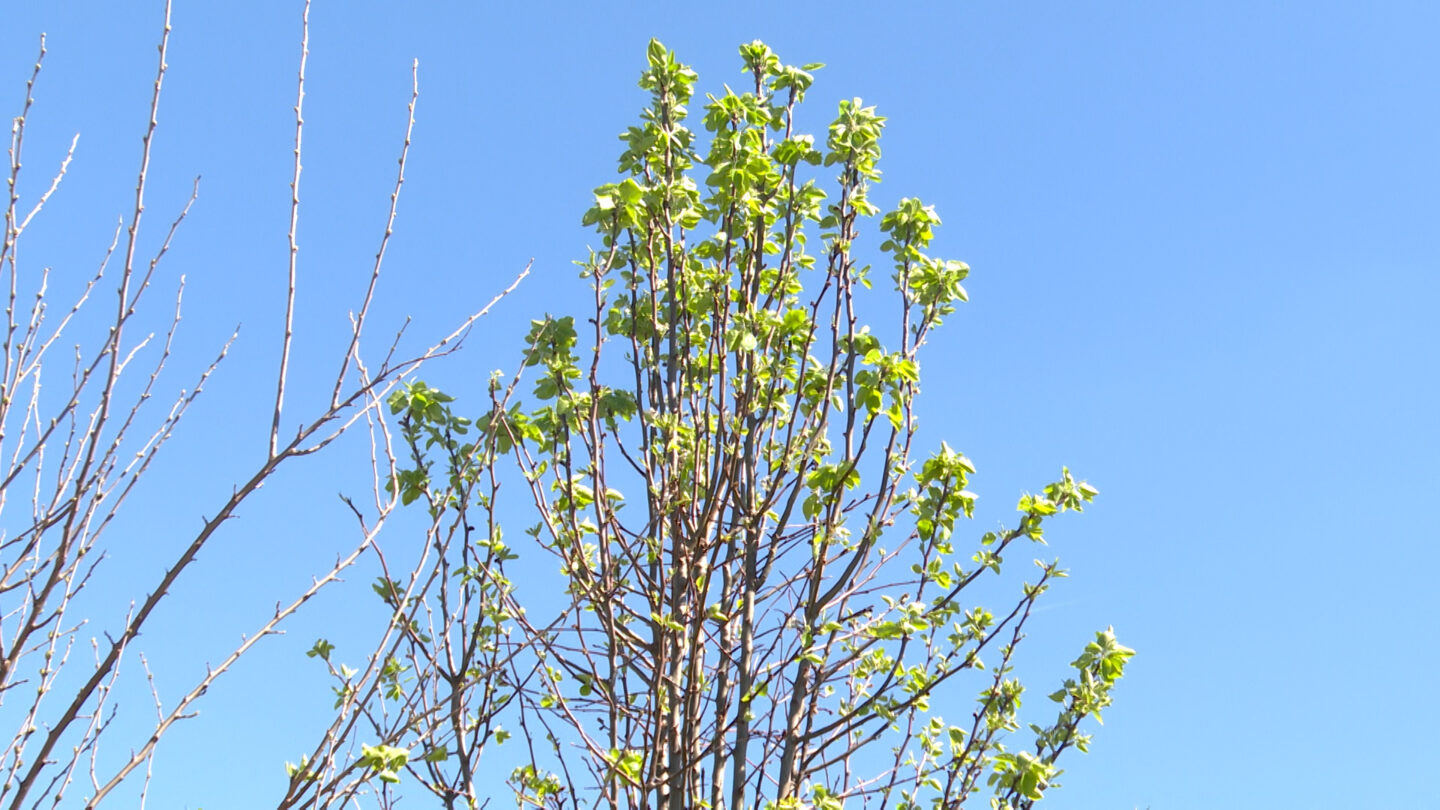

ST. JOSEPH, Mo. (KQTV) -- They bloom early, grow fast, and for a few weeks each spring, their white flowers light up roadsides and suburban yards, but the Callery pear, often called the Bradford pear, is anything but a welcome sight to Missouri conservationists.
Timothy Wolfe, a public lands resource forester with the Missouri Department of Conservation in the Northwest Regional Office, is urging residents to take action against the species.
For the third year, Wolfe and his partners are hosting a “take back” event in St. Joseph, urging residents to cut down the invasive trees and replace them with native species.
“These trees are invasive for several reasons,” Wolfe said. “They can alter your soil chemistry, preventing native plants and trees from growing. And while their fruit is appealing to some animals, it attracts invasive species like the European starling.”
Originally brought over from Asia in the early 1900's to fight fire blight, the Callery pear was later marketed as a fast-growing, hardy ornamental.
But that rapid growth comes at a cost.
“When they grow extremely fast, they form poor, weak wood,” Wolfe explained. “They can fail very easily. For a couple of weeks they look beautiful, but they can be very destructive to the landscape.”
Brittle branches break off easily, creating safety hazards and shading out native plants that wildlife depend on.
Unlike slow-growing oaks, which develop dense, sturdy wood, Callery pears are prone to splitting and collapsing.
Wolfe says the easiest time to identify Callery pears is right now, because they bloom earlier than most native species.
He advises looking for five-petaled white flowers with a pinkish-orange center, and a “staggered” or alternate branch arrangement, unlike dogwoods which have opposite branches.
The trees typically reach 20 to 50 feet tall and have small, thorn-like spikes with a domed top.
If you find one on your property, Wolfe says there’s no size requirement for removal.
“Cut it down as close to the ground as possible, at the lowest branch,” he said. “Then you need to treat the stump with herbicide, or it will grow back.”
This year, the St. Joseph event will distribute 25 native trees on April 21 from 3 to 6 p.m. at the Remington Nature Center, with registration closing April 16.
Participants in the buyback program must take a photo with the cut tree and register online.
In return, they receive a free, three-gallon native tree suited to their region.
“It’s been amazing,” Wolfe said. “I’m getting two to three phone calls a week about this now. The more awareness we get, the more trees we can hand out.”
The program has expanded to 23 locations across Missouri, including Kansas City, Springfield, and Moberly.
While it is not illegal to already have a Callery pear on your property, Wolfe noted that the state has stopped the buying and selling of the species, officially designating it as an invasive noxious plant.
“We’re stopping the distribution,” he said. “And that’s something to be really glad about.”
For those ready to replace an invasive tree, Wolfe recommends native species that grow slower but stronger.
“Oaks grow slowly,” he said. “Because they take their time, they develop a much meatier, hardier structure.”
To register for the buy-back event, you can go here.
