Recent earthquakes across the world highlight Missouri’s active seismic zone

MISSOURI (KQTV) -- Deadly earthquakes in Venezuela and a series of strong earthquakes in Japan have once again highlighted the devastating power of seismic events, prompting renewed conversations about earthquake preparedness worldwide.
While many people associate earthquakes with California or countries along the Pacific "Ring of Fire," Missourians should not assume they are immune from the threat.
Missouri is home to one of the nation's most active seismic regions, and although earthquakes in Northwest Missouri are rare, understanding how earthquakes happen and how to respond can make a significant difference if one strikes.
"Earthquakes are really an expression of motion that happens underground," said Nathan Limbaugh, a geology instructor at Northwest Missouri State University. "Whenever some sort of movement happens in the subsurface, that pressure has to release or go somewhere, and that is usually expressed in energy."
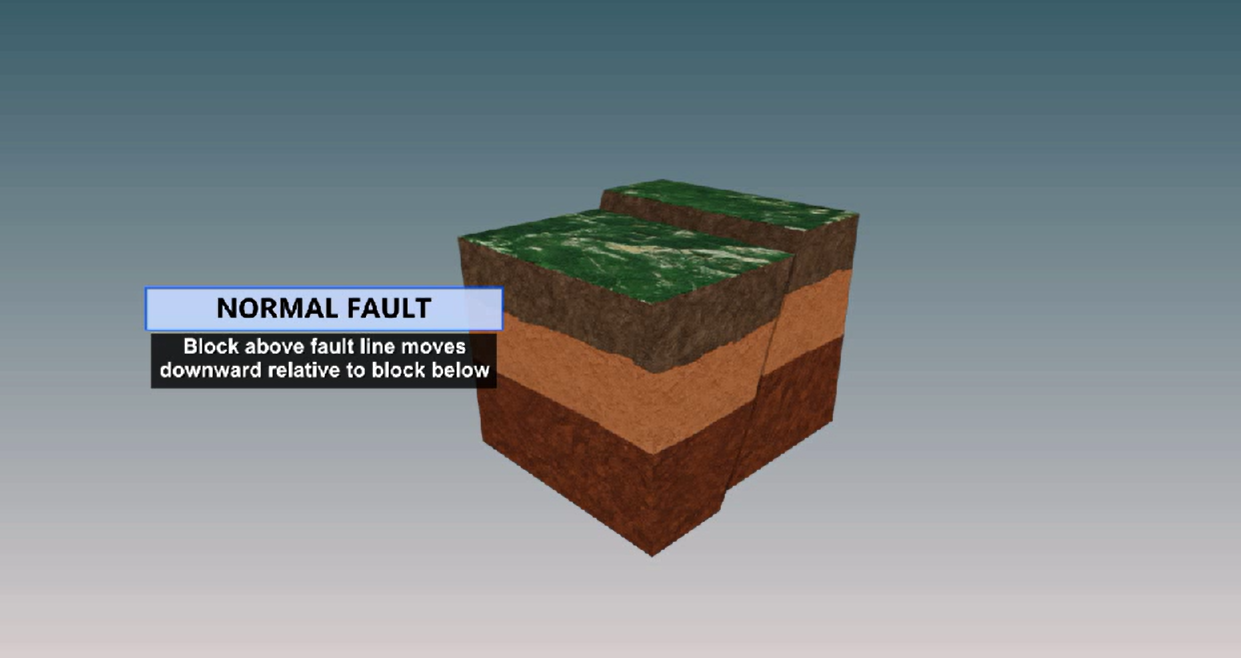
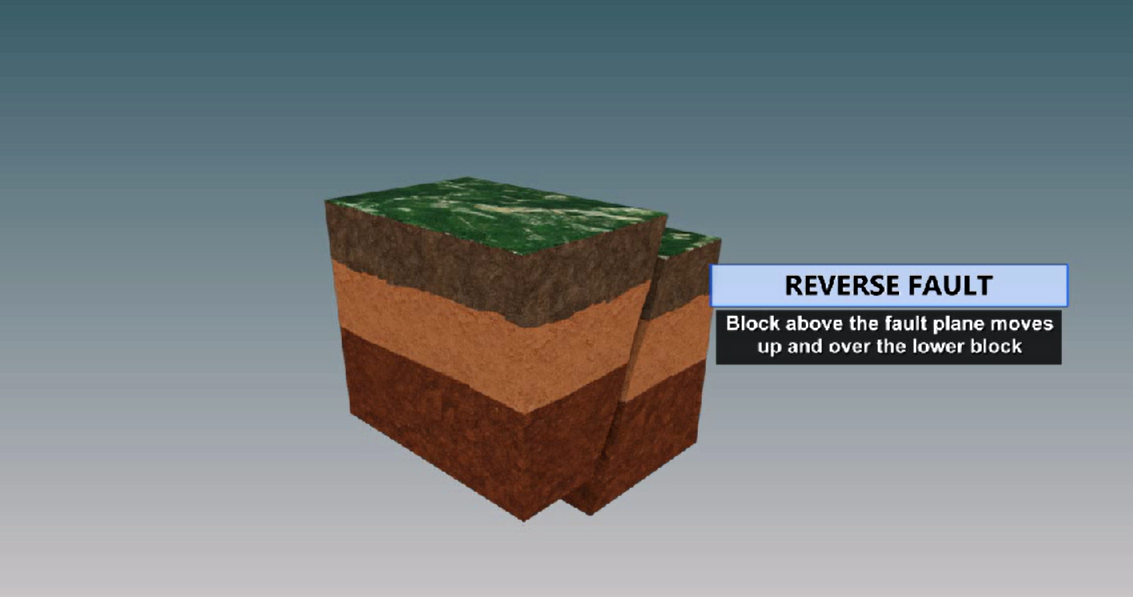
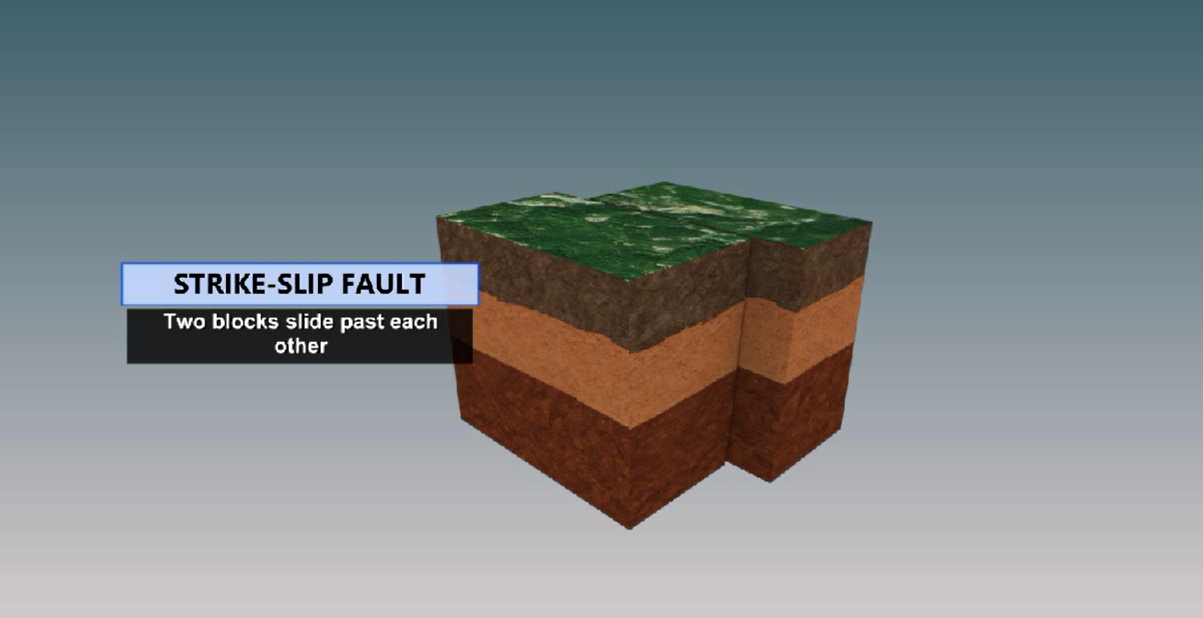
That energy travels through the Earth as seismic waves, often along fractures in the Earth's crust known as faults. Geologists generally recognize three primary types of faults that generate earthquakes.
A normal fault occurs when the block above the fault drops downward as the Earth's crust is pulled apart.
A reverse fault forms when compression forces push one block upward over another.
A strike-slip fault occurs when two sections of the Earth's crust slide horizontally past one another.
Any of these movements can release enough built-up stress to produce an earthquake.
Although earthquakes can occur almost anywhere, they are much more common near active fault systems.
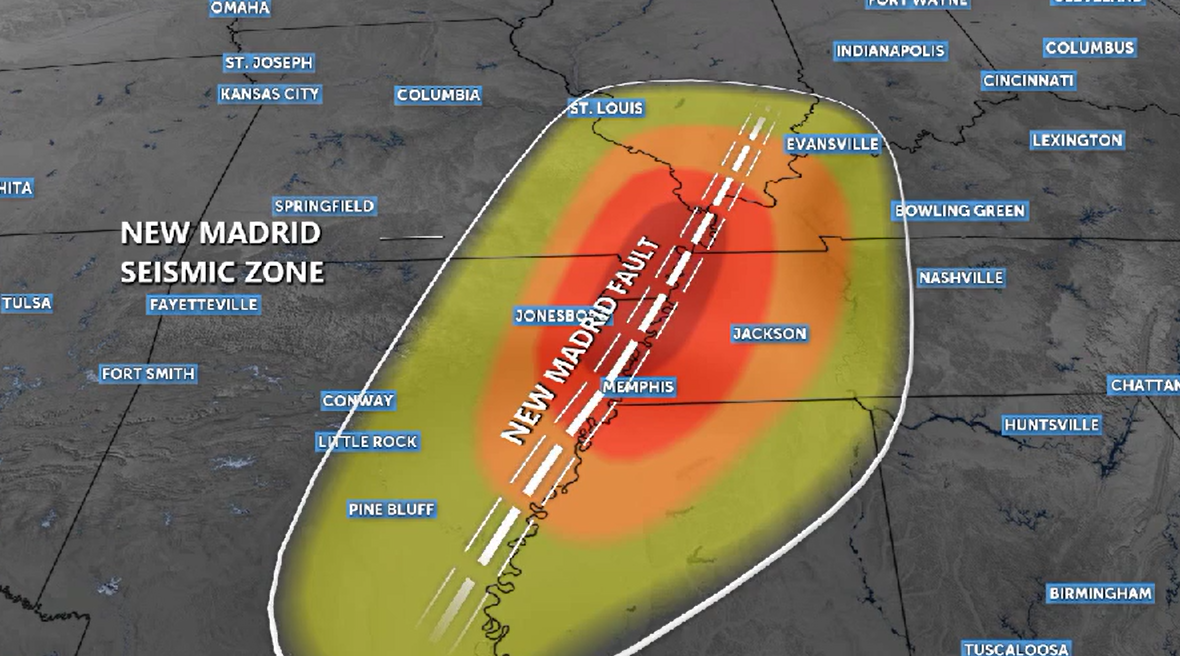
Missouri's best-known fault system is the New Madrid Seismic Zone, located in the Bootheel region of southeast Missouri.
The fault zone produced one of the most powerful earthquake sequences in United States history during the winter of 1811 and 1812.
Those historic earthquakes were so strong that they were reportedly felt across much of the eastern United States.
Historical accounts describe church bells ringing hundreds of miles away, landslides reshaping the landscape and portions of the Mississippi River temporarily flowing backward due to dramatic ground movement.
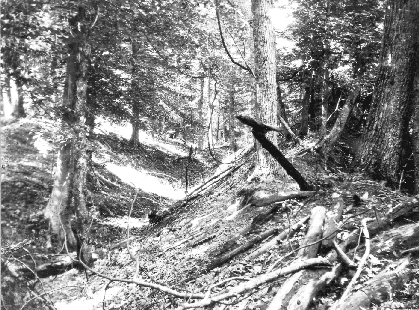
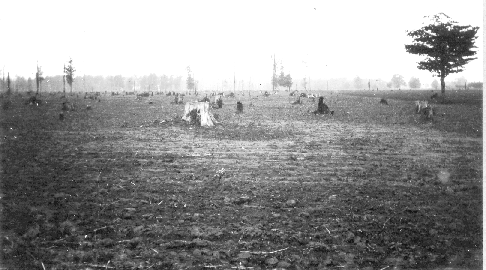
"It's more of an ancient fault zone," Limbaugh said. "Although it has activated in the last couple hundred years, one of the worst earthquake sequences in U.S. history occurred in the New Madrid in 1811 and 1812. The flow of the Mississippi River actually reversed for a little section. These things are pretty intense."
Scientists continue to closely monitor the New Madrid Seismic Zone, which produces hundreds of earthquakes each year. Most are too small to be felt and are detected only by sensitive monitoring equipment.
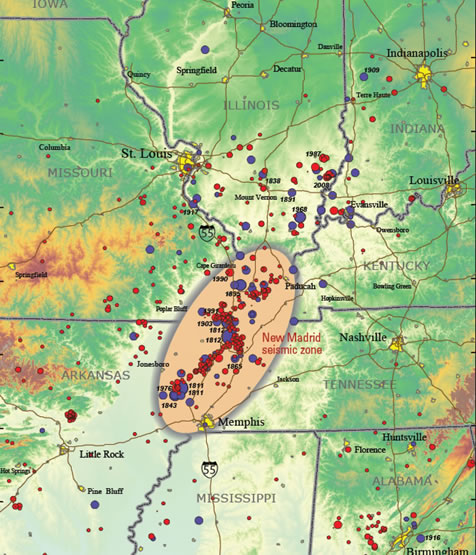
While St. Joseph is more than 300 miles from the New Madrid Seismic Zone, earthquakes originating there can still be felt hundreds of miles away. Smaller earthquakes can also occur much closer to home.
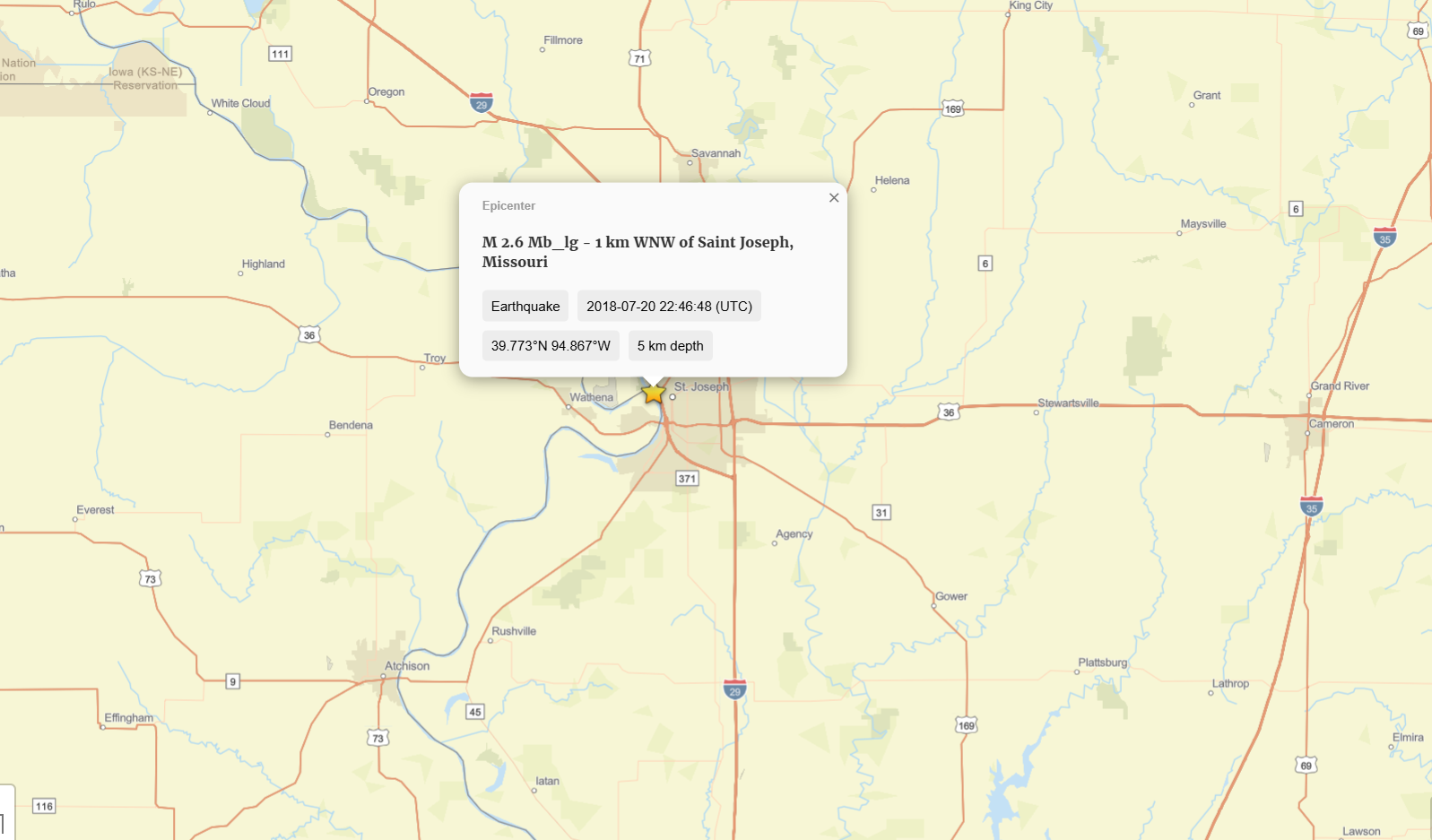
One of the most notable local earthquakes occurred in July 2018, when a magnitude 2.6 earthquake struck near the Missouri River west of Felix Street. Residents reported feeling light shaking throughout parts of downtown St. Joseph and in areas extending toward Frederick Avenue and Interstate 29. Although earthquakes of that size rarely cause damage, they serve as reminders that seismic activity is possible in northwest Missouri.
Experts estimate Missouri experiences roughly 230 earthquakes each year, with the majority occurring in the southeastern part of the state. Most are minor and are too weak to be noticed by residents.
Fortunately, the probability of a major earthquake occurring directly in the St. Joseph area remains very low.
Limbaugh explained there is approximately a 0.39% chance of a magnitude 5.0 or greater earthquake occurring in the St. Joseph area over the next 50 years.
Even with a relatively low risk, experts said preparation is one of the best ways to reduce injuries during an earthquake.
Limbaugh encourages people to remember the acronym "CAP," which stands for "Common Sense, Awareness and Protection."
Common sense means remaining calm, staying away from windows and avoiding the temptation to run outside while the ground is shaking.
Awareness involves understanding the earthquake risk where you live, identifying safe locations inside your home and creating an emergency plan with your family before disaster strikes.
Protection means dropping to the ground, taking cover under a sturdy desk or table if available and holding on until the shaking stops.
If shelter is not available, experts recommend protecting your head and neck while staying away from windows, heavy furniture and other objects that could fall.
FEMA also recommends keeping an emergency supply kit stocked with water, food, medications, flashlights, batteries and other necessities in case electricity and utilities are interrupted after a significant earthquake.
While the recent earthquakes in Venezuela and Japan occurred thousands of miles away, they serve as an important reminder that earthquakes can happen with little or no warning.
