Longtime Epstein attorney says he didn’t know of the financier’s sexual abuse
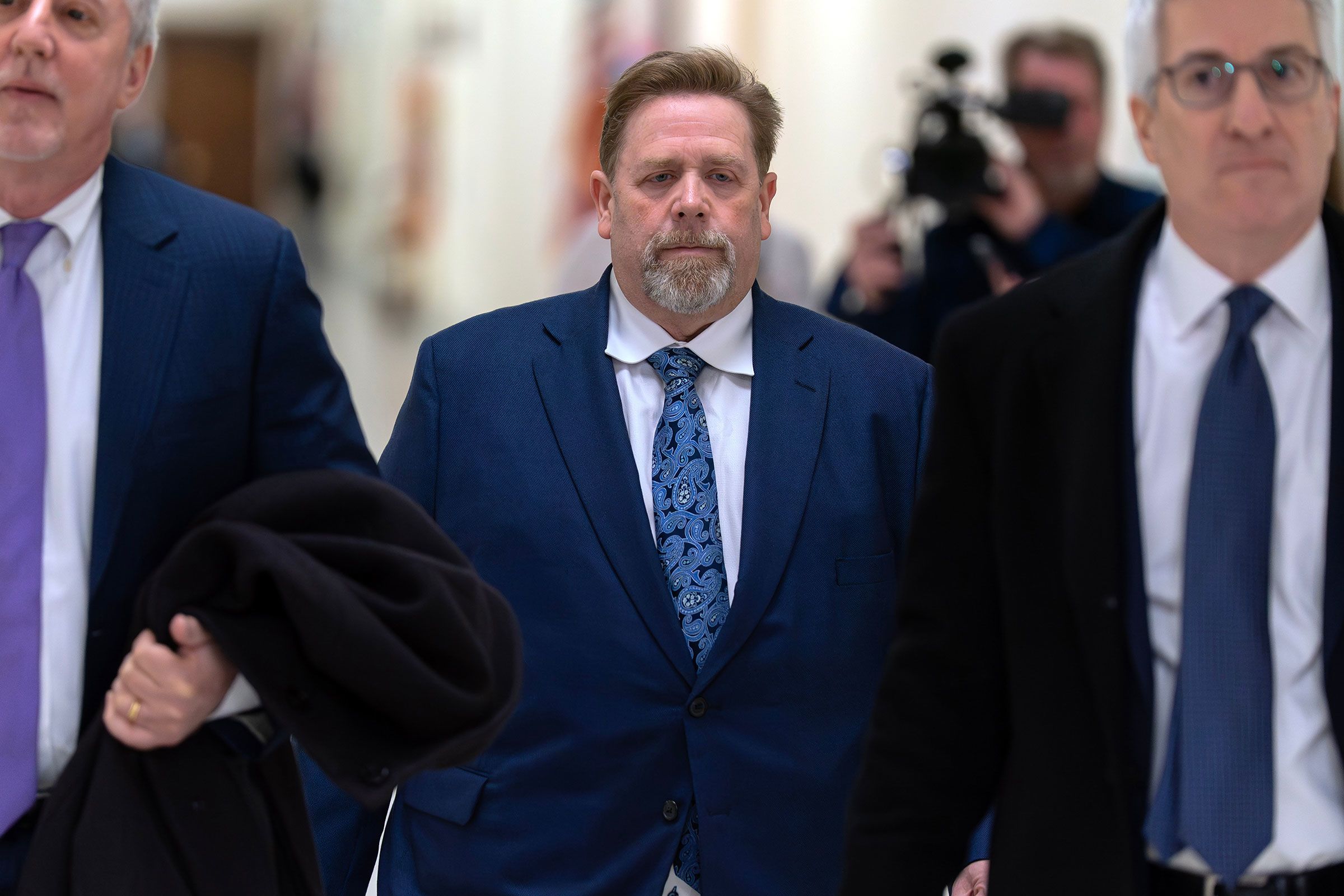
Darren Indyke

By Em Steck, Annie Grayer, CNN
(CNN) — Jeffrey Epstein’s longtime employee and attorney Darren Indyke testified to lawmakers on Thursday that he “had no knowledge whatsoever” of the convicted sex offender’s wrongdoing and rejected “any suggestion” he assisted or facilitated his former boss’ crimes, according to a copy of his opening statement.
“Had I known that he was abusing or trafficking women, I would have quit working for him at once and severed all ties to him,” Indyke said in an opening statement to the House Oversight Committee, a copy of which CNN obtained. “The truth is that I did not know what Mr. Epstein did after hours, behind closed doors, and in places where I was not present.”
Indyke, one of Epstein’s longest-serving employees, worked as an attorney for him for more than 20 years on corporate, transactional and general legal services. He described the work as a consulting role for “entirely legitimate purposes.”
The closed-door deposition lasted for roughly 8 hours.
Democrats said they believe Indyke is not credible for saying he had no knowledge of Epstein’s crimes and said Indyke may have perjured himself in his deposition.
Democratic Rep. Dave Min, a lawyer and former law professor, said of the deposition: “It’s just not credible to claim that you had no knowledge of what was happening.”
“I’m very surprised that he did not take the Fifth Amendment. I think it’s very likely he perjured himself over and over and over again,” the congressman said.
Democratic Rep. Jasmine Crockett said, “I can tell you that he has been quite defensive of Jeffrey Epstein … almost as if he still doesn’t believe Jeffrey Epstein to be who Jeffrey Epstein was.”
Lawmakers are seeking answers on Indyke’s work and his knowledge of Epstein’s financial dealings. The testimony occurred behind closed doors, though lawmakers are expected to release a video later.
In his opening statement, Indyke pushed back on allegations that he withdrew thousands of dollars in cash on Epstein’s behalf to avoid triggering bank suspicions. He said the cash was not used for “any improper purposes.”
Police investigators found that Epstein often paid young girls and women between $200 and $300 — payments that the women said came after he abused them under the guise of performing massages in the mid-2000s.
Min said he asked Indyke about a $725,000 cash withdrawal he made using a maximum of $7,500 per withdrawal to not trigger federal reporting, and said that Indyke “couldn’t describe what that was for.”
In his opening statement, Indyke also categorically denied that he helped coerce young women into same-sex “sham marriages” with each other to circumvent immigration, calling it “100% untrue.”
These allegations were made in a 2024 class-action civil lawsuit filed by Epstein victims against Indyke and his fellow co-executor of Epstein’s estate, Richard Kahn. The suit alleged that the two were facilitators in Epstein’s sex trafficking operation and “were also integral in allowing Epstein to escape justice for years by concealing his litany of crimes.” The pair strongly denied the allegations. Recently, the estate agreed to settle the lawsuit for up to $35 million but admitted no wrongdoing. The court preliminarily approved the settlement earlier this month.
Addressing the committee, Indyke also said that after Epstein was convicted in 2008 on state charges of soliciting prostitution from a minor, his former boss appeared “devastated and extremely contrite.”
“He was adamant that he had no idea anyone involved was underage, and personally assured me he would never again let himself be in that position. I believed him, and I made the mistake of believing Mr. Epstein that he would not again commit a crime.”
“I deeply regret doing so. Most importantly, I feel horrible for those women whom Mr. Epstein abused,” said Indyke.
House Oversight Chair James Comer said that Republicans asked Indyke why he continued to work with Epstein after he was convicted in 2008.
“He said that Epstein told him it was a mistake, it was a one-time deal, he didn’t know the girl was underaged, the one that he got convicted of in West Palm Beach, and Indyke said he convinced him he would never do it again and that he had remorse. So that was about it,” Comer said.
Democrats also said that Indyke could not give a straight answer about whether an accuser of President Donald Trump was given a settlement, which was an issue that came up during the panel’s deposition last week with Epstein’s accountant, Richard Kahn.
“It’s very concerning that the story around Jane Doe 4 as it relates to the executors of the estate has now changed four or five times whether there was ever a settlement. So until we get an answer on that question we will not be satisfied,” Democratic Rep. Robert Garcia said.
Democratic Rep. Melanie Stansbury said that she believes there are two separate women who have made allegations against Trump because in the deposition on Thursday, Indyke would not confirm if the woman who filed a lawsuit and restraining order against Trump that appeared in the Epstein estate files was a separate individual from Jane Doe 4, who appears in the Department of Justice Epstein files.
“I asked today … if these were two different individuals, and he could not confirm. I believe these are two different allegations involving two different minors,” Stansbury said.
Trump has consistently denied wrongdoing in connection with Epstein, and a name appearing in the Epstein case files is not evidence of wrongdoing.
In his opening statement, Indyke pointed to his work as a co-executor of Epstein’s estate, which has cooperated with the committee’s requests for evidence and material. The estate also established a restitution program for Epstein victims, called the Epstein Victims’ Compensation Program, which doled out $121 million to 136 women. The estate has also settled multiple civil lawsuits filed by victims and agreed to pay $48 million to an additional 59 women.
Garcia said that there are two areas of the committee’s subpoena to the Epstein estate, which Indyke helps oversee, that have not been provided to the committee. The missing documents include court records in the case between Virginia Giuffre and Ghislaine Maxwell as well as various documents related to businesses, firms and organizations that had communications with Epstein.
Garcia claimed that the estate has asked Oversight Republicans for clarity on which documents they need but that Republicans are “stalling.”
Comer defended the Epstein estate’s compliance with his subpoena and said the reason they haven’t pushed to get the remaining documents is because they “overlap” with other subpoenas the committee has issued and is receiving documents for.
In February, Tim Parlatore, who previously worked with Indyke and is a former attorney for President Donald Trump, told CNN’s Randi Kaye that Indyke “worked on the legitimate side of Epstein’s business.”
A lawyer for Indyke told CNN in a statement at the time, “Not a single woman has ever accused Mr. Indyke or Mr. Kahn of committing sexual abuse or witnessing sexual abuse, nor claimed at any time that she reported to them any allegation of Mr. Epstein’s abuse.”
The lawyer added that both men have denied they “knowingly facilitated or assisted Mr. Epstein in his sexual abuse or trafficking of women, or that they were aware of Mr. Epstein’s actions.”
The-CNN-Wire
™ & © 2026 Cable News Network, Inc., a Warner Bros. Discovery Company. All rights reserved.
CNN’s Veronica Stracqualursi contributed to this report.
