Excess belly fat may reveal more about longevity in older adults than BMI. A doctor explains
Among adults 65 and older

By Faye Chiu, CNN
(CNN) — Among adults 65 and older, having a larger waist circumference was linked to a higher risk of early death, according to a new study. But being classified as overweight by body mass index, or BMI, was associated with a lower risk of early death.
That’s confusing.
Obesity, we know, is associated with increased risks of many conditions, including heart disease and type 2 diabetes. But in older adults, the relationship between body weight and health may be more complicated than a number on the scale.
How should older adults, and their doctors, make sense of the seemingly contradictory findings in this study, published on August 19 in the Journal of the American Geriatrics Society?
To learn what this research means for healthy aging, I spoke with CNN wellness expert Dr. Leana Wen. Wen is an emergency physician and clinical associate professor at George Washington University. She previously served as Baltimore’s health commissioner.
CNN: What did the study find about BMI, waist circumference and longevity in older adults?
Dr. Leana Wen: The researchers analyzed data from nearly 7,000 adults ages 65 and older who were followed as part of a large and nationally representative study funded by the US National Institutes of Health. The scientists followed participants for up to 14 years and examined how changes in body mass index, or BMI, and waist circumference were associated with the risk of death.
Compared with men whose BMI was in the normal range, men who were overweight, defined as a BMI between 25 and 29.9, had a 46% lower risk of death. Those with class I or II obesity, defined as a BMI between 30 and just under 40, also had a lower risk.
Among women, those who were overweight had a 27% lower risk of death than those in the normal BMI range. Neither class I or II obesity were associated with a statistically significant difference in mortality risk. In both women and men with class III obesity, defined as a BMI of 40 or higher, there was no statistically significant difference in mortality risk.
The pattern was quite different when researchers looked at waist circumference. Men with a waist circumference greater than 40 inches (101.6 centimeters) and women with one greater than 35 inches (89 centimeters) had a 24% higher risk of early death compared with those below those thresholds. Importantly, this increased risk remained after the researchers accounted for BMI.
CNN: Does this mean that being overweight and having more body fat could be beneficial in older age?
Wen: No. This study found an association between certain BMI categories and lower mortality. It does not establish that gaining body fat will help people live longer, and the authors explicitly caution that their findings should not be interpreted as evidence that excess body fat is biologically protective.
There are a few possible explanations for what’s sometimes call the “obesity paradox”: How could obesity increase the risk of many serious medical conditions, yet appear to be associated with a lower risk of early death in some older adults?
One is reverse causation. People can lose weight because of cancer, heart disease and other illnesses. That could make lower weight appear to be associated with a higher risk of early death when underlying illness is contributing to both. Related to this is survivorship bias. Someone who reaches older age despite having obesity may differ in important ways from someone who developed obesity-related disease and died at a younger age. Also, the issue may also be that BMI is an imperfect measure of body fat.
CNN: Why might BMI be a less useful measure of health as people get older?
Wen: Body mass index is calculated using height and weight. As a tool, BMI is useful for looking at patterns across large populations, but it does not tell us what makes up someone’s weight.
Consider two people of the same height and weight. One could have substantial muscle mass and relatively little body fat. The other could have less muscle and more fat. They would have exactly the same BMI despite having very different body compositions.
That distinction becomes even clearer with aging. People tend to lose muscle mass as they get older. Older adults can also lose height and experience changes in where fat is stored. In an older person, some of what appears to be a higher BMI could reflect greater preservation of lean mass. Conversely, someone with a BMI in the normal range could have lost considerable muscle while retaining excess body fat.
CNN: What is different about fat around the waist? Should people be measuring their waist circumference in addition to knowing their BMI?
Wen: Visceral fat, referred to as hidden fat because it accumulates deep within the abdomen around internal organs, is associated with inflammation, insulin resistance and other metabolic changes that increase the risk of cardiovascular disease and diabetes.
Waist circumference is one simple way to estimate visceral fat. Numerous experts have advocated that measures of body fat, including waist circumference, waist-to-hip ratio and direct measures of body fat, such as skinfold measurements using calipers, be used in addition to BMI to determine whether someone has obesity or overweight.
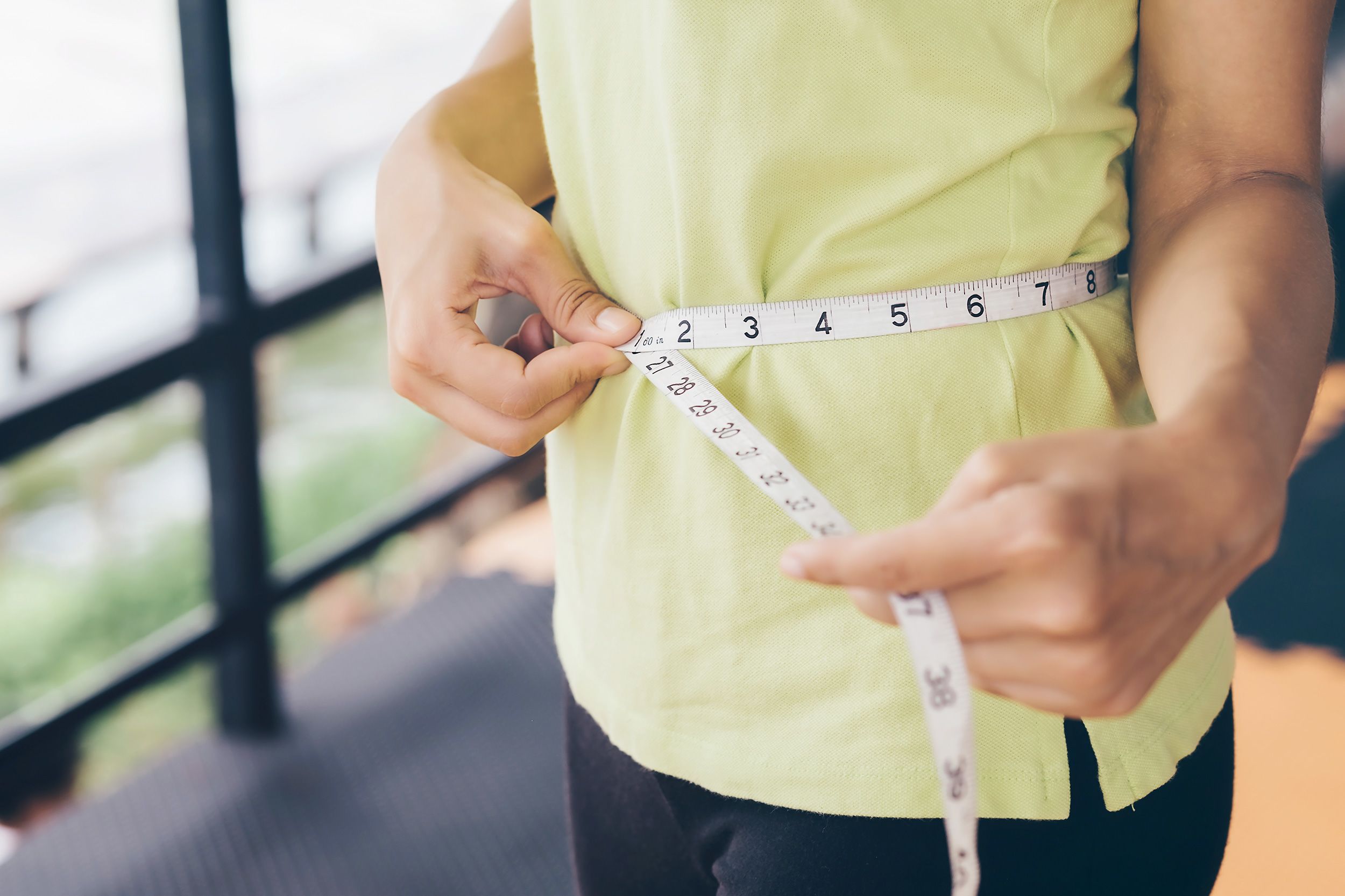
Measuring waist circumference has the advantage of not requiring specialized equipment, so patients can keep track at home. To gauge correctly, people can place a measuring tape around the abdomen, between the bottom of the ribs and the top of the hip bones, keeping the tape level and snug but not compressing the skin. The result is something that they and their physician can consider alongside BMI and other indicators of health, including blood pressure, blood sugar, cholesterol level and physical fitness.
CNN: The study also found a particularly high mortality risk among older adults who were underweight. Why might this be?
Wen: Indeed, in this study, men and women who were underweight had close to twice the risk of early death compared with people whose BMI was in the normal range. This makes sense, because low weight can result in frailty. Older adults need muscle strength to perform everyday activities, maintain mobility and reduce their risk of falls. Someone who is losing weight because they are losing muscle could become more vulnerable even if their BMI is moving toward what would conventionally be considered a “healthier” range.
Still, I think we have to be careful again about interpreting cause and effect here. Being underweight may be a consequence rather than a cause of poor health. Chronic disease can lead to loss of weight and muscle, and unintentional weight loss can be a sign of an underlying medical problem.
CNN: If tracking BMI isn’t enough, what should older adults focus on to assess and improve their health?
Wen: I would advise older adults to focus much more on health and function than on achieving a particular number when it comes to their weight goals. Are you physically active and can you perform everyday activities independently? Are you maintaining muscle strength? Set physical activity goals and prioritize exercise, including both aerobic activities such as brisk walking, cycling or swimming, along with strength training. Good nutrition, including sufficient protein, is important, too.
People should pay close attention to changes over time. An expanding waistline could indicate increasing abdominal fat even if weight and BMI have changed very little. Conversely, unexplained weight loss should prompt a conversation with a healthcare provider. And it’s always a good idea to discuss with your doctor what a healthy weight means for you as an individual. That assessment should take into account not only the number on the scale, but also your body composition, where you carry fat, your physical function, and other metrics like blood pressure, blood sugar and cholesterol that can better explain your health as a whole.
The-CNN-Wire
™ & © 2026 Cable News Network, Inc., a Warner Bros. Discovery Company. All rights reserved.
