‘Let us help you’: Local first responders focus on mental health support
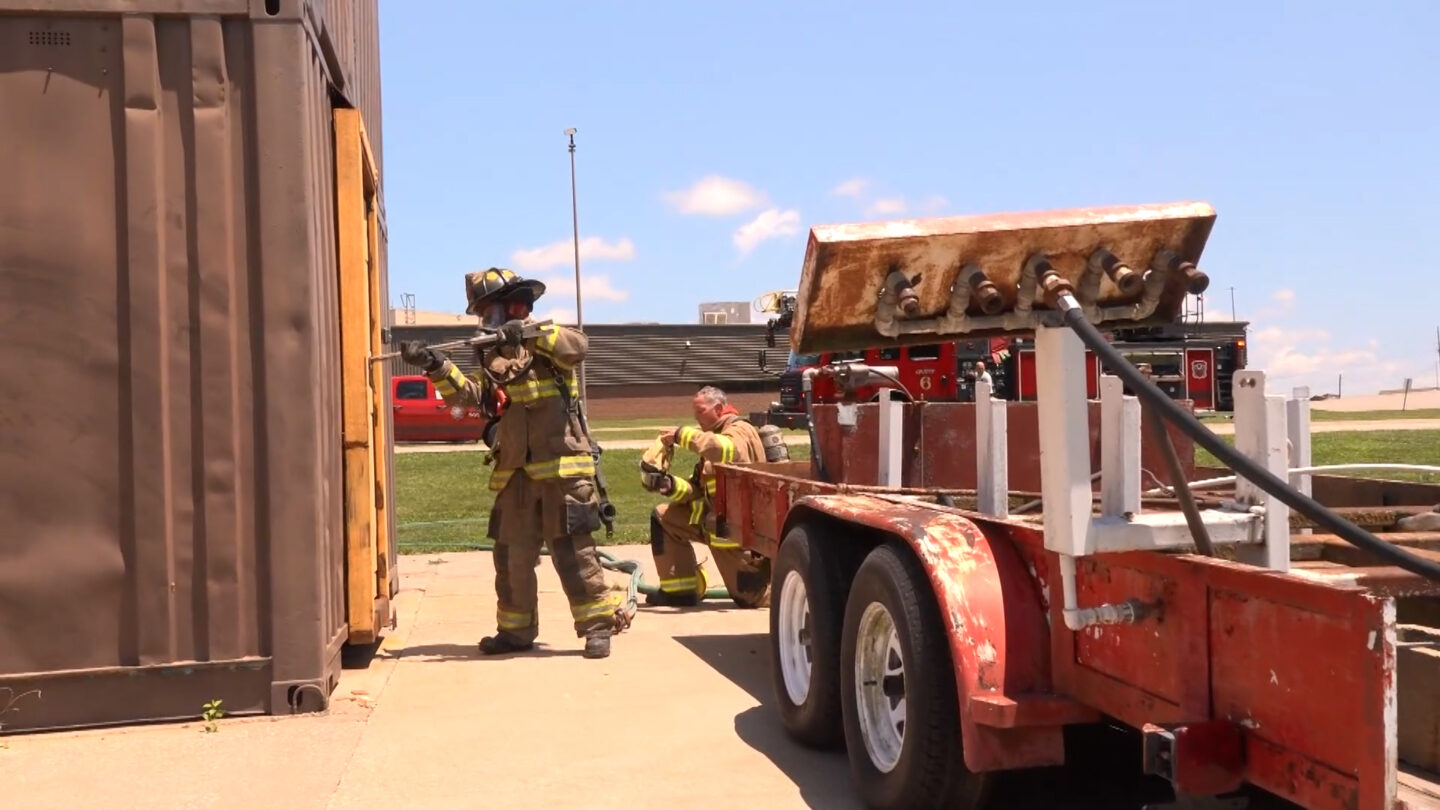

ST. JOSEPH, Mo. (KQTV) -- Emergency service workers face high-stress situations on a daily basis.
The demands of the profession can expose first responders to traumatic situations, whether responding to fires, active shooter threats or other emergencies.
Long hours, physical demands and emotional stress can also take a toll on first responders.
In recent years, emergency service agencies have increasingly invested in mental health resources and support for their personnel.
The St. Joseph Fire Department Battalion Chief Jeff Werner said mental health in the profession has started to become a recognized issue.
"It used to be a stigma; that’s been more easily talked about in our profession now," he said. "To the point where it’s recognized as the impact of trauma to our mental health with what we do for our job."
According to the IAFF Center of Excellence for Behavioral Health Treatment and Recovery, 1 in 5 firefighters will suffer from PTSD during their career.
"First responders will do between 400 and 900 of their exposure of trauma over a 20- to 25-year career," Werner said. "We're exposed to more traumatic events that can be cumulative effect on our mental health."
Family members are typically the first ones to notice changes in emergency responders' mental health. There are multiple signs that a person could are usually show when struggling with their mental health.
"You might have trouble sleeping; it's not always a flashback or intrusive thought or anything else like that. (You get) easily angered or irritated over a little thing, and you're not really sure why that is," Werner said. "That's becoming more of a telltale sign of you having issues of processing what's been going on. It's different avenues that you can approach reconciling that and how to get some help if you need it."
Werner said it's important for firefighters to support each other, through mental health crises or not.
"We're the firefighters; this is what we do, what we sign up for. If you complain then your soft or your not cut for the job. That's not true; it can literally jump out at any time. It might not be as prominent as you think that you're having an issue," Werner said. "It's someone else actually saying, 'Hey, you look a little bit off today, let's go hang out.' It's really just taking care of each other."
After dealing with a large traumatic event, Werner said SJFD has debriefings to check on their firefighters.
"We come together as a group. No one is forced to talk if they don't want to, but it gives them an outlet to see, 'Hey, I'm not the only one that may be dealing with some issues and things like that.' If they don't want to do it in a group, that's fine. That's when they come and find one of us after, and we do a personal one."
Conversations around mental health in law enforcement have been slowly shifting in the last decade. According to the National Library of Medicine, police officers are more likely to experience mental health problems than the general population.
The Buchanan County Sheriff's Office offers several resources to its deputies. BCSO has an app called "Cordico," a workout wellness program, support for the ETMS process, a peer support team and service providers.
Some of the key features of the Cordico app are a wellness console, weight loss challenge and therapist finder.
"It approaches mental wellness, physical wellness, health and financial wellness. The big thing is the approach is wellness and not just mental health," Buchanan County Sheriff Bill Puett said.
Puett said it's important to protect the people that serve our community.
"They see a lot of critical incidents. They see a lot of trauma that most people never see in their lifetime," he said. "In the state of Missouri, a few years ago they passed a statute that requires mental health check-ins. Every law enforcement officer every three years have to have a mental health check-in with a provider."
Puett said the sheriff's office staff and employees are open when it comes to deputies seeking help and needing resources.
"That's one of the biggest things is to make sure there is not stigma attached to it. If somebody needs help, we encourage them to reach out for that," Puett said. "When I started, that was a taboo topic. You were seen as damaged if anybody asked for help."
The sheriff’s office said it also holds debriefs after traumatic incidents.
"Those are with trained individuals who come in, and they discuss the incident. Sometimes it's nothing more than folks sitting around, talking, working through, explaining and getting their feelings out," Puett said. Sometimes it may be something where they need additional assistance.
Puett said those at the sheriff's office also spend time checking on each other and look out for each other.
"If there is a critical incident, a lot of us will check on that person and see if there's a change in behavior. Spending the time to sincerely talk to them, and make they're doing okay," Puett said. "We gotta take care of our people; they're our biggest asset, and they make the sheriff’s office work."
Both agencies shared the same message for their personnel: Let them help you.
"If you feel that you are struggling in any way, shape or form. Go to a colleague; it doesn't have to be a peer member, it doesn't have to be a captain, fire chief or battalion chief," Werner said. "Find someone else that has gone what you have gone through. They are going to understand where you're coming from."
"Let us make sure we take care of you, support you, do whatever we can to help you and get you to a better place," Puett said. "I think that's encouraging them but also making sure they know we're here to support them and not judge them in their time of struggle or crisis."
