Dolores Huerta, pioneering labor leader and civil rights icon, dies at 96
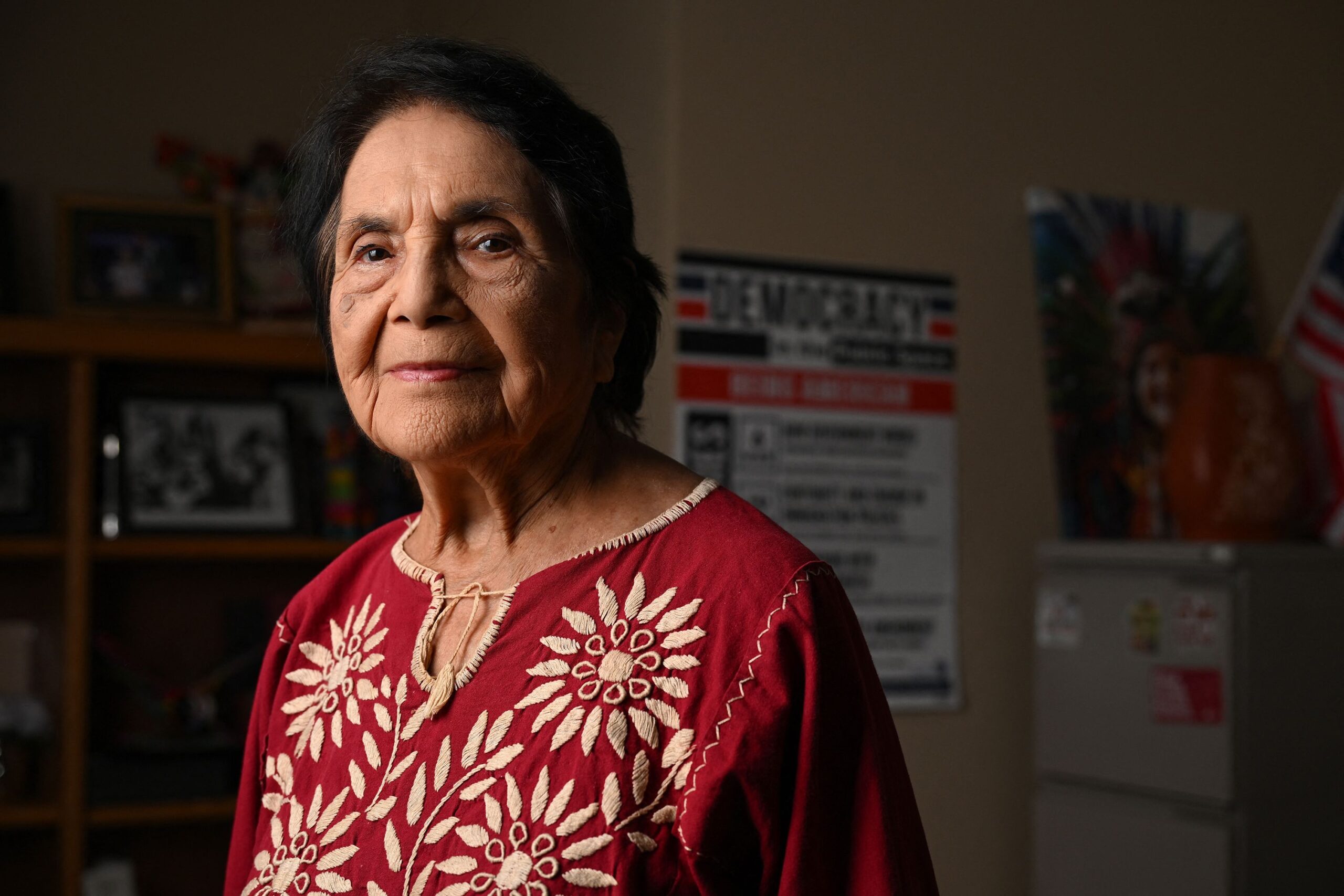
Co-founder of the United Farm Workers of America (UFW) labor union Dolores Huerta

By Ray Sanchez, Norma Galeana, Chelsea Bailey, Caroll Alvarado, CNN
(CNN) — Dolores Huerta, a pioneering labor organizer and civil rights icon who cofounded the United Farm Workers with Cesar Chavez in the 1960s, died at 96, her family said in a statement Wednesday.
“We are deeply saddened to announce that our beloved mother, Dolores Huerta, has passed away today,” they said, adding memorial arrangements will be announced later.
Earlier this year, Huerta revealed to The New York Times that in 1966 – at the height of the UFW’s boycott – Chavez allegedly drove her to a secluded grape field in Delano, California, and raped her.
Huerta told the Times she didn’t report the attack – or a previous incident in 1960 in which she said Chavez pressured her into having sex with him during a work trip – because of police attitudes toward their movement, and because she feared no one in their union would believe her.
Huerta had convinced herself the sexual assaults were incidents she had to “endure alone and in secret,” she said in a statement after the release of the Times investigation.
“I have kept this secret long enough,” she added. “My silence ends here.”
“As you can imagine, this is an incredibly difficult time for us,” her family said Wednesday, “and we ask for privacy as we grieve this incredible loss to our family. We know that many of you around the world share in our mourning, and we will be following up on plans to recognize and celebrate her incredible life and legacy.”
The United Farm Workers said Wednesday the “greatest possible tribute to her life is for her work of organizing to continue.”
“Our greatest monument to her memory is for the union she helped found to continue to grow. Dolores fought for farm workers to the very end of her life. The union she helped found will always continue that work. We know that wherever farm workers gather to organize, we can count on her presence.”
Across the country, elected officials and others paid tribute to Huerta and her legacy. Many repeated her signature rallying cry: Sí se puede — Spanish for “Yes, we can.”
Former President Barack Obama called Huerta “a hero of mine” whose calling enabled “thousands of migrant laborers working in brutal conditions make their voices heard, and demand something better.”
Obama, who in 2012 awarded her the Presidential Medal of Freedom, said Huerta spent her life “fighting for marginalized communities, even as she herself faced sexism and abuse — including, as she revealed earlier this year, from Cesar Chavez and others within her own movement.”
“She also came up with a pretty good slogan, ‘Si, se puede’ — Yes, we can — that I too often get credit for. But as usual, Dolores got there first,” the former president said.
California Gov. Gavin Newsom said Huerta “represented the best of us.”
“California — and the United States — would not be what we are today without her resolute spirit, her passion for justice and fairness, and her commitment to those overlooked and forgotten,” Newsom wrote.
“Dolores’ fight for gender equity, workers’ rights, and civil rights paved the way for generations to come — teaching people what was possible with determination and heart.”
Illinois Gov. JB Pritzker described Huerta as “a fearless labor leader and a lifelong champion of working people.”
Huerta “transformed the U.S. labor movement and improved countless lives,” Rep. Joaquin Castro wrote.
“We must honor her legacy, continue her work, and remember what she told us: Sí se puede. May she rest in eternal peace,” Castro said.
Actor Danny Trejo wrote, “She impacted my life and so many others, we will miss you Dolores … We will never forget all you have done, and we will see your work continue!”
In the 2018 documentary, “Dolores,” Huerta said she always felt called to fight for something greater than herself.
Dolores Clara Fernandez was born April 10, 1930, in Dawson, New Mexico. After her parents divorced, Huerta and her siblings were raised by their mother, Alicia, a businesswoman and active member of their agricultural community.
Huerta devoted much of her life to improving working conditions for farmworkers and championing the rights of marginalized communities. Yet her contributions to the farmworkers’ movement were long overshadowed by those of Cesar Chavez.
She attended college and graduated with a teaching certification.
Despite marrying young and starting her family, Huerta began working with the Community Service Organization, a grassroots group that fought to better the lives of Latinos across California. She climbed the ranks to become the organization’s political director and met Chavez.
In 1962, Chavez and Huerta started the National Farm Workers Association, which later became the United Farm Workers union.
At the time, agriculture workers were specifically excluded from federal protections that guaranteed the right to organize. They toiled under some of the harshest working conditions in the country.
Farmworkers were often exposed to deadly pesticides in the fields and they were among the lowest-paid workers in the United States. In 1962, the year the UFW was founded, the average farmworker earned $0.93 per hour.
“After I had seen the miserable conditions of farmworkers and knowing how to organize people … I just felt that that’s what I needed to do,” Huerta recalled in the documentary. “It was just a calling.”
In 1966, the union launched an international consumer boycott of grapes in protest of labor conditions. The boycott lasted four years. Union members and supporters picketed outside grocery stores and urged restaurants not to carry products that were not union grown.
Chavez began a 300-mile march from Delano, California, to the state capital of Sacramento in March 1966 as Huerta negotiated with the industry leaders. It was during this time, as the union secured its first major victory with a landmark agreement between workers and growers, that Huerta said Chavez allegedly sexually assaulted her.
Chavez’s family told The New York Times they are “not in a position to judge” the newly revealed allegations against him.
“As a family steeped in the values of equity and justice, we honor the voices of those who feel unheard and who report sexual misconduct,” the family said in a statement.
On June 5, 1968, Huerta stood beside Sen. Robert F. Kennedy in a ballroom at the Ambassador Hotel in Los Angeles as he thanked California voters and farmworkers for their support of his presidential campaign. Kennedy was fatally shot there and died the following day.
Kennedy was among the most prominent supporters of the UFW and the farmworker’s movement. In 1966, he traveled to California during the grape boycott and held a Senate hearing where he sparred with local law enforcement arresting picketers for demonstrating.
Over the years, Huerta and the UFW continued to negotiate contracts for farmworkers. The union also took up the battle against pesticides, often negotiating limits on their use into union contracts. In 1972, after years of pressure from the UFW and environmental groups, Congress enacted a federal ban on the pesticide DDT.
In the 2018 documentary, Huerta said she originally began using her signature phrase when anyone cast doubt on what the UFW could achieve.
There are four elementary schools in California, one in Texas, and a high school in Colorado named after Huerta, according to her foundation’s website.
In a foundation video posted just 12 days ago, Huerta compared justice to a crop that must be “nurtured and grown.”
“What remains constant is the movement for justice,” she said. “When we teach people how they can gain power by working together, justice grows. The power to change resides in us… Every moment is an organizing opportunity. Every person a potential activist. Every minute is a chance to change the world. Together, we can. Sí se puede.”
This story has been updated with additional information.
The-CNN-Wire
™ & © 2026 Cable News Network, Inc., a Warner Bros. Discovery Company. All rights reserved.
