What drove Trump to revive red-state rallies less than 24 hours after canceling them
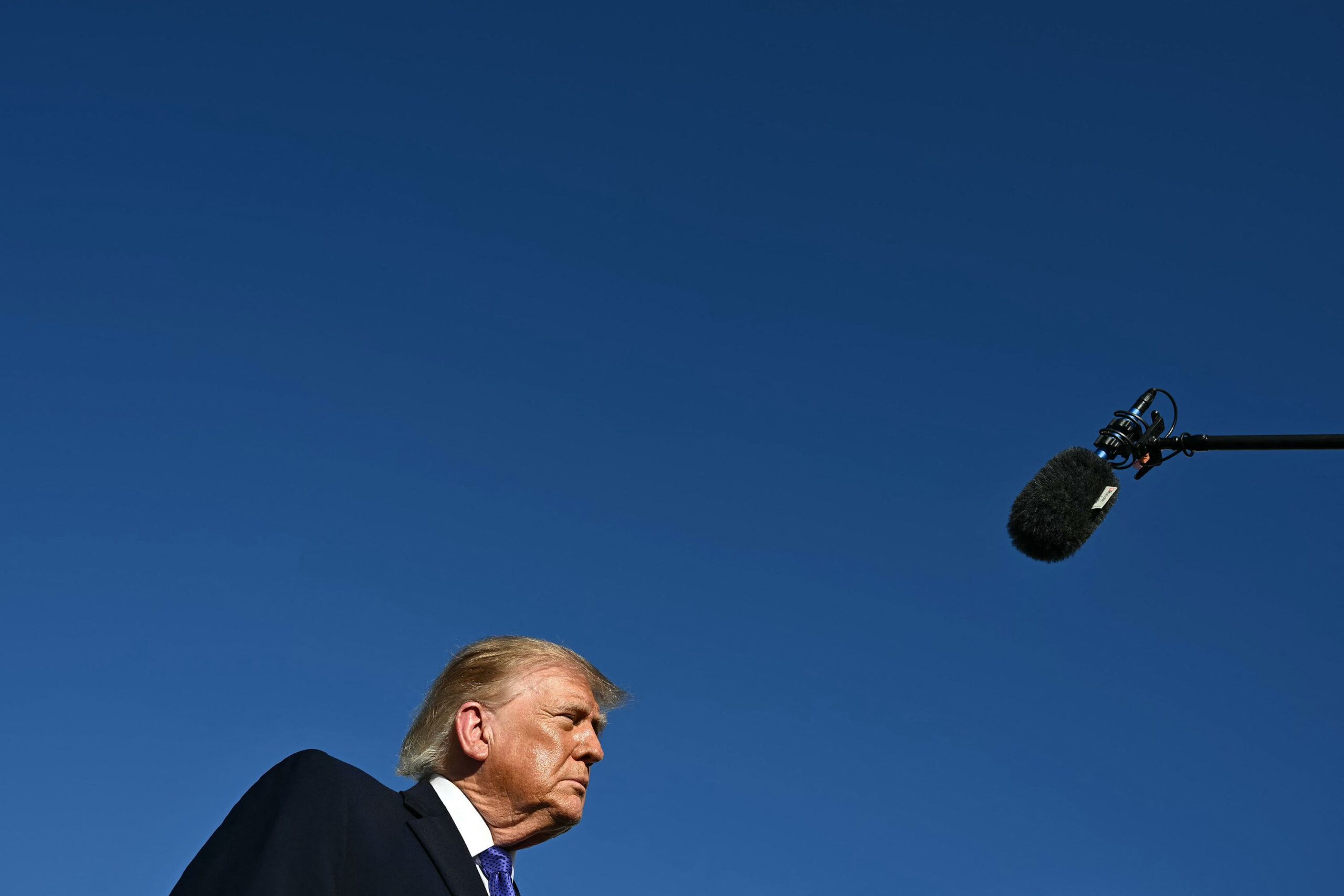
President Donald Trump speaks to reporters after exiting Air Force One at Joint Base Andrews

By Kevin Liptak, Kaitlan Collins, Adam Cancryn, Alayna Treene, CNN
(CNN) — Flying on Thursday to South Carolina to headline his 25th midterm rally this month, President Donald Trump and his political team made a decision, according to one of his advisers: Instead of holding an in-person rally this weekend in Kansas — a red state where Republicans appear vulnerable — Trump would deliver his closing argument there over the telephone.
A few hours later, another weekend rally in Iowa was similarly scrapped. It was a dramatic and sudden shift in the president’s closing-stretch strategy, which had relied on boosting enthusiasm among his base through an exhausting blitz of conservative districts.
When Trump returned from South Carolina, he told reporters he didn’t “feel I have to go to Kansas” because GOP Sen. Roger Marshall was “doing really well.”
The decision relieved some political operatives on the ground, who were happy to hear Trump would be engaging in telerallies that tend to be more scripted.
“Thank God,” one top Republican official told CNN, speaking on condition of anonymity to avoid alienating the White House. “He hasn’t moved the needle anywhere.”
Less than 24 hours later, the plans changed again. The rallies in Kansas and Iowa were back on, both now scheduled for Sunday. And the frenetic pace that White House officials had signaled was abruptly ending was now ramping back up.
Officials said the schedule had merely been rearranged to allow more time for Trump to dial into virtual events. But people familiar with the matter described different motivations to CNN.
After signing off on the changes, Trump had grown irked over the media coverage about his decision to cancel his final rallies, those people said. His irritation was apparent when he returned from South Carolina and lashed out at a reporter who questioned why he called off the events.
“You’ve been following me for two weeks. I feel perfect,” Trump said when asked how he was feeling and whether he was sick of campaigning. The reporter who asked, Trump seethed, looked “like hell.”
The president demanded the rallies be reinstated, the people familiar said, sending staff who had just worked to pull the events off the calendar scrambling to put them back on.
“Rallies are BACK ON!” read a statement confirming the change.
The episode only underscored how heavily Republicans’ midterm prospects have relied on Trump’s personal whims, from endorsements of his preferred candidates — some of whom are now struggling — to his signature rallies, which regularly veer away from the issues and talking points many candidates have tried to highlight.
Even some Republican candidates have scrambled to keep up.
“I think that I’m doing so well in the polls that he’s got, probably got better places to spend his time,” Marshall told reporters after news of the Kansas cancellation emerged Thursday.
Trump advisers insist the president remains a sought-after presence on the campaign trail, and his political team continues to field calls from GOP campaigns asking if he would visit their states in the sprint to Tuesday’s elections, one adviser told CNN.
That was what Trump officials argued was the original rationale for canceling his events this weekend: by skipping in-person events, Trump could maximize his time conducting telerallies for candidates across multiple states. Multiple sources familiar with the planning did not contradict that rationale.
By Thursday evening, Trump’s super PAC, MAGA Inc., had announced the president would headline virtual events in 19 states intended to “energize voters, drive turnout, and help deliver victories.”
The switch to virtual events was not unwelcome in some Republican corners. In the 21-hour stretch of time that the in-person events were canceled, several GOP operatives in battleground states quietly expressed a sigh of relief that the Trump roadshow would no longer be coming to their states.
Many pointed out that Trump is less likely during telerallies to meander into the obscure topics that now consume major chunks of his rallies: the cognitive tests he claims to have aced, the White House ballroom, the bodies of various Republican men.
One Republican official said the Trump rallies were too time-consuming during a peak period when GOP activists would otherwise be door-knocking, canvassing and doing other get-out-the-vote activities.
Trump has pressed his aides at times to schedule more travel in the campaign’s closing weeks, people who have spoken with him said, invigorated by the adoring crowds he’s encountered in deep-red districts and encouraged by friends and advisers who have told him his presence is directly boosting Republican enthusiasm.
Yet at other moments during the monthlong barnstorming, those people said, he’s bemoaned the breakneck nature of a tour that has taken him to a new town nearly every day — oftentimes to rally voters in college arenas or civic centers that appear downright miniature compared with the sold-out stadiums he played during his own campaigns. Trump has also griped privately, and increasingly in public, about how hard he’s having to work down the stretch for a campaign that’s not his own.
“I have to tell you a little secret,” Trump said during an October 23 rally in a Florida arena that sat fewer than 5,000 people. “Outside, there’s a crowd about two or three times this size, and I looked at my people with anger. I said, couldn’t you have gotten us a larger arena than this?”
Later, as Trump boasted about the economy, he joked that he was “wasting my time” with the speeches and should just go home and let his accomplishments speak for themselves — a bit that he repeated at subsequent rallies.
The president has visited nearly every state on the Senate battleground map aside from Maine — many more than once. The initial White House decision to cancel the weekend Midwest appearances caused tremendous buzz, but few complaints among party stalwarts.
“Everyone has seen the president who wants to see him,” the second GOP official said.
Trump will travel Friday to Daytona Beach, Florida, for a rally with Republican candidates for Senate and governor, and he is expected to spend part of the weekend at Mar-a-Lago, where an annual Halloween party is planned.
Including Sunday’s events, Trump will have headlined 28 rallies since the start of October. Even he has acknowledged the schedule is a grind and that it has taken a toll on his voice.
“I don’t need to do this. But I have to because if (Democrats) win the midterms, all of a sudden you’re gonna see a slide and all of the crap that we talk about,” he told a crowd in Kentucky this month. “That’s why I’m here working my ass off for you.”
The-CNN-Wire
™ & © 2026 Cable News Network, Inc., a Warner Bros. Discovery Company. All rights reserved.
