Trump announces global tariffs will increase to 15% from 10% ‘effective immediately’
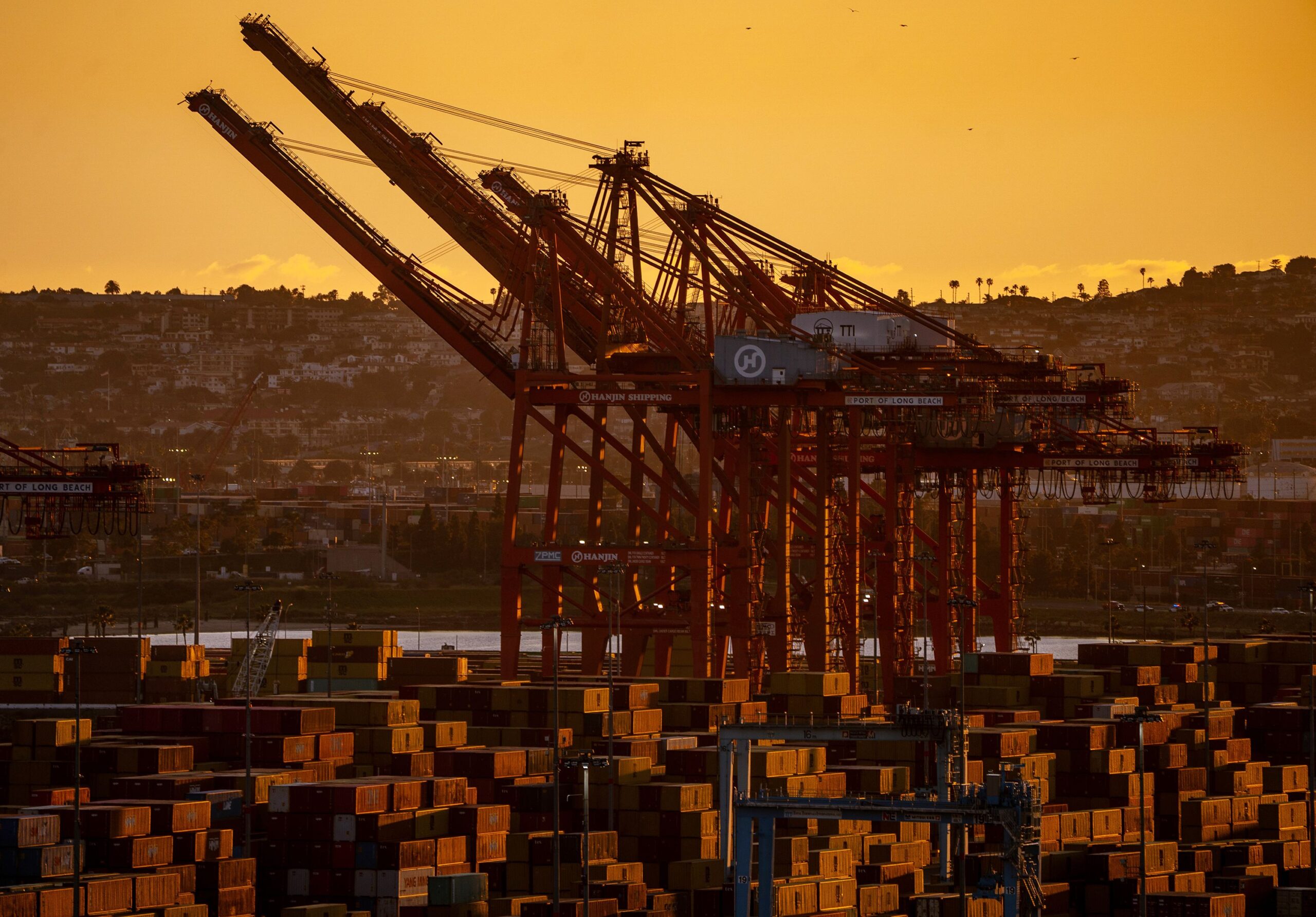
Cranes and shipping containers are pictured at the Port of Long Beach in Long Beach
By Auzinea Bacon, CNN
(CNN) — President Donald Trump said on Saturday that he will increase the global tariffs he imposed a day earlier to 15% from 10% following an adverse ruling at the Supreme Court.
The court on Friday ruled that Trump exceeded his authority with the way he imposed tariffs on trading partners using the International Emergency Economic Powers Act (IEEPA), a law from 1977 reserved for national emergencies.
Trump said in a Truth Social post that “effective immediately,” he would be “raising the 10% Worldwide Tariff on Countries … to the fully allowed, and legally tested, 15% level.” He added that the administration will determine and issue the new tariffs “during the next short number of months.”
After the 6-3 decision, Trump lashed out at the Supreme Court, calling the ruling “deeply disappointing” and adding that he was ashamed of the justices who ruled against his tariffs, which included his own appointees.
Trump said Friday that he would impose a 10% global tariff using presidential powers under trade law Section 122. Those tariffs were set to take effect at 12:01 a.m. ET on Tuesday.
The White House did not immediately respond to CNN’s request for comment on whether the 15% tariff will take effect on Tuesday.
Presidents can impose up to 15% in tariffs using Section 122, but those duties are temporary and require congressional approval after 150 days.
Trump imposed sweeping tariffs last year, including the so-called “reciprocal” tariffs that have raised duties as high as 50% on key trading partners, including India and Brazil, and duties once as high as 145% on China.
Trump may continue imposing duties using other trade laws. The administration has already used Section 232 investigations to impose across-the-board duties on steel, aluminum, copper, lumber, furniture, cars and car parts.
The administration could also use Section 301 to investigate countries that potentially violate other nations’ trade agreements or practices in a way that is “unjustifiable” and “burdens or restricts” US business.
Another tactic would be to impose duties of up to 50% if the US believes trading partners are engaging in discriminatory trade practices, a move that could violate World Trade Organization agreement terms.
Trump is expected to discuss global trade Tuesday in the State of the Union address.
The-CNN-Wire
™ & © 2026 Cable News Network, Inc., a Warner Bros. Discovery Company. All rights reserved.
This story has been updated with additional content.
