Carney says US asked ‘too much, offered too little’ as trade talks collapse
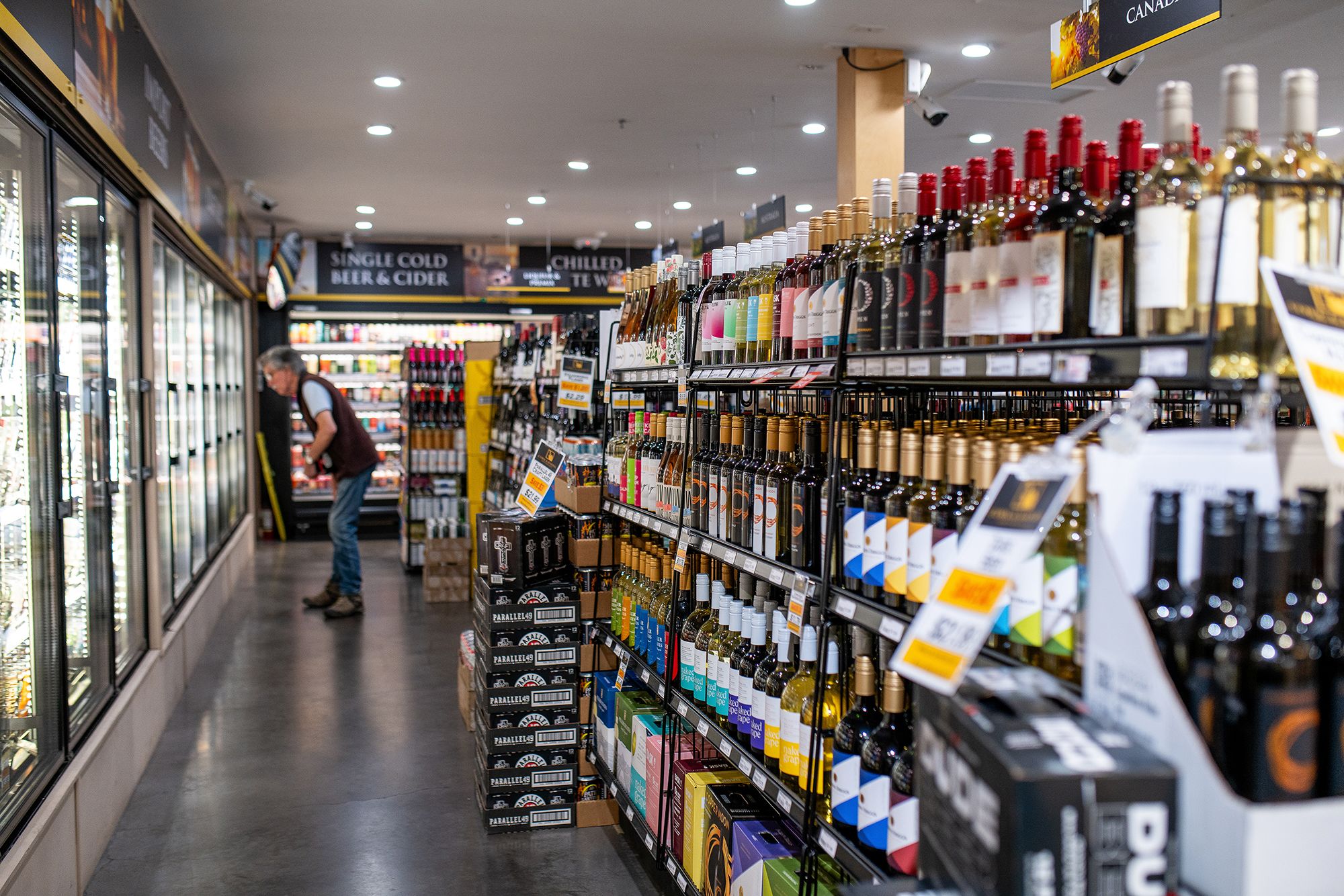
Shelves of wine at a liquor store in Victoria

By Elisabeth Buchwald, Auzinea Bacon, CNN
(CNN) — Canadian Prime Minister Mark Carney on Saturday vowed “dollar-for-dollar” tariffs in response to the United States’ 50% tariffs on $20 billion in Canadian goods after the two sides failed to reach a trade deal.
Carney’s tit-for-tat measures, set to take effect on September 8, will include tariffs on steel, dairy, appliances, agricultural equipment, pulp, paper and electronics.
“In recent days, the United States proposed new terms that were uneconomic, unfair, and undermined the net benefits for Canada, and called into question the reliability of any deal. In short, they asked too much, and they offered too little,” Carney said Saturday at a news conference in Ottawa.
The White House has not responded to CNN’s request for comment.
Canada had offered some concessions as part of the deal, including removing its retaliatory measures from last year and returning US alcohol to Canadian shops. But the US did not agree to “sensible economic terms” for core industries, including automotives. And when asked about critical minerals, Carney said Canada would never give the US “exclusive access.”
Trump and Carney, as well as top trade officials from both countries, had been in direct contact throughout the week after Trump granted a three-day delay to the tariffs.
Earlier in the week, Trump declared: “We’ve come to a deal with Canada.” But he added that it was “still subject to finalization of documents.”
“Canada declined to finalize the trade deal under the terms agreed earlier this week,” US Trade Representative Jamieson Greer said early Saturday in a post on X. He said the deal included “significant tariff reductions on steel, aluminum, autos, and lumber,” as well as “a historic economic and national security partnership.”
“Despite the U.S. offer to Canada to receive the best treatment of any major exporter to our market, new demands and walk backs of other commitments by Canada have upended the careful balance reached in the past days,” Greer said.
Appearing later on Fox News’ “Fox & Friends,” Greer said the US would move forward with its own countermeasures after Canada said it would retaliate against new tariffs.
“We don’t have new talks planned with the Canadians. We’re moving forward with measures that respond to Canadian retaliation,” Greer said. He did not provide specifics on the countermeasures.
The latest standoff is the product of a trade relationship that has steadily deteriorated since Trump returned to office.
Trump imposed tariffs on major Canadian industries — including autos, steel and aluminum — while Canada retaliated with its own measures. While Carney walked back his most sweeping countermeasures last year, Trump remained irked by Canadian provincial leaders’ bans on American alcohol.
The tariffs that are now going into effect are relatively limited in scope, covering about $20 billion worth of goods imported from Canada — roughly 5% of the total value of goods imported to the US from its northern neighbor last year.
On their own, they are unlikely to meaningfully impact American consumers, who are already getting squeezed by high gas prices. The greater issue is the reigniting of the trade war.
“The new US tariffs are designed to hurt and divide us,” Carney said Saturday. “They’re a miscalculation. They’re a miscalculation because Canadians will always take care of each other.”
Carney said in his Friday statement that Canada would introduce “additional measures to support Canadian workers and businesses,” adding to the nearly $25 billion provided in support over the past 18 months.
He said Canada’s economic growth is “accelerating” and that Ottawa would “not allow any nation to determine our future.”
What was on the table
The US had been considering lowering Canadian tariffs on steel, aluminum and cars. Steel and aluminum have been facing 50% duties, and officials reportedly were considering halving them. Meanwhile, Canadian cars have faced 25% duties, with the duties applying only to the non-US content, allowing automakers to deduct the value of American-made parts from the portion of the vehicle subject to tariffs. Officials had discussed lowering the rate to 15%.
Trump has long complained about the restrictions Canada has on American dairy producers’ ability to sell there.
While the country allows US dairy products into its market, it limits the amount that can enter through quotas. Imports above those quotas can face prohibitively high tariffs, effectively restricting additional US dairy sales.
Trump had emphasized earlier this week that the deal, which had not been finalized, would be “great for our farmers.”
“Our farmers will no longer be held up because they were being hurt very badly by Canada,” he added.
Little-known law
Trump is using a little-known law from the 1930s that has never been used to impose tariffs in this way. The move is all but certain to face legal challenges, as have many of the administration’s efforts to impose new levies.
But unless courts block Trump from using the law this way, it could give him a powerful new method to impose tariffs of up to 50% on Canada — and potentially other trading partners — whenever his administration determines they are discriminating against American commerce.
Unlike some of the other laws Trump has turned to as he rebuilds his sweeping tariff regime after the Supreme Court decision earlier this year, this trade law, known as Section 338, does not appear to impose a time limit on the duties. That means tariffs imposed under the law could remain in place indefinitely unless Trump or a future president chooses to remove them.
And the potential reach is broad. The Canadian goods targeted in this first round spread far beyond the products at the heart of Trump’s stated grievances, hitting close to 500 items.
For now, Trump has spared many of the goods the US relies on Canada for most, including energy, critical minerals and fish, but that may be subject to change.
The-CNN-Wire
™ & © 2026 Cable News Network, Inc., a Warner Bros. Discovery Company. All rights reserved.
This is a developing story and will be updated.
