Canary in the coal mine or just a bad apple? CoreWeave debt drama roils Wall Street
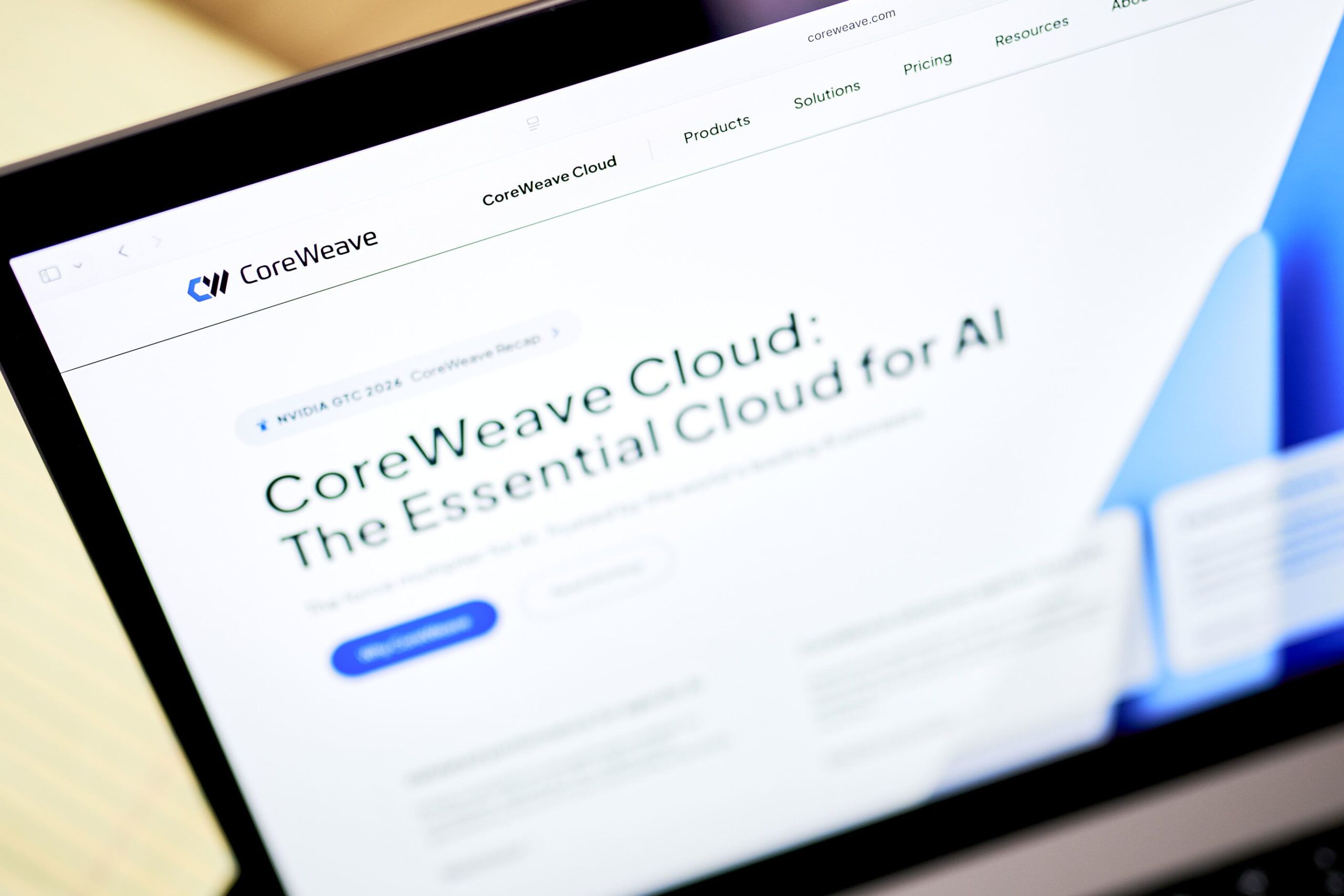
The CoreWeave website arranged on a laptop in Forest Hills

By John Towfighi, CNN
New York (CNN) — Wall Street is increasingly scrutinizing the massive debt companies are taking on to fund the artificial intelligence boom.
Rising interest rates and uncertainty about the pace of the data center buildout are fueling concerns about whether heavily indebted AI companies will be able to earn enough to pay it all back.
CoreWeave (CRWV) is at the center of the turmoil. The New Jersey-based tech company is part of a niche sub-industry called neoclouds that rent computing power to companies building AI technology. It’s a high-growth opportunity for investors, given expectations for intense AI demand. But CoreWeave is relying on debt to fund its growth.
The company has come under pressure this month as its bond yields surged to levels that signal distress. Rising interest rates are putting pressure on the company, which isn’t profitable. The company’s shares have dropped 30% this month.
And it’s making Wall Street wonder: Is CoreWeave a canary in the coal mine, or a case of a bad apple in an otherwise healthy orchard? Investors are trying to discern whether CoreWeave’s troubles could create systemic problems for the AI boom.
“Canary in the coal mine implies that if CoreWeave fails, that the whole ecosystem is going to fall, that the whole AI economy is going to fail. I don’t think that’s the case,” Gil Luria, head of technology research at D.A. Davidson, told CNN.
“The AI economy is full of good behavior and bad behavior,” Luria said. “They are a bad apple, but there’s other bad apples. They just represent some of this bad behavior.”
In a fresh sign of doubts about whether the billions flowing to AI companies can be justified, AI data center company Elice Group plunged 32% on its trading debut in South Korea Tuesday. The IPO flop will only add to concerns about valuations and returns across the sector.
AI debt in focus
CoreWeave had roughly $52 billion in debt and lease liabilities on its balance sheet in the second quarter. That’s up from roughly $30 billion at the end of 2025.
Meanwhile, the cost of borrowing has climbed as bond yields have surged this year. Smaller, debt-laden companies are more vulnerable and exposed to the pain of higher interest rates.
As of last week, the interest on some of CoreWeave’s bonds surged to 15% — a level that signals distress or a higher risk of default. Investors are more concerned that CoreWeave won’t earn enough returns to pay back all the money it borrowed.
CoreWeave exemplifies the risk of “funding speculative investments with debt,” Luria said. Since CoreWeave went public in 2025, Luria said he’s been skeptical about the amount of debt the company is taking on without a clear path to profitability.
With enormous amounts of debt on its balance sheet, the company is vulnerable to sharp moves in interest rates, as well as any signs of a slowdown in the data center buildout.
As public backlash to data centers mounts, investors are trying to discern whether moratoriums or other hurdles could hamper forecasts for size and completion of data center projects.
We’ve been here before… sort of
Uncertainty about the health of CoreWeave contributed to a slide in tech stocks last week. But Wall Street analysts argue the reaction might be overdone.
Markets have seen this kind of reaction from investors before when rising interest rates start to spark turmoil — and it wasn’t always rational or warranted.
In 2023, a series of regional bank failures sparked concerns that rising interest rates were ushering in a widespread crisis.
“It was a plausible argument. It was also wrong,” Ajay Rajadhyaksha, global chairman of research at Barclays, wrote in a Monday note.
“Similarly, investors shouldn’t extrapolate recent challenges for CoreWeave debt to a view on the entire AI capex cycle,” he wrote.
What’s next for CoreWeave and AI?
CoreWeave’s enormous debt load is concerning for the value of the stock, but there isn’t a systemic risk for the AI buildout, analysts say. Ultimately, the demand for AI is real and will continue to power the boom.
“The only systemic risk to the ecosystem right now, is if people stop using AI and aren’t willing to pay for it,” Luria said. “I actually think that demand for AI is growing so fast that any potential failures are probably down the road.”
Wall Street is still feeling confident about the Big Tech companies powering the AI boom like Alphabet, Microsoft and Nvidia. These are some of the largest publicly traded companies in the world.
As long as demand for computing power exceeds the supply, these Big Tech titans will have the incentive to keep building. Higher interest rates are a pain, but not enough to dissuade them from building.
Still, the Big Tech titans have been burning through cash as they spend more money on the AI buildout. Wall Street analysts are trying to discern whether Big Tech will continue to burn cash or not. If more debt is used, higher rates could become more of a problem.
“Our downfall is always when we take on too much debt,” Luria said. “It’s unnecessary, but times of boom and opportunity and frontier end up becoming a form of the Wild West, and bad behavior ensues.”
“That doesn’t mean the growth is wrong or the technology is bad,” Luria said. “It just means that there’s bad behavior that usually follows large growth cycles.”
The-CNN-Wire
™ & © 2026 Cable News Network, Inc., a Warner Bros. Discovery Company. All rights reserved.
