With the US pressuring Cuba, a Castro known as ‘the Crab’ is making appearances. Here’s why it matters
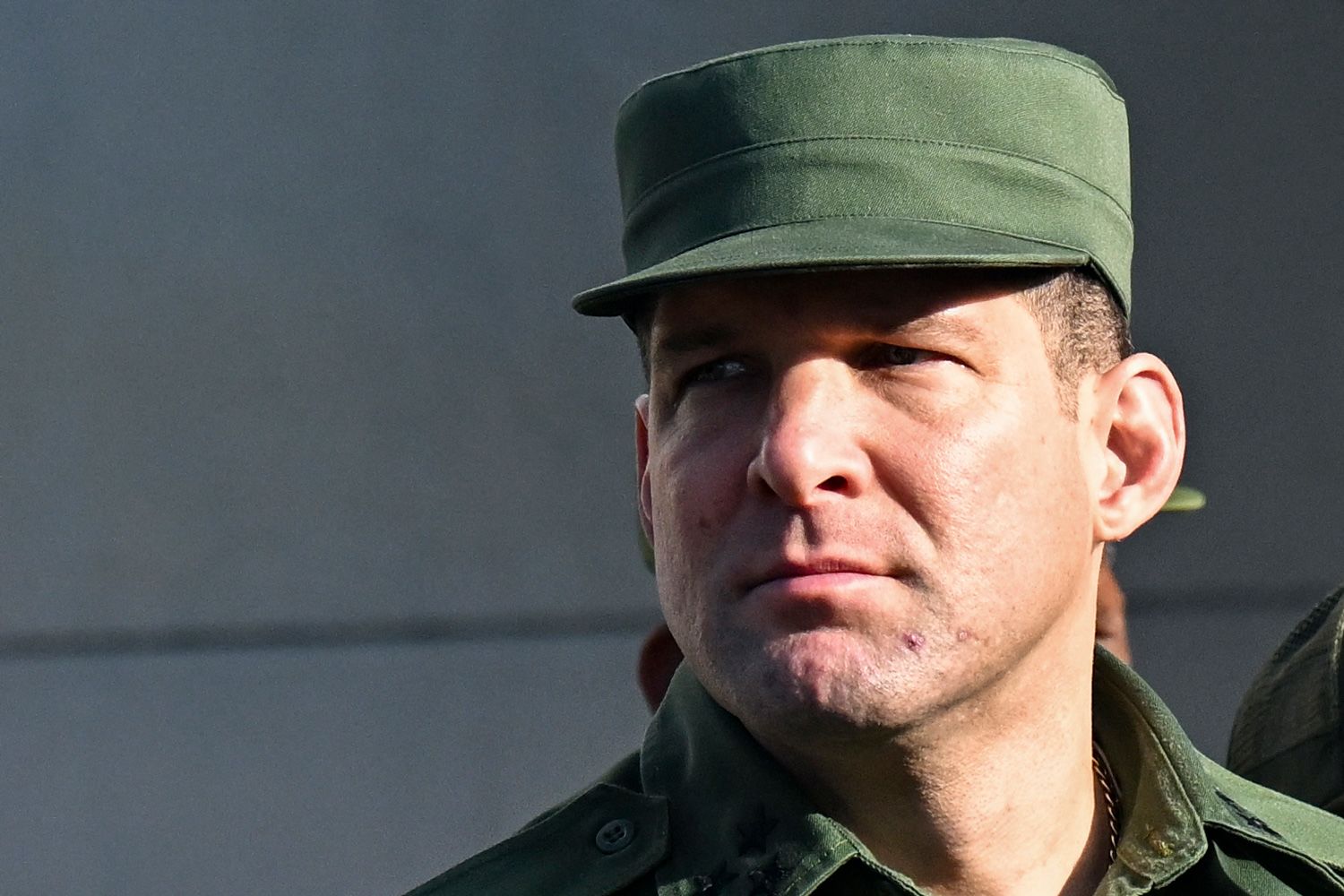
Cuba's Colonel Raúl Guillermo Rodríguez Castro
By Mauricio Torres, Michael Rios, CNN
(CNN) — Raúl Guillermo Rodríguez Castro, grandson of former Cuban President Raúl Castro, appeared for the first time alongside Cuban President Miguel Díaz-Canel at two public events on Friday, raising questions, according to analysts, about his role in Cuba’s leadership as the island faces calls for regime change from the United States.
On Friday morning, Rodríguez Castro took part in a meeting Díaz-Canel held with leaders of the Communist Party of Cuba and the Council of Ministers. Later, he attended a press conference where Díaz-Canel addressed the island’s social and economic crises and confirmed that his government had spoken with the US about the pressure Washington has maintained on Havana since the 1960s and intensified in recent months.
Rodríguez Castro’s appearances came weeks after reports surfaced that he has allegedly been in talks with the US about the island’s future.
According to Axios, the discussions were held with US Secretary of State Marco Rubio while bypassing official Cuban government channels.
CNN has not been able to verify this information with the US State Department or the Cuban government.
Still, some analysts and many Cubans believe Rodríguez Castro is gaining public prominence and could even assume a leadership role in the event of a change of government, as Cuba faces immense political and economic pressure from the US.
How Cuba crisis deepened
Cuba’s communist government, weakened by decades of US sanctions and economic mismanagement, is facing one of its most severe crises in years, with the country edging toward a humanitarian emergency. Power outages are widespread, hospitals are cutting back on surgeries, shortages of fuel and food are worsening, while tourism declines.
The situation in Cuba deteriorated further after the January 3 US operation that removed Venezuelan leader Nicolás Maduro, whose government had long supplied the island with heavily subsidized oil. Severing Venezuela’s relationship with Cuba is part of Washington’s broader strategy of toppling Havana’s communist-run government. Since mid-December, Washington has blockaded Venezuela from shipping oil to Cuba, economically strangling the island.
US officials say the raid to capture Maduro also exposed Cuba’s vulnerabilities, killing dozens of Cuban security personnel assigned to protect Maduro while US forces suffered no casualties.
Washington’s decision to leave some of Maduro’s allies in power in Venezuela, including allowing Vice President Delcy Rodriguez to be acting president, signaled that the Trump administration may be willing to strike deals with Cuban rival factions rather than seek total regime change.
US officials had already been quietly holding hush-hush meetings with Venezuelan elites before Maduro’s capture and are now reportedly exploring similar contacts with influential figures in Cuba.
His grandfather’s bodyguard
Rodríguez Castro, 41, is the son of one of Raúl Castro’s daughters, Débora Castro Espín, and Luis Alberto Rodríguez López-Calleja, a general who headed the Business Administration Group (GAESA), a consortium of companies under military command. Rodríguez López-Calleja, who died in 2022, was one of the former president’s closest confidants, the Associated Press reported.
Rodríguez López-Calleja was “a man Raúl Castro trusted completely,” said Sebastián Arcos, director of the Cuban Research Institute at Florida International University. After Rodríguez López-Calleja’s death, Arcos told CNN, his son began to climb the ranks, taking charge of his grandfather’s security during his presidency, from 2008 to 2018.
“Raúl Guillermo, ‘el Cangrejo’ (the Crab), … became head of Raúl’s personal guard, his personal security detail,” Arcos said. “Eventually, he became head of what would be the Cuban equivalent of the Secret Service.”
Photos from Reuters show Rodríguez Castro guarding his 94-year-old grandfather at various times, including during meetings with the late Pope Francis or high-ranking Russian officials.
Rodríguez Castro is widely known in Cuba by the nickname “Raulito,” a nickname meaning “Little Raúl.”
Rodríguez Castro is also a grand-nephew of Fidel Castro, who led the Cuban Revolution in 1959 and then was president of the country from 1976 to 2008. He left office due to health problems and died in 2016.
International relations expert Fausto Pretelin noted that Rodríguez Castro has no known history within the Communist Party of Cuba. Diana Correa, director of the international relations program at Tecnológico de Monterrey, believes that his appearance at Díaz-Canel’s public events on Friday points to both the influence Raúl Castro continues to wield in Cuban politics and the trust the former president has in his grandson.
“What strikes me is … that it’s happening publicly now, but what we should really ask ourselves – and it’s very difficult to know the answer – is how long he has been acting as this channel of communication,” she said.
Questions about Cuba’s future
Another of the former president’s closest associates, Arcos said, is his son Alejandro Castro Espín, long seen by many Cubans as a possible successor after Castro stepped down in 2018.
“They participate in all these high-level government meetings, even though neither of them holds a government position. They are Raúl Castro’s eyes and ears on everything that happens at the government level. Therefore, it wouldn’t be surprising if they were Raúl Castro’s interlocutors in a supposed negotiation with the United States,” he said.
CNN has reached out to the Cuban presidency for more information about the current roles of Rodríguez Castro and Castro Espín.
There have been multiple media reports claiming Rubio and Rodríguez Castro have spoken in secret, something neither has confirmed publicly.
Speaking to reporters on the sidelines of a Caribbean Community gathering in St. Kitts and Nevis in late February, Rubio referred to the crisis in Cuba.
“Cuba needs to change. It needs to change. And it doesn’t have to change all at once. It doesn’t have to change from one day to the next. Everyone is mature and realistic here,” Rubio said on February 25.
“And they need to make dramatic reforms. And if they want to make those dramatic reforms that open the space for both economic and eventually political freedom for the people of Cuba, obviously the United States would love to see that,” he added.
Correa emphasized that amid the crisis in Cuba, many citizens see Rodríguez Castro’s increased presence as an indication that a change of government may be coming, framed within talks with the US.
“Many are saying right now that it is indeed a generational shift, taking the reins, even if it’s somewhat behind the scenes, but still operational control,” she said. “By having Castro negotiating, at least externally it seems they are sending the signal that the negotiation is serious because this person represents all state power,” she concluded.
The-CNN-Wire
™ & © 2026 Cable News Network, Inc., a Warner Bros. Discovery Company. All rights reserved.
CNN’s Jonny Hallam contributed reporting.
