What we know on the 21st day of the US and Israel’s war with Iran
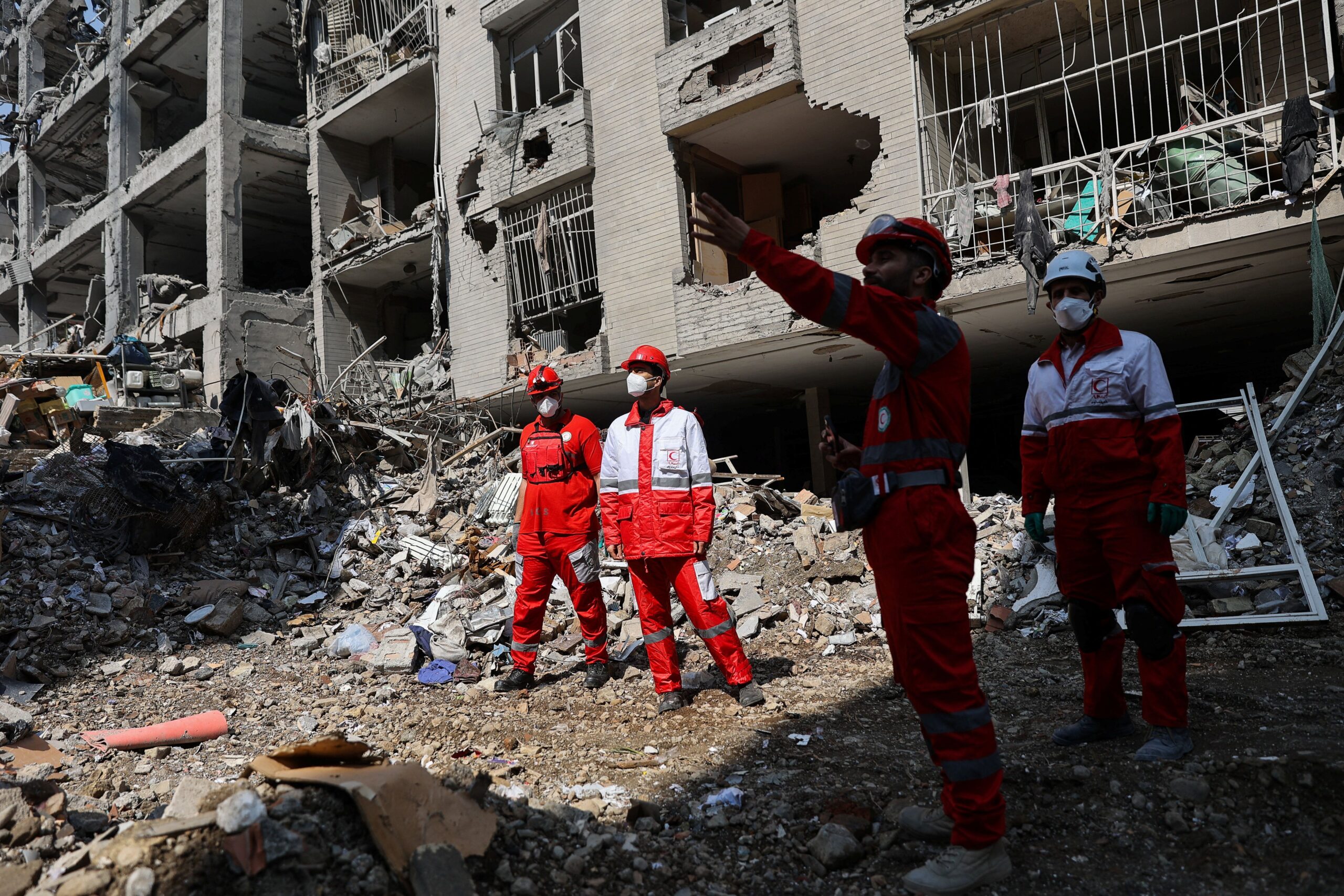
Members of a Red Crescent rescue team work at a building that was damaged by a strike

By Jessie Yeung, CNN
(CNN) — As the US-Israel war against Iran nears the end of its third week, Prime Minister Benjamin Netanyahu has said that Israel will halt its strikes on Iranian energy sites, after US President Donald Trump reacted angrily to an Israeli attack on a facility linked to the world’s largest natural gas field.
Meanwhile, Trump could soon ask Congress for as much as $200 billion to keep funding the war, which has sent shudders through the global economy. The president has also created an awkward moment when he cracked a joke about the Pearl Harbor attack during a summit with Japan’s leader.
Here’s what to know on Day 21.
What are the main headlines?
- Netanyahu’s address: A day after Israel struck Iran’s South Pars gas field, Netanyahu said Thursday that he would comply with Trump’s demand that Israel refrain from attacking Iran’s important energy sites. The South Pars strike was a major escalation in the war and caused global energy prices to spike.
- Israel “acted alone:” Netanyahu also said that Israel “acted alone” in the strike, seeming to confirm Trump’s claim that the US “knew nothing” about the attack in advance. But US and Israeli sources familiar with the attack told CNN on Wednesday that the US had been aware of the strike, contradicting both leaders’ claims.
- Energy prices: Brent crude, the global oil benchmark, rose early Friday to more than $110 a barrel. Goldman Sachs has warned that energy prices will stay elevated and that a barrel of oil may cost more than $100 all the way through 2027.
- Strait of Hormuz: The United Nations’ maritime organization said it will start negotiating with countries to establish a humanitarian corridor to free around 20,000 seafarers stranded in the Gulf. The UN did not give a timeframe for when talks would begin, or whether Iran –– which has a chokehold on the Strait of Hormuz –– would cooperate. The United Kingdom has also sent military planners to work with the US to come up with a “viable collective plan” to reopen the vital waterway.
- Wartime funding: Trump may seek $200 billion in new Pentagon funding, calling it a “small price to pay” to equip the military. His administration also bypassed Congress to expedite the sale of billions of dollars’ worth of weapons to the United Arab Emirates and Kuwait, as Gulf allies take the brunt of Iran’s retaliation for US and Israeli military action.
- Pearl Harbor joke: When a reporter asked Trump why he didn’t tell allies like Japan about his intention to strike Iran, the president responded in part with a joke about the World War II attack on Pearl Harbor –– while sitting next to Japan’s prime minister in the Oval Office.
- Boots on the ground: Trump said he’s not deploying US troops, when asked about Reuters’ reporting that his administration is considering sending thousands to the Middle East. But he also added: “If I were, I certainly wouldn’t tell you, but I’m not putting troops.”
What’s happening on the ground?
- US aircraft hit: An F-35 fighter jet made an emergency landing at a US air base in the Middle East after it was struck by what is believed to be Iranian fire, sources told CNN. US Central Command said the pilot is in a stable condition.
- Strikes on the ground: Countries across the Middle East intercepted drones and missiles early Friday morning, including Iran, Israel, Saudi Arabia, the United Arab Emirates, Bahrain and Kuwait. The attacks come as Muslims around the region celebrate the Eid al-Fitr festival, that marks the end of the holy month of Ramadan.
- High casualties: More than 18,000 Iranian civilians have been injured since the latest conflict began, according to state media, citing the Iranian Red Crescent Society. Meanwhile in Lebanon, the death toll surpassed 1,000 on Thursday. Scores more have been killed around the region, including US service members and foreign nationals.
- Al-Aqsa closed: The Al-Aqsa mosque in Jerusalem will remain closed on Friday – the first time since 1967 that the place of worship has been shut during Eid. Israeli authorities shut down the mosque at the start of the war with Iran for “security reasons,” in a move that critics say have deprived Palestinians of the chance to worship at one of Islam’s holiest sites.
- Lebanese flee: A fifth of the population of Lebanon has been uprooted from their homes in just two weeks, according to an official with the United Nations Refugee Agency, leaving families struggling to find shelter during the conflict between Israel and Hezbollah.
Clarification: This story has been updated to reflect that President Donald Trump may ask Congress for up to $200 billion to fund the Iran war.
The-CNN-Wire
™ & © 2026 Cable News Network, Inc., a Warner Bros. Discovery Company. All rights reserved.
