Checklists, masks and mystery: What we know about the plague scare in Russia
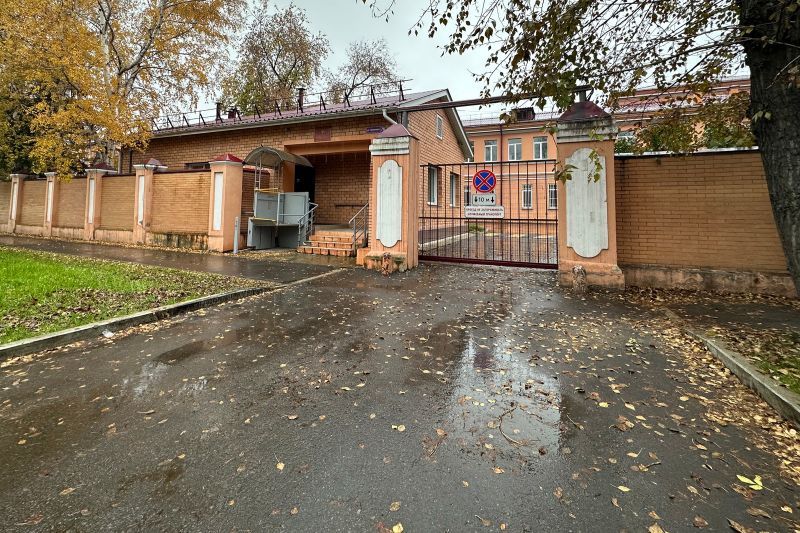
The entrance to the grounds of the anti-plague institute in the city of Irkutsk

By Zahra Ullah, Arina Porkhovnik, Anna Chernova, CNN
Moscow (CNN) — Russian authorities have sought to allay global worries over the death of a young woman who worked at a Siberian anti-plague laboratory. But moves to isolate her contacts and introduce new disease-control measures at local hospitals have raised concerns among people who fear they’re not being told the full story.
The woman was a lab technician at Irkutsk Research Anti-Plague Institute of Siberia in Russia’s southeast. Questions have swirled around what illness she contracted and why Russian authorities have rushed to isolate her contacts, while downplaying the suggestion that she died of plague.
Russia’s health watchdog said Wednesday said there is no epidemic risk following the woman’s death, and that it was winding down response. Rospotrebnadzor said medical monitoring has been completed for “over 90%” of contacts of the deceased lab worker, and no “dangerous” pathogens have been found. But unanswered questions remain.
The United States has made a formal request to Russia for information and US President Donald Trump said he is expecting to speak to his counterpart Vladimir Putin about the issue. The Kremlin on Wednesday said no call had been arranged between the two leaders but could be arranged, if requested.
Kremlin spokesman Dmitry Peskov added Moscow had informed the World Health Organization of the plague researcher’s death “in accordance with established practice”, but offered no clarity on reports of a second case linked to the episode.
Despite the assurances from Moscow that the risk is “low,” some regional states implemented quarantine controls at borders.
Here’s what we know:
How did the plague scare originate?
A lab worker, identified as 28-year-old Darya Shipilova, was hospitalized on September 29, according to independent regional news outlet Lyudi Baikala.
She is believed to have died at a hospital in Shelekhov, a town about 12 miles southwest of Irkutsk, at the end of last week. A friend of hers told CNN she died on October 2. The friend didn’t confirm any other details.
Unverified reports suggest she fell ill after a potential lab-leak or contracted the illness after traveling to another region.
Russia’s health and consumer watchdog, Rospotrebnadzor, said she died of a pneumonia of “unknown” origin. The agency downplayed suspicions that her illness was related to her work.
The first sign of a potential issue came on October 2, when Irkutsk Governor Igor Kobzev posted on Telegram that Anna Popova, the head of Rospotrebnadzor, had convened an “extraordinary meeting” about a suspected case of a “particularly dangerous infection” in a resident of the region.
Kobzev did not mention plague, but Alexey Tsydenov, the head of neighboring Buryatia, raised that possibility when he said in a statement that the woman “died of plague in the Irkutsk region.” According to Russian media reports, his statement was later edited to say that she had “possibly died from plague.”
We don’t know what the lab worker was suffering from, or how she contracted her illness, but the opaque Russian response has fueled speculation.
What’s happening in Irkutsk?
Ulyana Gavryunina, a 29-year-old blogger from Angarsk, a city in the Irkutsk region, told CNN she had to change maternity hospitals at 40 weeks pregnant after newly imposed quarantine restrictions meant her husband could no longer be with her during labor.
When she arrived for a scheduled appointment at the Irkutsk City Perinatal Center, her mother, who usually accompanied her during visits, was refused entry.
Staff checked her temperature, asked her to show her tongue and instructed her to wear a mask, sanitize her hands and complete two questionnaires. One of them was titled “Checklist for Suspected Highly Dangerous Infectious Disease Plague” and listed symptoms such as high fever and chest pain.
Staff did not mention plague, she said, telling her only that there was an unidentified “new virus” and that extra precautions were needed to protect the babies.
Inside the hospital, the atmosphere was calm, Gavryunina said. “Everything was as usual,” she told CNN. “Everyone was wearing masks, that’s all.”
For other residents, the hospital restrictions have fueled questions about whether authorities are being transparent.
“It feels like they’re not telling us the whole story,” one person who self-identified as an Irkutsk resident commented beneath one of Gavryunina’s social media posts.
“They’re telling everyone that it wasn’t the plague but pneumonia. Yet hospitals are still under quarantine, and ambulance doctors are driving around in full Covid protective suits.”
Another local resident, who identified herself only as Ekaterina, said life there was continuing as normal.
She told CNN that while some of her acquaintances were “slightly panicking,” she had seen little change on the streets.
“Everything is as usual, no visible changes,” Ekaterina said.
How have Russian authorities responded?
Russia’s health watchdog has reassured locals that the “epidemiological situation” is stable, but local media reported that 60 workers in the Irkutsk Research Anti-Plague Institute were in quarantine and a that number of hospitals were subject to restrictions
The Kremlin has urged people to rely on updates from the health watchdog rather than “various rumors and speculation.” But the watchdog has released limited information.
What has been the international response?
The Trump administration is struggling to get clear answers about the death of Shipilova and has formally escalated its request for information from Moscow amid days of stonewalling from Russian officials.
US Secretary of State Marco Rubio has urged Russia to share more information about the circumstances of the researcher’s death.
“I think it’s incumbent upon Russia to obviously share more information with the world,” he said. “Maybe it’s bigger than we thought. We don’t know, but I think it would be reckless at this moment, given the limited information we still have, to speculate.”
The World Health Organization (WHO) said it was in contact with Russian health authorities to “verify the event, its circumstances, the laboratory tests underway, and their results.”
“Based on unofficial information available, the public health risk to the general population appears to be low,” it said.
WHO chief Tedros Adhanom Ghebreyesus said on Tuesday that Russian health authorities reported that no case of plague had recently been registered in Irkutsk region, in response to WHO’s verification request.
He said Russian health authorities told WHO that an epidemiological investigation was conducted, and contacts were identified, tested and put under medical observation. The Russian health authorities did not detect any high-threat pathogens among the contacts, Tedros said.
Tedros also added that the WHO is seeking clarification from Russian authorities regarding “media reports of a second employee with pneumonia of undetermined cause”, though he did not say which media reports he was referring to.
Some Western media outlets have reported a second case linked to the episode, citing unspecified Russian media reports. CNN is not aware of any such reports and neither local media nor local officials have confirmed a second infection.
The Kremlin on Wednesday said Russia had informed WHO of the plague researcher’s death “in accordance with established practice.”
Border measures
Despite such reassurances, several countries in the region have said they are monitoring and have put safeguard measures in place.
Kazakhstan, Kyrgyzstan, Uzbekistan and Tajikistan have implemented quarantine controls at state border crossing points. Uzbekistan said it has “increased the readiness” of authorities to deal with highly infectious diseases.
But there do not appear to be additional border measures in place in China, which has a history of infectious disease control with Russia. No flights from Irkutsk to China have been cancelled in recent days, according to data from Flightradar24 reviewed by CNN.
CNN has asked China Customs and its foreign ministry whether Beijing plans to establish any border measures. China is currently observing an national holiday.
Why was the lab studying the plague?
According to its website, the Anti-Plague Institute employs around 95 researchers and is a major public health facility responsible for monitoring and preventing outbreaks of high-risk bacterial and viral infections across Siberia and Russia’s Far East.
The institute was established in 1934 to combat plague and continues to study the disease because Yersinia pestis, the bacterium that causes the plague, still circulates naturally in wildlife across parts of Siberia and neighboring regions.
The-CNN-Wire
™ & © 2026 Cable News Network, Inc., a Warner Bros. Discovery Company. All rights reserved.
Tim Lister, Hira Humayun and Isaac Yee contributed reporting.
