America 250: St. Joseph’s Civil War legacy as a city divided by the Union and Confederacy
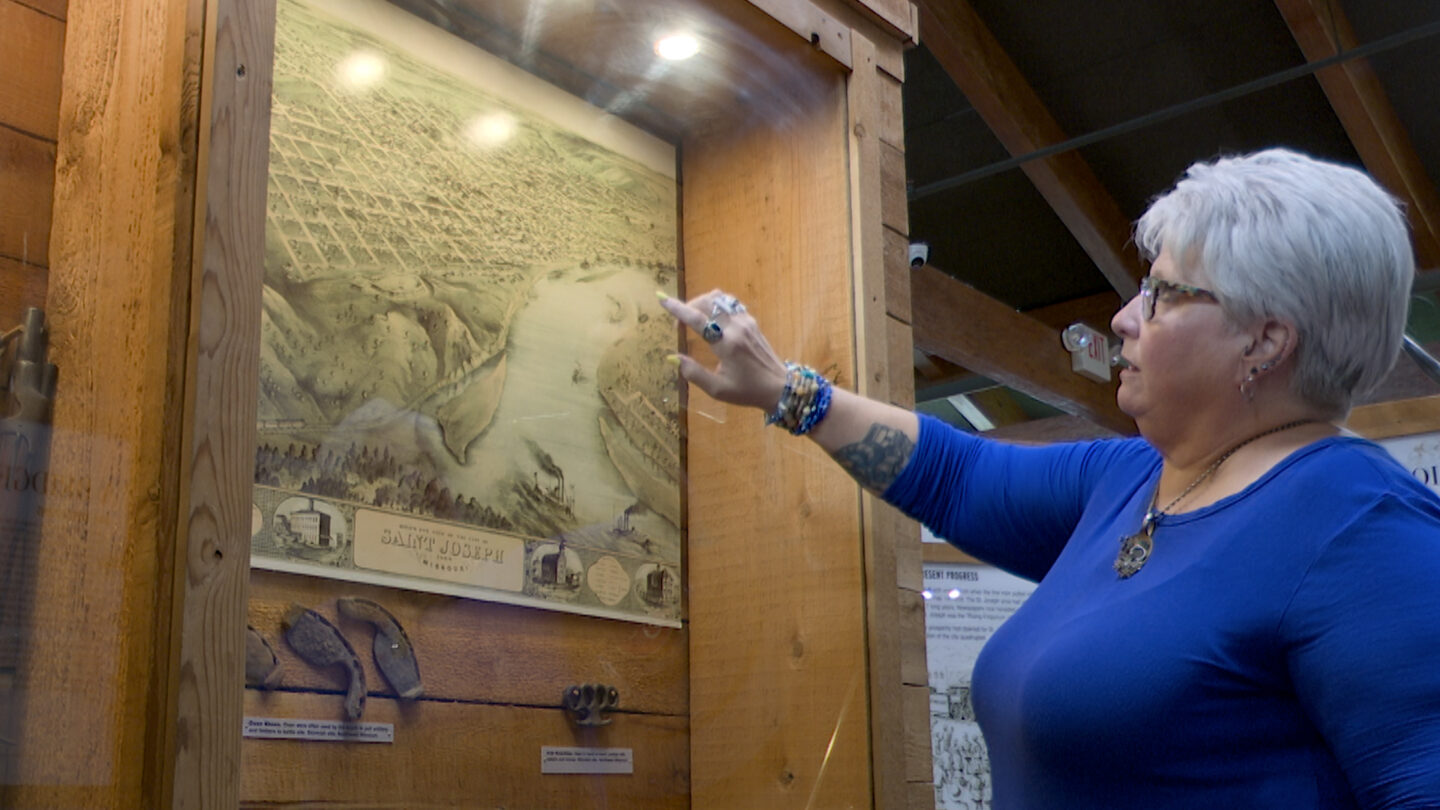

ST. JOSEPH, Mo. (KQTV) -- During the American Civil War, St. Joseph played a crucial part for both the Confederacy and the Union, serving as a supply depot for soldiers all across the United States and eventually becoming a key aspect in the Union's victory.
By 1860, St. Joseph was Missouri's second-largest city, a bustling hub of commerce and the jumping-off point for westward expansion.
But beneath the prosperity lay a boundary that would divide friends and family during the war.
"Two thousand men went to fight for the North, about 2,000 men went to fight for the South in the county," said Sarah Elder, manager at the Remington Nature Center. "St. Joseph was about the same. So you had families split down the middle."
The division extended beyond households.
Business partnerships dissolved, law firms broke apart, neighbors who had once shared meals now viewed each other with suspicion, and in some cases, outright hostility.
St. Joseph was a metaphor of the nation itself, a border city in a border state, caught between two warring ideologies.
The breaking point came in May 1861.
Mayor Jeff Thompson, a staunch Southerner who would later become a Confederate general, watched as the postmaster raised the United States flag above the post office.
According to Elder, something inside him snapped.
He climbed the outside of the building, tore the flag down, and tossed it to the crowd below, where it was torn to pieces.
The flagpole was cut down and thrown into the Missouri River.
The ensuing street fighting prompted the United States Army to arrive and place St. Joseph under martial law for the duration of the war.
The Union built Fort Smith to oversee the occupation.
Southern sympathizers were required to sign loyalty oaths to travel or conduct business.
Schools closed in 1861 and would not reopen for three years. By the end of the war, St. Joseph was visibly changed.
"By the end of the war, St. Joseph was a ghost town," Elder recalled. "It was no longer the bustling metropolis it had been in 1860."
The Pony Express, while not an economic success, played an important part in relaying information before the telegraph could be fully established.
Bob Ford, a local historian and podcast host, spoke on the express's importance.
"Information and the battle reports and everything else politically that was going on had to get to California in a timely manner," Ford said. "And because of the Pony Express, it did."
Contrary to popular belief, the Emancipation Proclamation did not free slaves in Missouri.
Elder explained, "It freed only the slaves in those states that were in rebellion. Missouri was not considered to be in rebellion."
Missouri's enslaved people were not freed until an amendment to the state constitution in late 1865, nearly a year after the war ended.
Within a decade after the war, St. Joseph entered what historians call its Golden Age.
By the late 1870s and 1880s, the city had more millionaires per capita than any other city its size.
The homes on Hall Street and Museum Hill, still admired today, were constructed during this period of renewal.
"That wealth came from reestablishing wholesale trade and selling products to California and the new states being carved out of the interior," Elder explained.
Yet the city's trajectory might have been even greater.
"We were on the verge of becoming a Chicago, but it wasn't meant to be," Ford reflected.
President Lincoln ultimately decided to route the transcontinental railroad through Iowa instead, a decision that altered St. Joseph's fate.
Which brings us to the present, while St. Joseph may not be the size of Chicago, its rich history is worth exploring.
While no major battles were fought, only minor skirmishes, St. Joseph helped play a key role in Abraham Lincoln's and the Union's victory, having the resources and connections needed to secure the win.
Both Elder and Ford continue to share this history through public presentations.
Elder speaks at the Remington Nature Center, and Ford hosts monthly history talks at East Hills.
