Life in exile: What the Iranian soccer players who defected can expect

By Don Riddell, CNN
(CNN) — Shiva Amini says that the lives of Iranian athletes can change with the snap of a finger.
Amini was a soccer player on Iran’s national futsal team until 2017, when she was pictured casually playing soccer with some male friends in Switzerland – a crime, she was told by Iran’s governing regime. She was also not wearing her mandatory hijab – another crime. She quickly learned that it would be too dangerous for her to return home and that nothing would ever be the same again.
“I lost everything, you know, my family, my safety, my home, even my dog,” she told CNN Sports. Amini still has money in an Iranian bank account that she cannot access. “You are in a new country with new people, with new culture, with new language and you have to start from zero.”
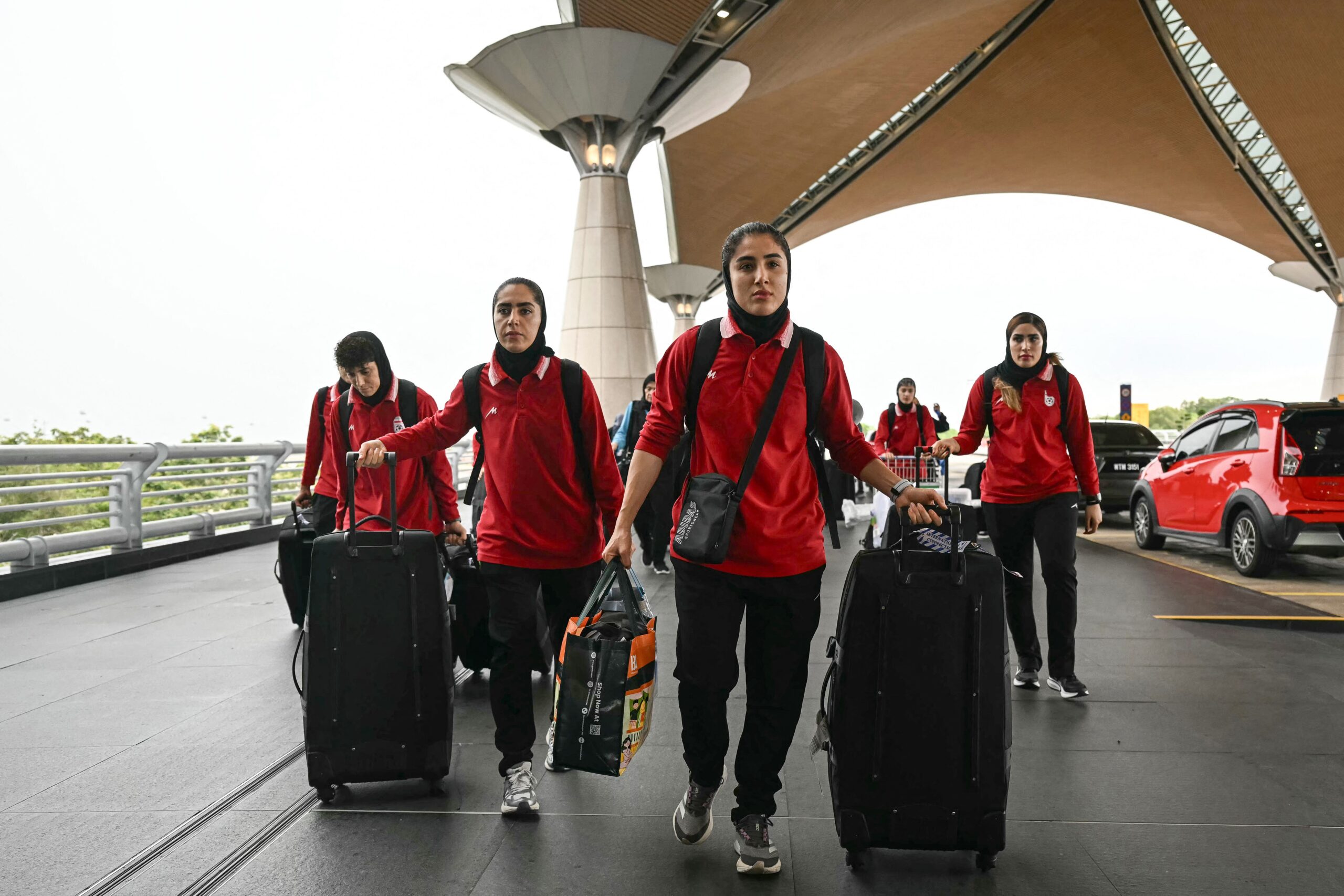
This is now the situation that some of the current Iranian soccer players are facing, after seeking asylum during the Asian Cup in Australia. Seven players originally sought asylum in Australia, but five withdrew their claims over the weekend.
“I can exactly understand what they are going through because I have been in their shoes,” she said.
The team’s ordeal began when they played South Korea on the Gold Coast, two days after the US and Israel attacked Iran. The players chose not to sing the national anthem before the game. Having been labeled traitors in Iran and following reports that some of their families had been threatened, the players then sang before their other two matches. When their tournament was over, some claimed asylum in Australia, while most of the squad returned home.
Whichever decision those players made, their future is now very uncertain. In such moments, Amini says that the regime presents athletes with an almost impossible choice.
“You have to think about your freedom or your family,” she explained, adding that the regime was so desperate for all the players to return that they even offered money for their compliance.
Amini says she has been in touch with some of the players at various stages of their ordeal. Some have messaged to say they cannot communicate because they are under the control of their traveling minders, quickly deleting text messages after sending them. Some admitted they “froze” while trying to determine their future, grappling with the enormity of their decision.
“I’m crying when they said, ‘Yes, we wanna stay.’ I was screaming, saying, ‘You have to stay, please!’” she recalled. “At the same time, I felt guilty if something happened to their family. It’s really complicated, it’s really hard.”
Those who are returning do not even know if their families are safe or alive because the government has shut down the internet in Iran.
It’s almost 10 years now since Amini was forced to start a new life, first in Switzerland, before moving to Italy and now New York. She hasn’t forgotten the painful way in which she was suddenly forced into exile, nor the ways in which life as a female athlete was difficult under the regime.
“In one word, I can tell you that it was humiliating,” she said. “They were using us as a tool to whitewash their crimes.”
On one occasion, she says she spoke with Mehdi Taj, who is now Iran’s soccer federation president, over a concern about sponsorship, but he was more interested in something else.
“’Hey, forget about soccer, forget about all of that,’” Amini recalls him saying. “‘What’s your plan for tonight?’ The presidents of all federations are from the regime and sport in Iran is under complete control of the politicians, so every day we were facing misogyny and discrimination. I was fighting always.”
Amini grew visibly emotional as she described the treatment that she often had to endure.
“Every time you entered in that federation, we were ready for those dirty conversations with them. I’m shaking, sorry, I’m traumatized. I really don’t want to talk about that because it makes me so angry,” she added.
She fears for her friends and family still in Iran, admitting that she is often afraid to check her phone for news in the morning. The athletes who were caught up in the recent crackdown by the regime in January are kindred spirits – she mentions 15-year-old swimming champion Arnika Dabbagh, who was shot and killed during the mass protests that swept the country, and wrestler Saleh Mohammadi, who is facing a death sentence, allegedly for killing a policeman. Human rights groups in Iran say that his confession was obtained through torture.
“My biggest concern right now is the athletes in prison,” she said. “More than 100 are in prison and they are facing rape. They are facing torture and they are also facing execution. In a normal country, athletes are greeted with medals and awards. In my country, athletes are greeted with bullets.”
Amini recently spoke at the United Nations about the suffering of so many under the regime, stating defiantly that she refuses to give in to tyranny.
“While we are here talking,” she explained to CNN, “I don’t know if my family are alive or not. I don’t know if the regime has them hostage or not. I’m so worried about them, I don’t know what to do. But at the same time, I cannot be silenced. I wanna be the voice of those people in Iran.”
She and other athletes have tried to capture the world’s attention before, working with exiled Iranian journalist and women’s rights activist Masih Alinejad; this time, she feels that people are finally listening. She’s calling on Elon Musk to help Iranians connect to the internet and she’s asking the Australian government and US President Donald Trump to find a way to help the families of the soccer players join their daughters overseas.
Amini knows just how painful forced separation can be, her father died while she was in Europe.
“My biggest dream is to get back to Iran,” she explained, “and the first thing I want to do is get a bunch of flowers and go to my dad’s grave and talk to him.”
Amini broke down as she spoke of the last conversation they had on FaceTime, explaining that she had tried unsuccessfully to get him out of Iran. “I was like, ‘Hey Dad, I tried so hard.’
“I just wanna apologize to him. I feel so guilty. And that guilt is killing me.”
The-CNN-Wire
™ & © 2026 Cable News Network, Inc., a Warner Bros. Discovery Company. All rights reserved.
