SART launches ‘Seek then Speak’ tool to support sexual assault survivors

ST. JOSEPH, Mo. (KQTV) -- In recognition of Sexual Violence Awareness Month, Mosaic’s Forensic Program is introducing a new online reporting alternative designed to give survivors of sexual assault more control, time, and privacy when deciding whether to come forward.
Natalie Maupin, Forensic Program Coordinator at Mosaic, discussed the initiative, which centers on a tool called Seek Then Speak, created by the international organization End Violence Against Women.
“It’s an alternative tool for victims to report,” Maupin explained. “There are two sides to it. The ‘seek’ side gives information if they want to know, ‘I was just sexually assaulted, what do I do? What are the next steps?’ The ‘speak’ side is what we’re really wanting to bring to our community.”
Unlike traditional reporting methods, Seek Then Speak allows survivors to complete a guided, trauma-informed questionnaire on their own time, using an app or a web-based tool.
The questions were developed collaboratively by advocates, law enforcement, and medical professionals to balance investigative needs with survivor well-being.
“The victim survivor does it themselves,” Maupin said. “They type it out. It can be their words. That allows them time to really see what the questions are, process it, and understand.”
Once completed, the survivor can save the form as a PDF, print it, and submit it via a secure community email address, currently managed by the Buchanan County Sheriff’s Department, which then directs the report to the appropriate local agency, such as St. Joseph Police Department.
“If a question seems harder or might feel judgy, they explain why we actually need to know this, how it helps in our process,” Maupin added. “Knowledge and information can help a lot.”
Maupin coordinates Mosaic’s SART (Sexual Assault Response Team), a coalition of medical providers, representatives from the YWCA, first responders, and sexual assault advocates, who meet quarterly to improve the community’s response to sexual violence.
“We all might need something a little different,” Maupin said. “But at the end of the day, our priority is that victim survivor, always improving, always making sure our response is as trauma-informed and victim-centered as possible.”
The team has also promoted the Start by Believing campaign, emphasizing that a survivor’s first disclosure can shape their entire healing journey.
“How you respond to a victim after they’ve been assaulted can make a huge difference,” Maupin said. “We really want to push that in our community.”
Despite the difficulty of the topic, Maupin stressed the importance of months like Sexual Violence Awareness Month in April.
“It’s obviously a hard topic, but it was also hard for the victims,” she said. “We wish we could say there wasn’t ever any sexual assault, but we know that’s out there. So what can we as a community bring and offer?”
Survivors can access the Seek Then Speak tool through Mosaic’s website or via a QR code distributed by local advocates and hospital staff.
The tool does not replace in-person reporting or advocacy but offers an additional pathway for those who may feel overwhelmed by traditional methods.
“It doesn’t take away that they can still talk to an officer,” Maupin said. “It’s just another alternative that might give them different options and choices.”
Looking ahead, Maupin said she is proud of how local agencies have united around the issue.
“I’ve been doing this for a while. We’ve been here for a while. But it’s so neat to see that we are going to keep having growth,” she said. “We realize this is probably one of the hardest things someone’s ever going to go through. Anything we can do as a team to make that better, to make our response better and create a safer place, that’s what we want to do.”
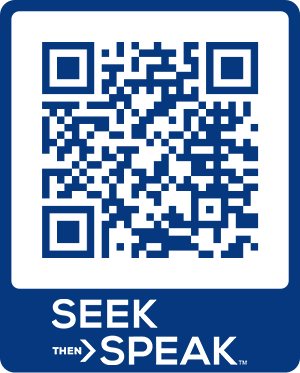
To directly access the Seek then Speak tool, you can go here.
